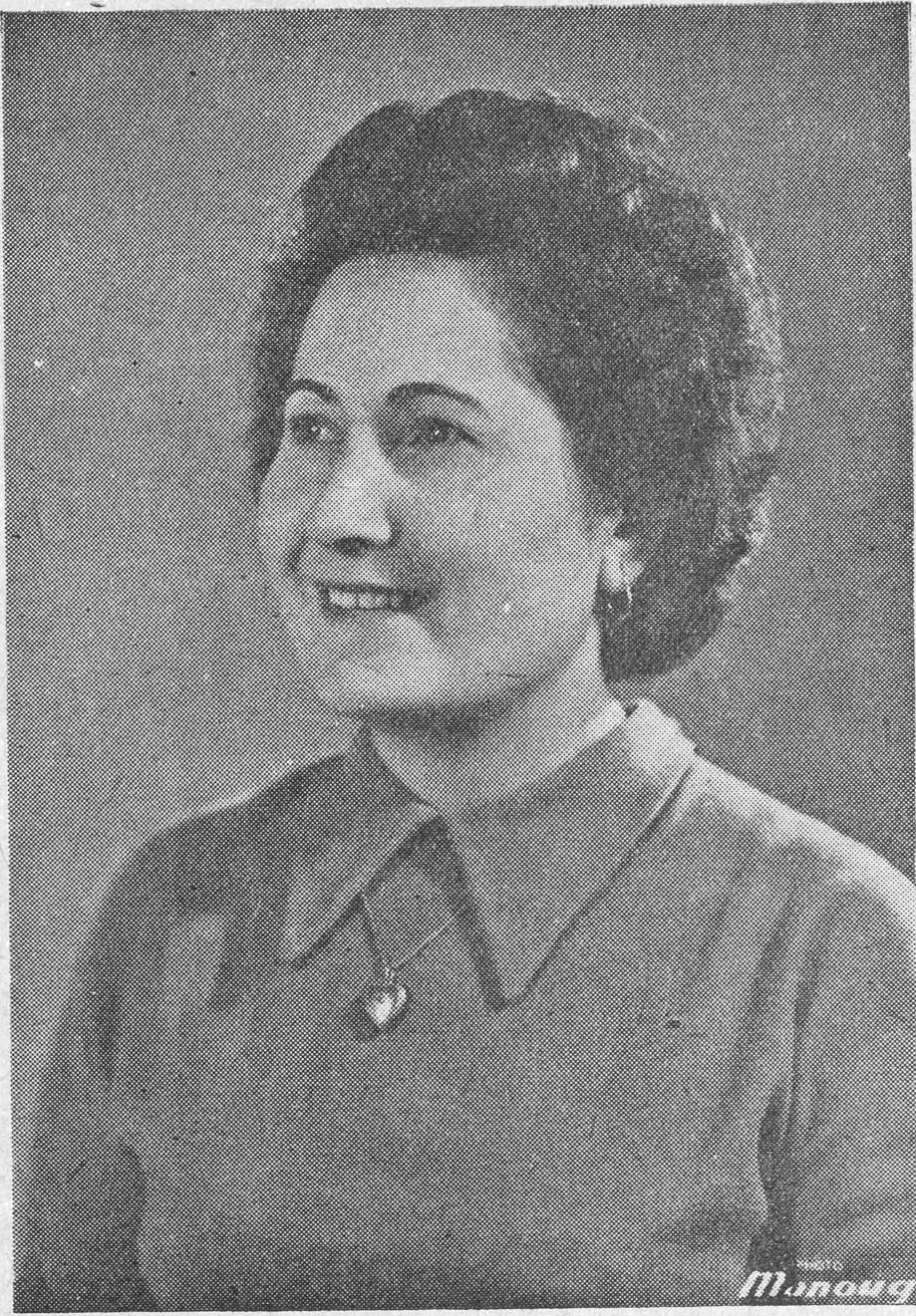
... This is the fruit of knowledge and experience... a deep and discerning psychological study, in a style of the utmost simplicity, brought to us by Miss Nora Katibah, who specialized in this art in England, and who is in charge of the kindergarten at the Evangelical School for Girls.
Often one of the mothers comes to me in distress
and startles me with this question: my boy used to feel pleasure and eagerness in going to school — but these last two days he has shown exactly the opposite!
I answer her: "The child, standing at the gates of a new life, is preparing to enter school. The child who has reached the age of five usually goes to school quite willingly, from his feeling that he has reached five. No doubt he has heard about school from his family, his brothers and sisters, and his companions, and has built himself pictures and imaginings, some of them wonderful and some frightening. I say frightening, with all regret, because some parents — ignorant of the true method of raising their children, the sound upbringing that builds the child's personality and refines his inclinations so that he has confidence in
himself and in his parents — misuse the words 'school' and 'teacher,' so that for the child they come to be like the word 'ogre.' Then the time comes and the school opens its doors to receive the children in joy and calm, and instead there is weeping and wailing. They implore the teacher to work the miracle, after those pictures and threats their parents drew for them. What then, I wonder, becomes of the child's trust in his parents when he puts to the test the reality that contradicts their frightening pictures?! I leave that to the reader's reflection...
On the other hand, we can understand the child's dislike of school from his reaction. This poor child is continually changing his surroundings, from home
to school and from school to home, and at first it is not easy for him to keep his balance, so he shows an unwillingness to go to school. We ask him: why do you not like school? Sometimes he objects for a particular reason, and most of the time he cannot express his feeling. And suppose we reverse the question and say: why do you like to stay at home? The child's separation from home and from the things he has grown used to may be a bitter separation. Perhaps he has a brother or sister he dotes on, or his toys, or an animal, and so forth. We must understand what things matter to the child at home if we are to understand his situation.
His growing familiar with school comes more easily if the bond between his two worlds, school and home, is a close one, so that there does not open up that gap which he must leap across.
Intimacy between the school and the parents is most necessary. How the child rejoices when he knows that his mother has a connection with the school, and that the school knows his mother and his home! At school he can talk about home, and at home about school. And so the child does not feel that the tie between school and home is nonexistent. Add to this that in
play the child finds the personal thread of his life: sometimes he takes his toys with him, and sometimes he puts them in his pocket — this link gives him a feeling of reassurance.
The kindergarten, then, is a world made specially for the child, in which he can realize all his inclinations. This world is fitted to his thinking and his capacity: equipment easy to move, cupboards and shelves within easy reach, from which he can take his playthings without any trouble. And the other playthings that benefit children — water, sand, clay, and pieces of wood in their various sizes — strengthen their muscles and prepare them to face life.
As for success in this atmosphere, it depends on the preparation made at home: on the outward side — "Look at these new shoes of mine for school!" — and on the inner, emotional side, which he acquires from his parents and the rest of the household and carries, all of it, with him to school. On these foundations and feelings he goes on building his experiences with his teachers and his companions — and some of these companions
are ones he has known before (neighbors or relatives).
And yet despite all the precautions and measures