* A lady of noble lineage, cultured.
* She played an important political role in the era of the Arab government in Damascus.
* She distinguished herself as an energetic, capable farmer.
* A great social reformer.
* A unique personality among our ladies.
* A lover of good works.
Q — I know, Mrs. Nazik, that you were, and still are, among the enthusiasts for the Arab cause. When, I wonder, did this feeling begin in you?
A — The awakening of national feeling began in me while I was still small, when the Turks exiled the free men of my people, my father among them; and there I began to feel the intensity of my love and longing for my people, and that I was ready to do anything for the sake of their liberation and advancement.
Q — Were there certain events in the dawn of your youth that nourished the spirit of nationalism in you?
A — Yes. What redoubled my national feeling was that danger which overtook my homeland, Syria, after its independence under the rule of King Faisal. For the French — no sooner did the ambition stir in them to impose their mandate on Syria than a stormy nationalist whirlwind arose there among the daughters of the noble families, to say nothing of their men. The government of that time appreciated these noble sentiments and wished to include the ladies in the work of defense; and when the "Red Star Society" was formed — which was the equivalent of the Red Cross — it chose for it a group of daughters of good families and appointed me its president. And when we founded the School for the Daughters of the Martyrs, it delegated me to head it as well. And when the war broke out, we set up the hospital in a few days.
Q — Did you witness the battles between the French and the Arab army?
A — Yes, and I was in the front lines; and when the Minister of War, Yusuf Bey al-Azmeh, was wounded, he gave up his soul in my hands, at Maysalun.
Q — A mighty endurance and a rare courage!! How did the government of King Faisal reward you?
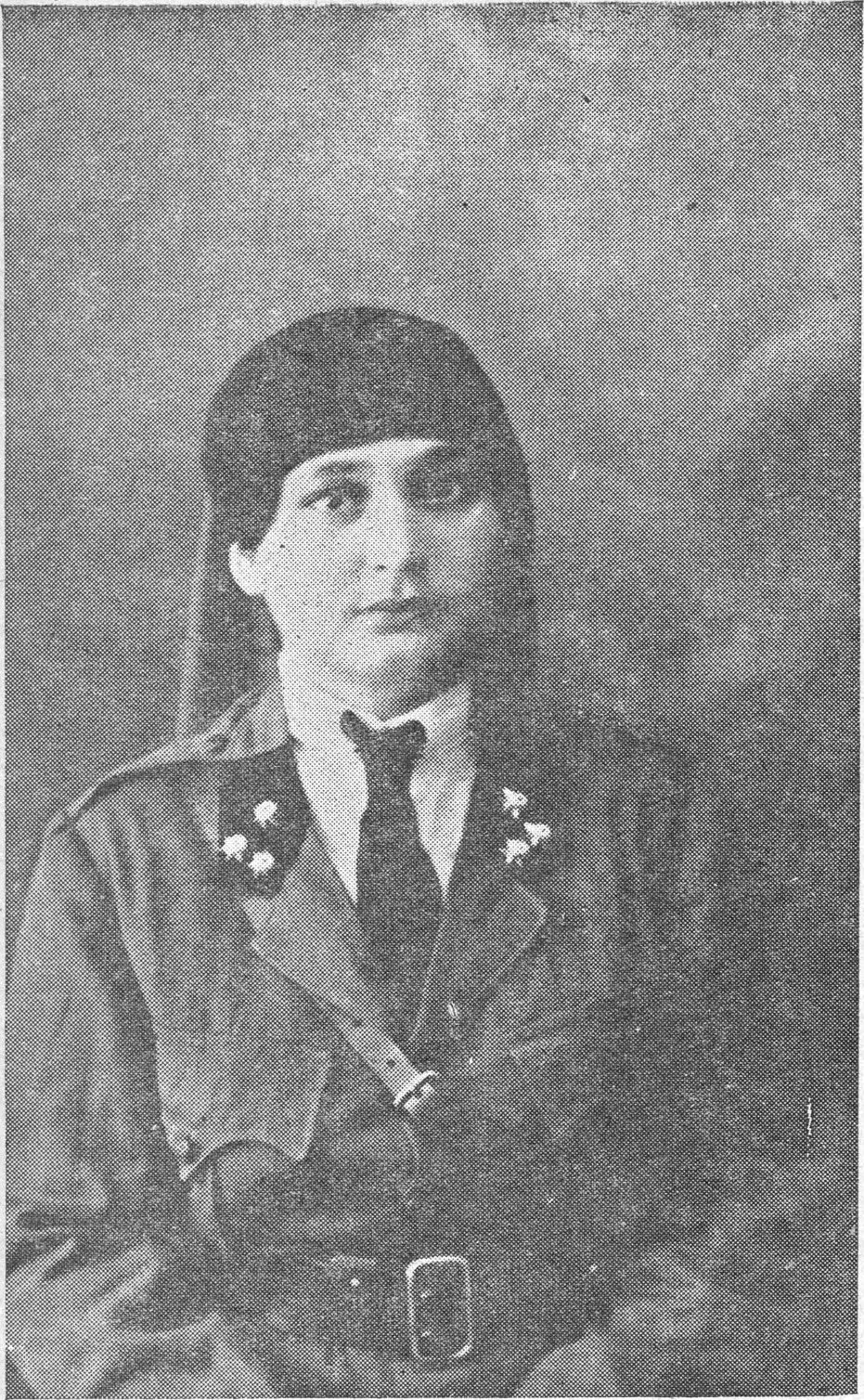
A — It conferred on me the rank of honorary captain in the army — "yuzbashi" — and I used to inspect the troops in my military uniform, which I still keep and put on for certain occasions, as a memento dear to me.
Q — And did you continue your political activity after King Faisal's departure from Damascus?
A — Yes, and I was the mainspring of the movement in kindling the fire of the revolts — which drove the French to banish me out of the country: I was exiled three times.
Q — And when was that?
A — In 1920, and in 1922. On one of these occasions I went to Istanbul, and I took advantage of the opportunity of being there and entered the American College for Girls and studied English.
Q — I understand, Mrs. Nazik, that at its beginning your activity took a political direction. In what circumstances did it turn to agricultural activity?
A — When I was removed from the field of politics and forbidden by the French government to take part in the opposing revolutionary movements, my father sent me to his villages on the outskirts of Damascus, and I devoted myself to the service of the land; and when my father saw this zeal in me, he set apart for me the lands of al-Zuraiqiyah, which were still fallow,