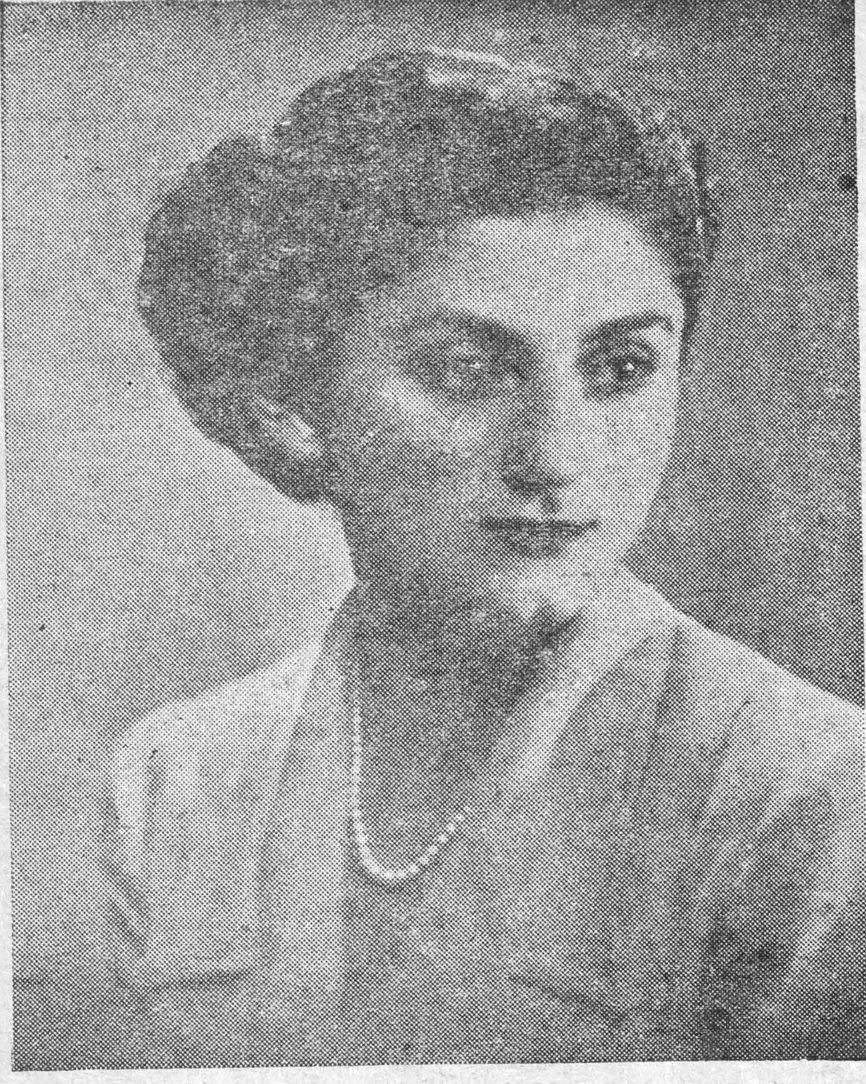
At this season, of this year and of every year, a wave of nervousness sweeps over the schools and over our homes, and terror creeps into the hearts of students... It is the time of the final examinations, and it was said of old: 'At the examination a man is honored or humbled.' This maxim has come to run upon our tongues, and so we hang a very great importance upon examinations, since upon their results our honor or our humiliation depends. Because of this importance, I wished to put some questions to one of the women in charge of our dear schools, Mrs. Layla Charles Saad, principal of the National College in Choueifat, that perhaps, after discussing the subject, we may be able to judge whether examinations are necessary or unnecessary.
Q — Do you believe, Mrs. Layla, that we could do away with examinations altogether, considering the uproar these examinations stir up every year, and the exhausting state of nerves that takes hold of students as a result of them?
A — In my view we cannot do away with examinations altogether, because examinations are, at the present time, the only means of judging a student's knowledge, of sifting students, and of estimating their capacities in the fairest way possible.
Q — Then you do not count daily work?
A — Naturally I do not count it beside the examination, because daily work may not give a true picture of the reality of a student's knowledge — the daily assignments, for instance, are very often not the fruit of the student's own effort.
Q — That is an important point. And what more of the merits of examinations?
A — The examination is likewise a mental stimulant for the pupil: it trains him to use the information he has gathered and to bind it together, and it also teaches him to think of subjects as a whole, not as scattered ideas.
Q — Of course examinations have many merits — no one denies this. But there are three kinds of examination: written, oral, and laboratory. On which of these examinations do you place the greatest weight?
A — Each of these three examinations completes the others, and all of them must be held in order to render a just verdict on a student's knowledge. The oral examination, for example, tests the pupil's quickness of mind, the strength of his personality, his fluency, and the excellence of his delivery.
Q — Whereas the written examination gives the pupil room for thought, reflection, and deliberation, and for
gathering and setting out what he wishes to say in the best possible manner.
A — And the examiner himself, too, can prolong his consideration and scrutiny of the answers; and so his verdict on the student's knowledge comes nearer to truth and justice than the verdict of the oral examiner.
Q — And do not forget, Mrs. Layla, the value of neatness, order, and beauty of handwriting in the written examination — qualities which the Latin schools foster more than any others, so that their examination papers are generally a marvel of neatness and fine script; and the founding of this habit is very necessary for the lives of our students, over which muddle and disorder hold sway.
A — And therefore it has become obligatory, as I said, that we not content ourselves with a single examination; rather each examination should be the complement of the other.
Q — There remains the laboratory examination. Could it not be dispensed with?
A — No, for the laboratory examination is necessary because it is a means of making certain how far the student can apply his theories in practice, and how great is his manual skill.
Q — I suppose you refer by that to the vocational lessons — carpentry, smithing, agriculture, and so on...
A — I mean also the sciences of physics, chemistry, botany, zoology, and the like.
Q — And now, before entering into the very heart of the subject, let us pause