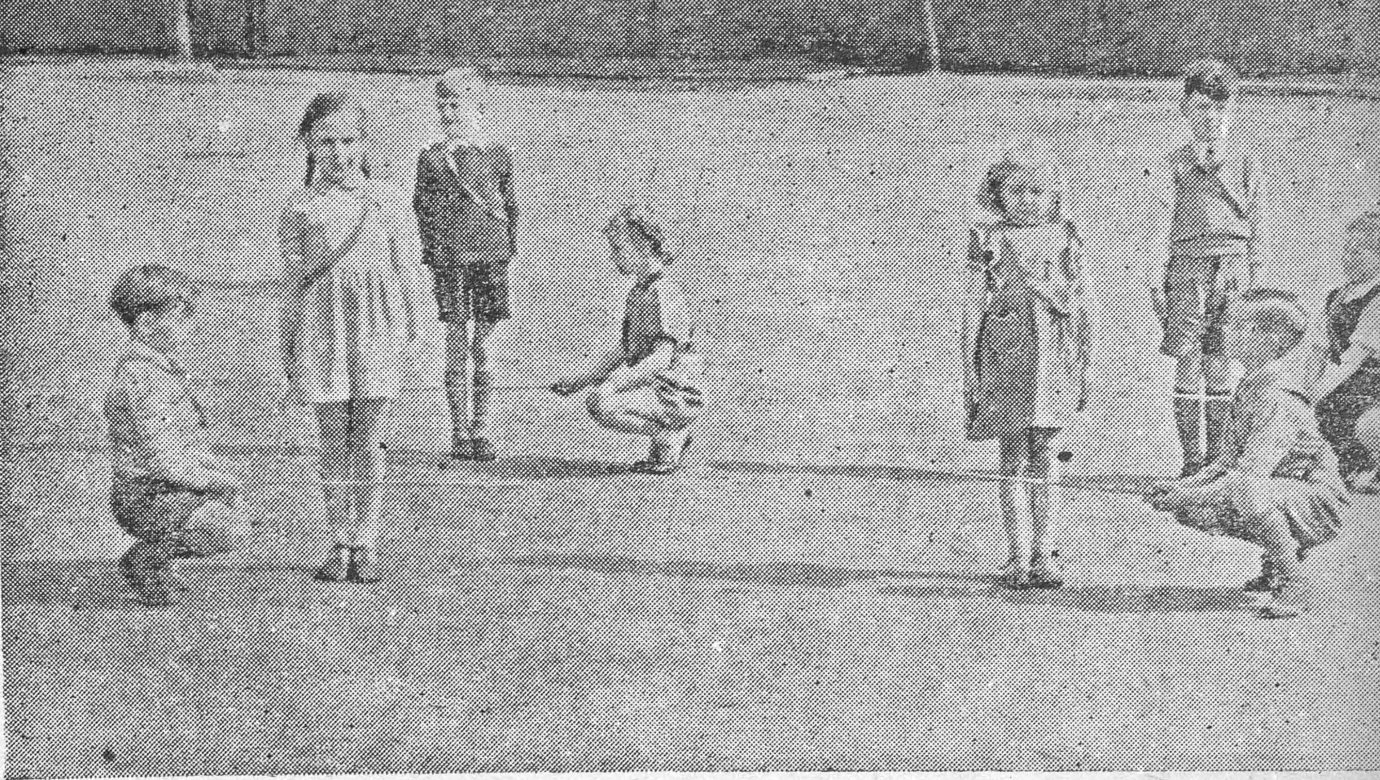

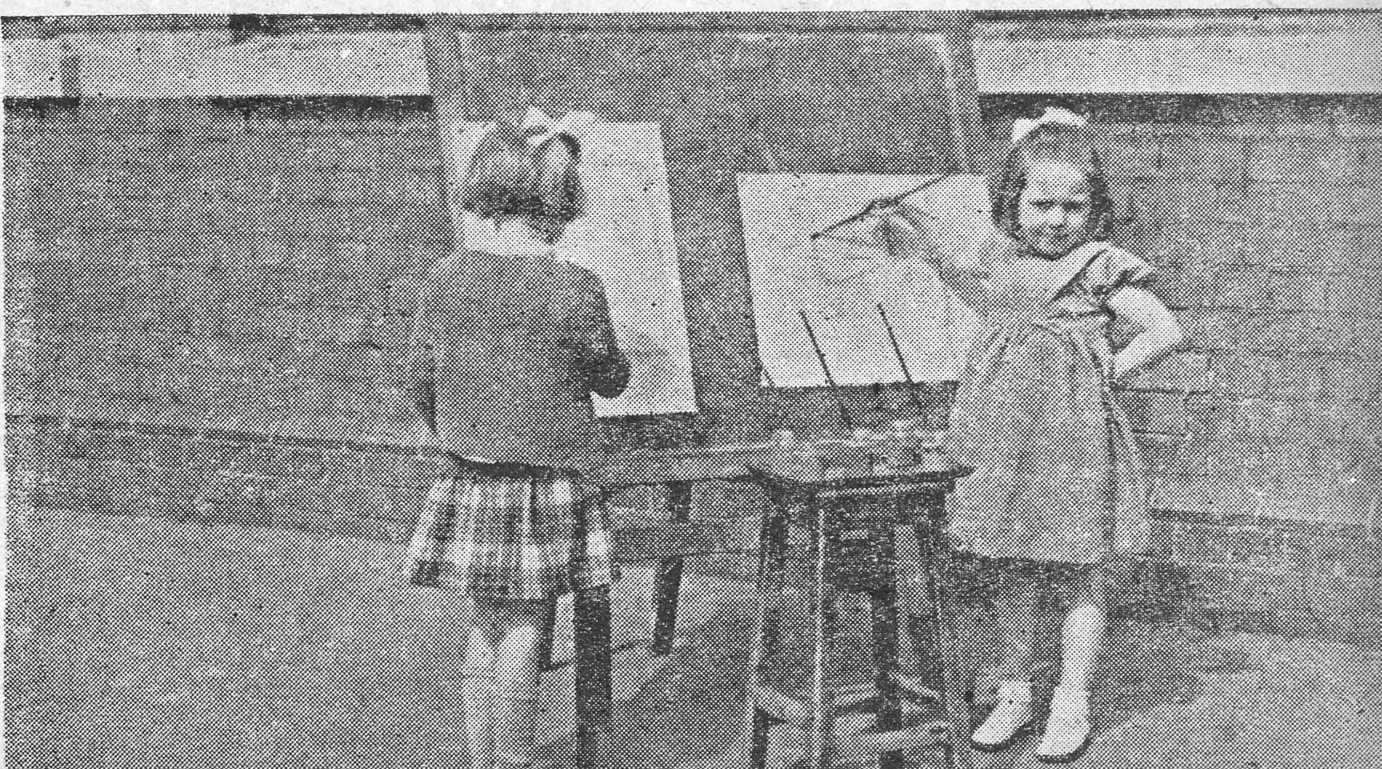
It is impossible to think of children without thinking of their games and their make-believe in the playgrounds, in the garden, in the house, in the hallways, etc. We find them playing at "Mother and Father," "Red Indians," "School," "Cowboys," and other games. You see them, while still in the cradle, playing with the fingers of their hands and feet. And the moment they are left to themselves, we see them go back to their games of make-believe. To anyone who takes pleasure in watching children, it appears plainly that they love to play. Play, then, is a universal trait among the children of the whole world, and therefore it must not be neglected nor its importance overlooked.
If someone should ask: why is play the occupation children choose? we would answer him:
1 — Play is the road by which they come to know the world around them. The boy who stands amazed, watching a man build a house, we find a while later absorbed in mud and sand, building a house in make-believe fashion, to test out and work through his amazement in
play. Children are forever living in their experiences, because as they play they are testing life, and their knowledge grows. Some of them, for instance, play at "the sick man" or at "the shop" or "war" or "travel"; and among them we see the little girl imagining herself a mother, washing her little girl, or cooking, or receiving her guests, while the boy imitates his father, doing carpentry or fixing something in the house. Most of their games turn on imitating the grown-ups, because in imitating the grown-ups there ripens in their heads the idea of the things grown-ups do which they find hard to understand. They are forever living their experiences in play, and in this way they can understand life better.
2 — Play helps them to become skillful in the use of tools and materials — and not only how each is used, but what each one does by itself. The little girl gives a party for her doll: she manages her cooking and her drinks with care and precision, and receives her guests with good manners; then, the party over, she sets about washing the dishes, pressing lip upon lip as she pours the water for fear of a spill!
So too the boy: he does not attempt climbing without first making sure within himself that he can keep his balance, and with which of the boys he can play "Up You Go, Down You Come." And here is another child who has learned by experience how many pieces of wood he needs to load his cart. And there is a child who knows just how damp the sand must be to make a good cake of it!! Naturally, this precision and skill were arrived at gradually, after
many mistakes at the beginning. The child learns from his