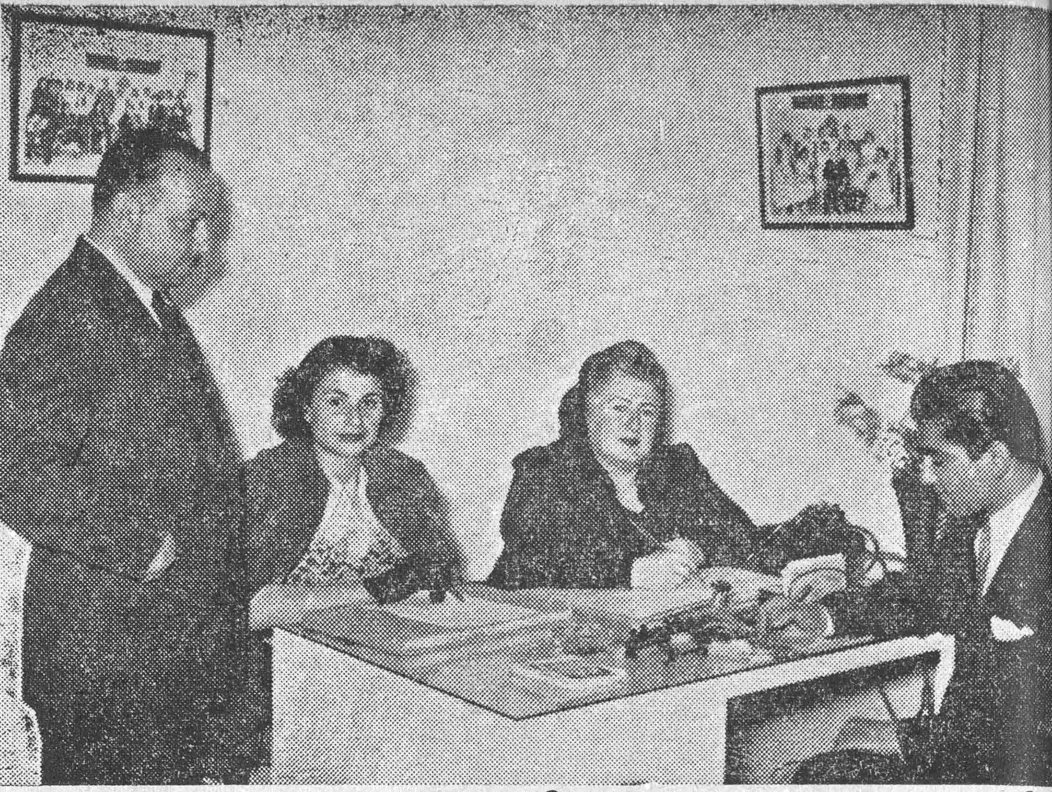
Mrs. Ramziya al-Nasouli at her working desk in the Mouasat Hospital
— 2 —
And who does not know Mrs. Ramziya al-Nasouli, Lebanon's delegate to the Islamic Women's Congress in Pakistan and president of the Mouasat Charitable Society? This lady, this mother, was the finest ambassador for her country in Pakistan — a country whose people do not know whether Lebanon is a village or a province. This lady is the mother of five girls, four of whom are married, and all of them live happy and prosperous lives thanks to their mother's capability and her wisdom.
Q — We hear a great deal about your society; what are your aims, and how do you carry them out?
A — The aims of our society are the establishment of shelters and reformatories for girls who are minors, and we are now building up, little by little, the hospital and the dispensary, which serve 1,900 patients. We have a chemical laboratory, and we strive to serve the common class only; and our great hope is to extend our work to the villages.
Q — What is the saddest story you have met with among your patients who visit the hospital?
A — Some people brought us a pregnant woman with eight children, whom their father had abandoned out of the severity of his poverty. We took her to the hospital, and after a while she gave birth to twins who captured the attention of all the hospital's nurses. We kept her with us, together with her two babies, for a week, during which they were given tonics and nourishing foods — and all of it at the hospital's expense.
Q — Do you find encouragement from your husband for the work that you do?
A — No! My husband never interferes in my private affairs, and I have reached what I am by my own efforts alone.
Q — Do you believe that you have succeeded in combining work and motherhood?
A — Praise be to God; to Him alone belongs all the credit for my success. I am never behindhand in paying
the necessary visits, although I deny myself certain social obligations.
I do not believe that every mother can do the work I do, for I seize opportunities constantly, and I have a strong will that has helped me never to put off until tomorrow what I can do today. Great difficulties have come my way, but I have come through them by my patience, my endurance, and my strength of will.
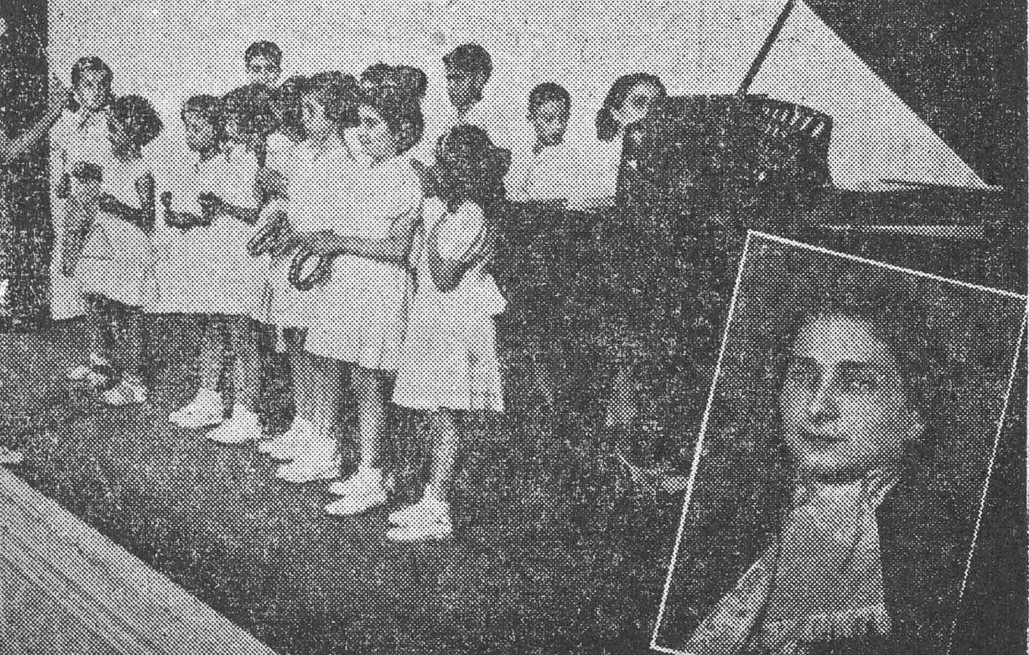
And how could it slip my mind to meet the makers of the generation, the fashioners of the ladies and men of the future? How could I forget our excellent lady teachers who head the schools and take their part in teaching? Mrs. Cortas's travel abroad deprived me of the honor of meeting her, but that does not prevent me from recording her name in this roll of honor. The second guide with whom I wished to meet was Mrs. Zafer Dabghi, teacher of music and singing in the children's schools; she also gives private lessons on the piano, by her modern method, to children up to the age of ten.
Q — How many pupils have you, and how do you carry out your work? A — The number of my pupils is limited, because they are all at school and cannot come to me before four o'clock, and at that hour I am busy with my own children. I teach in the schools until four o'clock, then give private lessons by my own method from four until six, and that in my home.
Q — How have you been able to reconcile your work and your home? A — I fall somewhat short at home on the side of sewing. I prepare part of my food in the morning and part of it in the evening, and the
The children's orchestra at the kindergarten of the Lebanese Women's League, conducted by little Chris Alfred Diab; Mrs. Dabghi can be seen at the piano in the right-hand corner.