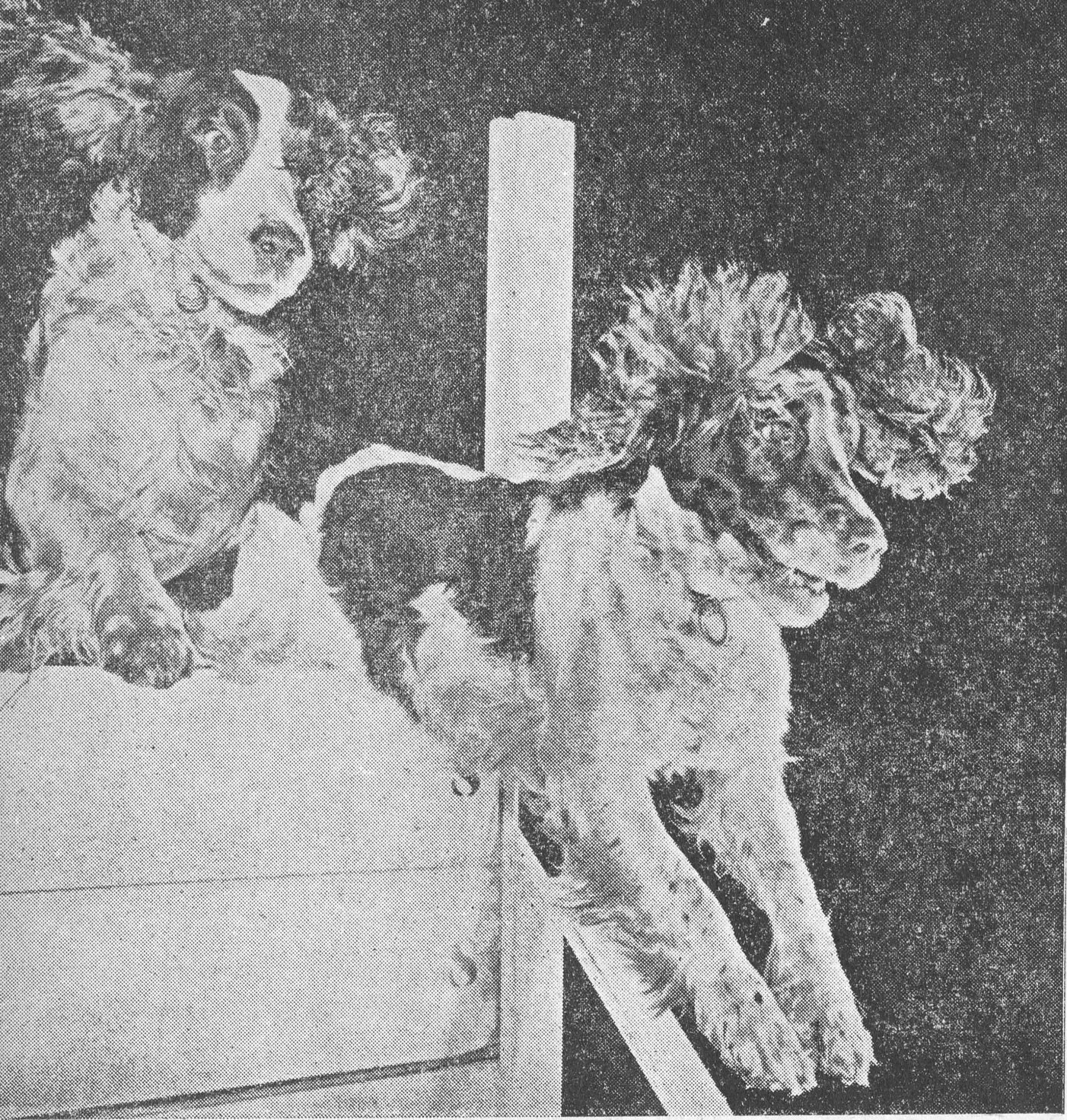
Training Dogs in Wartime
Some dogs are trained to discover the enemy's positions and kill soldiers, while others carry electric wires, maps, and messages from the scenes of war to the front line. The Red Cross dogs search out the wounded and guide the doctors to them. And there is a class that carries food, water, and necessary supplies to people exposed to dangers. As for the dog, he exposes himself to danger and to death to save man. It is known of one dog that, by the power of his sense of smell, he was able to detect the enemy's position at a distance of about 800 kilometers from an entire detachment of soldiers who felt secure where they were; he hurried to his own party and showed them the warning signal he had been trained in. The soldiers sprang from their beds, hurried to their weapons, and began firing on the enemy, who fled in terror; and had it not been for the dog's warning, that detachment would have been wiped out to the last man.
The Dogs of Newfoundland
In one of the outlying districts of Newfoundland there is a monastery inhabited by monks whose whole purpose in dwelling in those cold regions is to rescue and aid travelers lost in the wilds of those parts. To this end they have trained a great number of dogs — resembling lions in the grandeur of their bodies — to guide whomever they find there to that monastery, besides searching for persons buried in the snows. These dogs would range those regions daily and bring lost people to the monastery, and before long these people, thanks to the monks' care and their
directions, would find their way to their intended destinations. Often the dogs guided the company of monks to people whom the snows had buried; they would bring them in unconscious and administer to them the necessary first aid until life returned to them. Were it not for those Newfoundland dogs, many a traveler would have perished, still living, beneath the snow.
A Dog's Ruse
A pampered dog tried to sit in his mistress's place, but could find no way to do it. After turning the matter over at length in his mind, a charming ruse occurred to him by which he succeeded: he stood at the edge of the room's window and began to bark. His mistress rose from her seat and looked out to see who was coming, whereupon he hurried over and sat in her place. She was vexed with him, and then wished to pay him back in kind, so she stood by
the window and took to imitating his barking; but she did not succeed, for the dog understood that it was a ruse on her part, and did not stir from his place.
The Dog and the Loaf of Bread
A man accustomed his dog to go daily to a certain bakery and buy him a loaf, to be fed to him afterward, its price having been placed for him in a small basket which he carried in his teeth; and on returning with the basket to his master's house he would take out the loaf and eat it with appetite and contentment.
One morning the baker took it into his head to tease the dog and have a laugh at his expense, so he set out for him a very hot loaf; hardly had the dog brought it near his mouth than he recoiled from the intensity of his pain, and from that time on he bought his loaf from another bakery — in revenge on that baker who had wronged him.