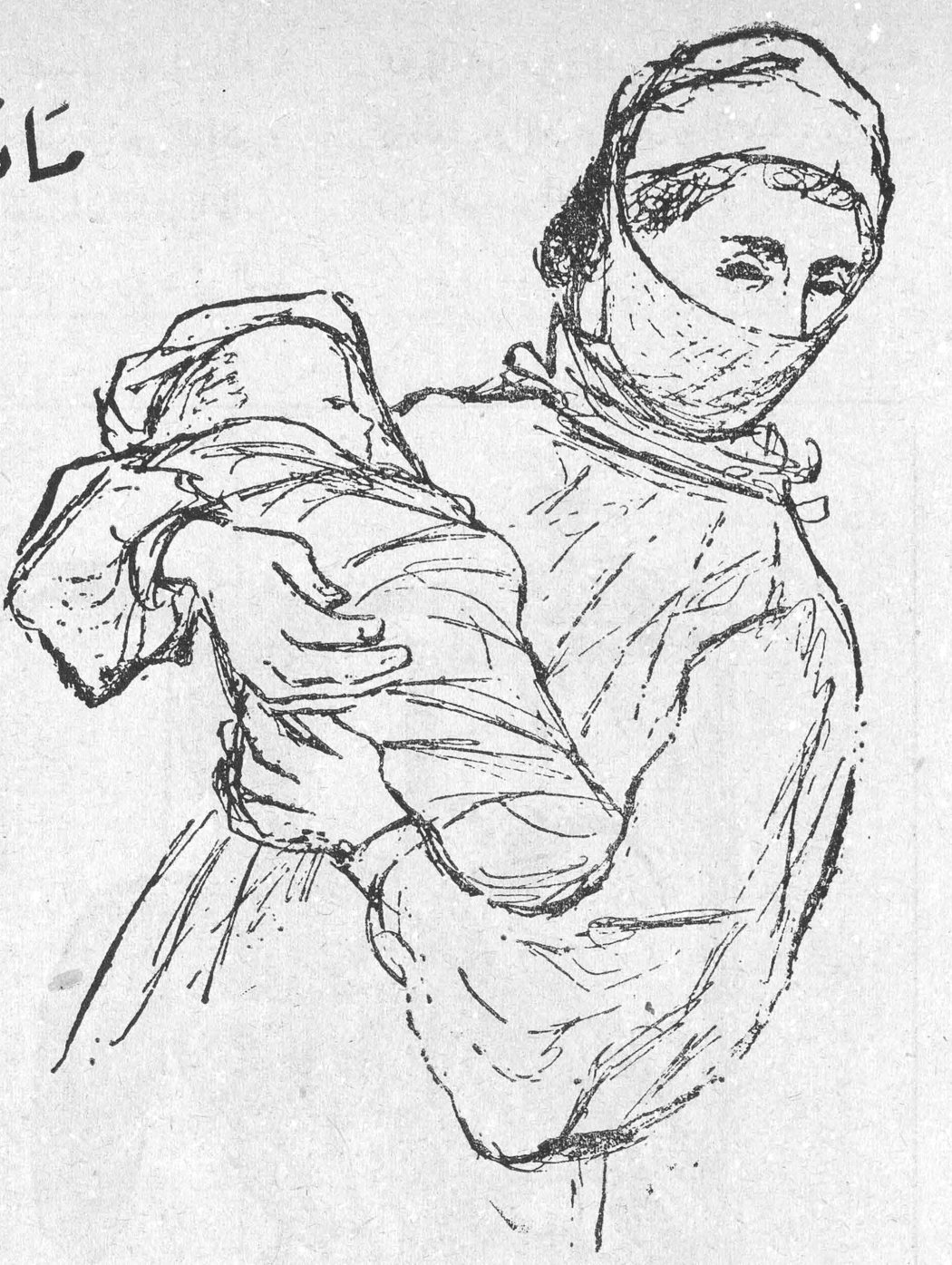

Here Dr. Edma Abouchdid, the specialist in women's diseases and obstetrics, answers a series of questions put to her by a lady who is expecting for the first time — Mrs. Layla Fakhoury. These counsels draw the line between the superstitions of the old school and the facts of science in the modern school.
Q — Doctor, ever since the first week of my pregnancy my mother's instructions to me have multiplied: not to move about, to take to my bed, to sleep and rest. She has forbidden me to climb stairs or to ride in automobiles — so much so that I have grown very weary of this situation, and I should like to ask you: is there any scientific justification for all these precautions?
A — The first thing I want to assure you of, Mrs. Fakhoury, is that pregnancy is a natural condition; it is not a burden upon the expectant mother, nor is it a state of illness. The expectant mother should go on with her life as it was before the pregnancy, carrying out all her household affairs — except at certain times.
Q — What are these times?
A — They are the dates on which the menses would have been due, during the first four months. At these dates only must the expectant mother avoid carrying heavy things and riding in automobiles over long distances. As for housework, the expectant mother continues to do it as before — provided, of course, that
her health is normal as before. But if she has previously felt pain or abnormal symptoms, then in that case she must consult the doctor and keep to her bed.
Q — I often hear from my women friends of the severity of the morning sickness that struck them in the first period of pregnancy, and I was surprised when I had my own experience and felt no change at all — my life now differs in nothing from before. Does this mean that my friends, and the other women who are stricken with morning sickness, are under a psychological influence, or that it is a matter of "coquetry" — or is morning sickness a scientific fact?
A — You, Mrs. Fakhoury, are fortunate not to have felt any dizziness or change in your life. Morning sickness is not all coquetry or delusion; many cases of it are genuine.
Q — And what, I wonder, is the cause of these cases?
A — Some cases of morning sickness have medical explanations, such as nervous symptoms, and the fetus's secretion of various toxins that affect the kidneys... Yet in most of these cases we are able to treat the expectant mother and to stop the dizziness and vomiting by modern medical means.
Q — The second question that has occupied my mind of late is this: when should I visit the hospital and undergo general examinations? ... I feel that consulting a specialist is a necessary thing, but whenever I mention it before my mother she says to me: "The name of God be about you! What do you want with the doctor? Take your time — wait for the seventh month..." So I should like to ask you, Dr. Abouchdid: when should the expectant mother consult the doctor who is to supervise her throughout the pregnancy, and who will accordingly be responsible for her delivery?
A — You put it well in that last phrase, for it is essential that the expectant mother place herself, from the very beginning, at the disposal of a specialist who undertakes to supervise the development of her condition and to give her the necessary scientific guidance. Consultation of this doctor begins from the moment the pregnancy is confirmed, when the doctor performs the various analyses and examinations... After that, the expectant mother visits her doctor's clinic once a month during the first seven months, once every two weeks in the eighth month, and once every week in the ninth month... The task of the