moral values it embodies — pure devotion in work, sacrifice, and good example.
"And on this occasion I bring to this noble gathering these glad tidings: the Ministry of Health has contracted with the World Health Organization for a project whose aim is the care of childhood and motherhood in this dear country. The equipment for this great work has arrived in Damascus, and only a few months will pass before the work begins on a wide and organized scale.
"This modest society will then be merged into that organization, where it will be like a gleaming pearl, radiating the light of its devotion, its sacrifice, and its good example."
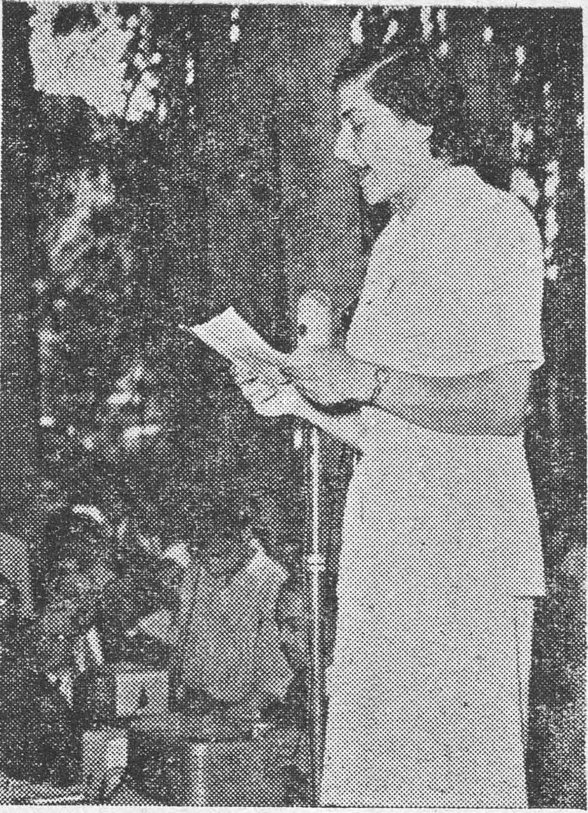
Mrs. Vera Khoury also spoke, and this is what she said:
"... We all know that the child does not enter school a blank page; he enters school with the page of his soul already filled with the various impressions, good and bad, useful and harmful, to which he has been exposed in his family circle in the pre-school period, in the nursing period, and even in the period of pregnancy. These impressions are usually of such strength and firmness in the formation of the personality over the whole span of life that it becomes impossible to erase them or to modify them in any fundamental way.
What, then, are the impressions to which our children are exposed, especially in rural circles? We observe, with regret, that the poisonous, injurious impressions are the prevailing ones in these circles, save in rare cases. The child most often lives in his family in a milieu infested with moral defects, to which are added the lack of care for his state of health and his cleanliness, and the lack of care for the mother during pregnancy and nursing — all of which poisons the child's health, his feelings, his morals, his activity, and his intelligence, and makes the school's influence afterward weak and of little benefit, however great the efforts expended in this cause.
Therefore the fight against these poisons, and the warding off of their dangers from our children, must begin in the pre-school period; and this is a thing which, at the present time and in our present circumstances, none can undertake but societies like our society, which take upon themselves the protection of the child from the health and social standpoints; helping to bring him up by modern methods and safeguarding his health, his cleanliness, and his nutrition; striving to plant the seeds of good qualities in his soul and to keep him away from the influence of moral defects; and caring for the mother in the times of pregnancy, childbirth, and nursing, and protecting her from the diseases and harmful agitations that injure the fetus and the infant and stamp them with their stamp for the whole of life. To attain this end it employs every possible means: the establishment of centers for care and health guidance; the making of visits to inspect homes and to offer counsel and guidance to mothers; the delivery of lectures and public talks; the issuing of bulletins on the various subjects connected with the rearing of the child from the health and moral standpoints; helping girls' schools to give attention to this subject, so as to
prepare aware and understanding mothers — and other serious means besides.
On this basis our society was formed at the beginning of this year; it laid down its statutes and its program of work and began its activity, and it will continue this activity in the measure of the sympathy, support, and encouragement it meets."
Mrs. Vera Khoury delivering her address
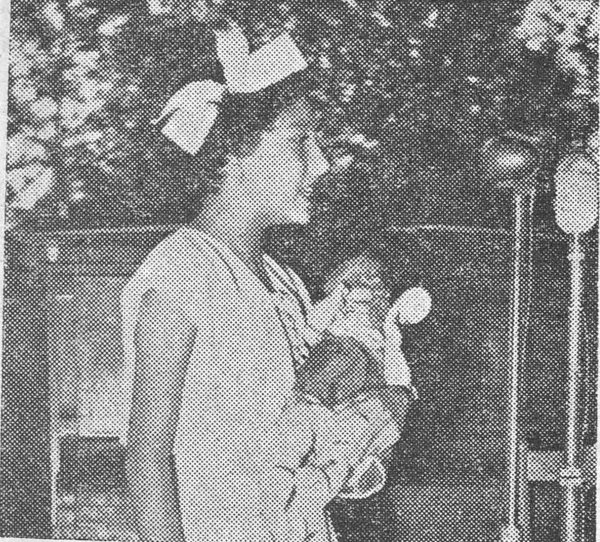
Miss Sarah