marked by creativeness, stirring all manner of feelings and thoughts, imposing pleasure and admiration upon whoever relishes it; as for the edifying purpose, it may indeed be present in it, but positively and indirectly.
On the subject of the artist’s personality the question at once confronts us: is the artist a person different from other human beings? And does this difference extend to his mind and his morals together?
The artist’s intelligence is usually of the contemplative, inspirational, or intuitive kind, and it differs from the philosopher’s ratiocinative intelligence and the scientist’s analytical intelligence. Rarely do we find an artist like Michelangelo who unites several kinds of intelligence. For this reason it behooves the artist to keep away from subjects that do not concern art.
As for the artist’s character, it cannot but be affected by his art — unless he is one of the pretenders to art. The first aspect of this influence is his inclination to freedom and to social emancipation, under the effect of an art that obliges him to innovate, to bring out his own personality, and to recoil from imitation. Hence
the quarrel that has existed since antiquity between art and morals; people have reproached artists for their moral eccentricity and their departure from the accepted traditions, and have alleged that their deeds contradict their words.
Nor is it strange that the artist’s deeds should contradict his words, for art is very often an ideal presentation, an aspiration toward a better reality to which nothing in ordinary life corresponds; and for this reason we do not always expect the artist to do what he says.
The artist’s personality is for the most part a mixture of balance and disturbance: at times the artistic influences prevail over him and he
devotes all his powers to his art, and at times he surrenders to the influence of his surroundings and becomes an ordinary person again, exposed to relapse and decline.
This is what I have seen fit to set down of the book’s matter; time does not allow me to expound the elements of art and the elements of poetry, or the extent of aesthetic criticism among the Arabs and the place this criticism occupied in their books.
And were it given me to look over this work anew, I would enlarge upon the kinds of beauty, and upon the subject of suggestion and obscurity in art — that is, upon those subjects in which the sources of research failed me.
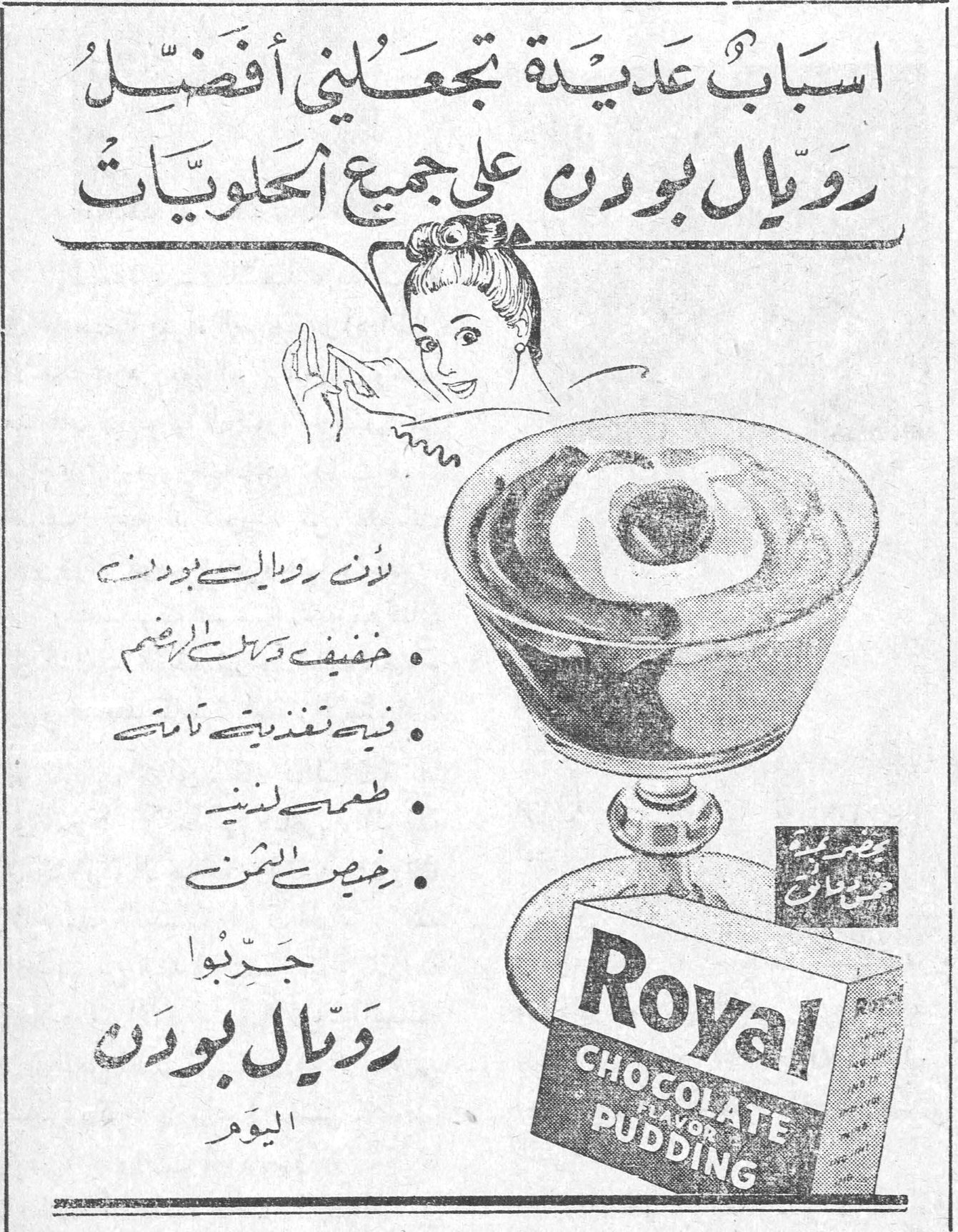
Royal Pudding
Many reasons make me prefer Royal Pudding to all other sweets
Because Royal Pudding is:
• Light and easy to digest
• Completely nourishing
• Delicious in taste
• Cheap in price
Try Royal Pudding today
Royal CHOCOLATE FLAVOR PUDDING
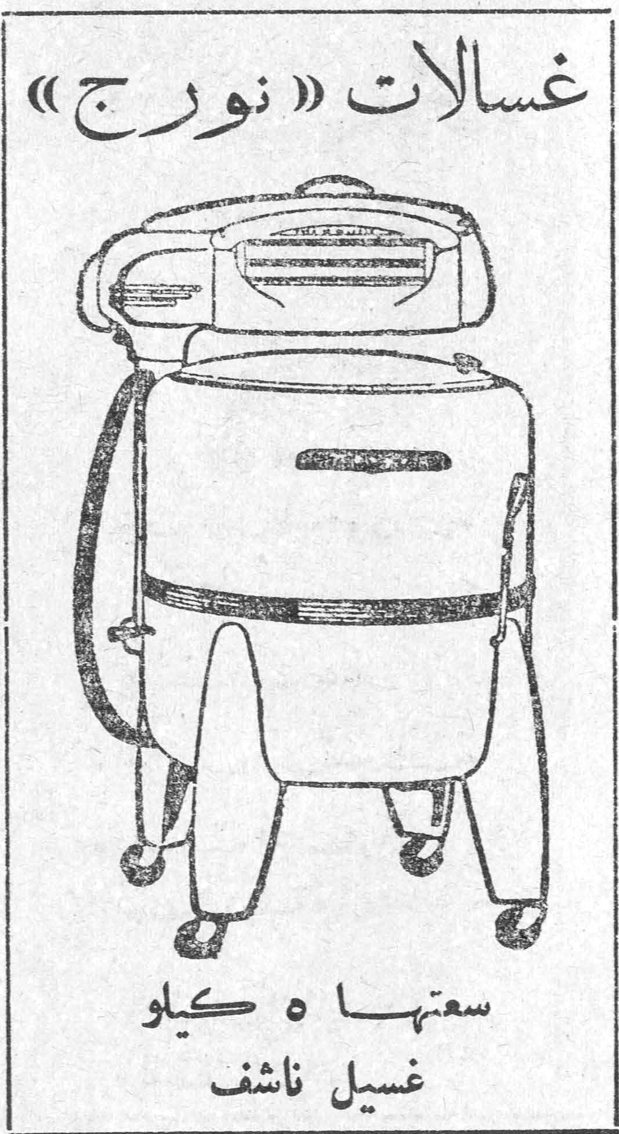
“Norge” washing machines
Capacity: 5 kilos
Dry wash