When the magazine The Woman's Voice asked me to write a word on the occasion of the anniversary of the birth of the noble Messenger, I did not expect to find myself as I now am — filled with awe, and with a sense of falling short of giving this anniversary its due. I was also at a loss as to which of his aspects I should speak of, and from which side I should look upon Muhammad, God's blessings and peace be upon him.
Shall I look upon him as the just judge, or the patient striver, or the great educator and noble preacher, or the highest example? Or as the first to speak of a charter of human rights, or the pioneer in giving women their rights?
He, peace be upon him, was more than all I have mentioned. Is it any wonder, then, that I feel a great measure of awe and inadequacy together?
Above all that, he labored in a sphere loftier than anything people expected of any preacher upon the earth: guiding people to see that the divine religions hold no differences among themselves in beliefs and fundamentals, for the pivot of all religions is faith in God and the Last Day, and righteous works; and that the religious truths which Islam brought are those which all the prophets brought. If people return to them, the religious differences that stir up odious fanaticism will vanish from among them. The Almighty said: "He has ordained for you of religion what He enjoined upon Noah, and what We have revealed to you, and what We enjoined upon Abraham and Moses and Jesus — that you uphold the religion and be not divided in it."
He also called to brotherhood and
mutual support:
"The believing men and the believing women are allies of one another; they enjoin what is right and forbid what is wrong, and they establish prayer and give alms."
In this duty he made males and females equal alike. He likewise reconciled the claims of this world and the next: The best of you is not he who forsakes his world for his hereafter, nor his hereafter for his world; rather the best of you is he who takes from this and from that.
It is related of him that while he was sitting with his companions, they looked upon a strong young man who had gone out early, striving and toiling at his work. They said: Alas for him — if only his youth and his strength were spent in the way of God! The Messenger, peace be upon him, said: Do not say this. If he has gone out to provide for small children of his, he is in the way of God; and if he has gone out to provide for two aged parents, he is in the way of God; and if he has gone out to provide for himself, to his own benefit, he is in the way of God.
Have we ever heard of a wisdom in practical life loftier than this wisdom?
He, God's blessings upon him, was the highest example in justice among men and in equality.
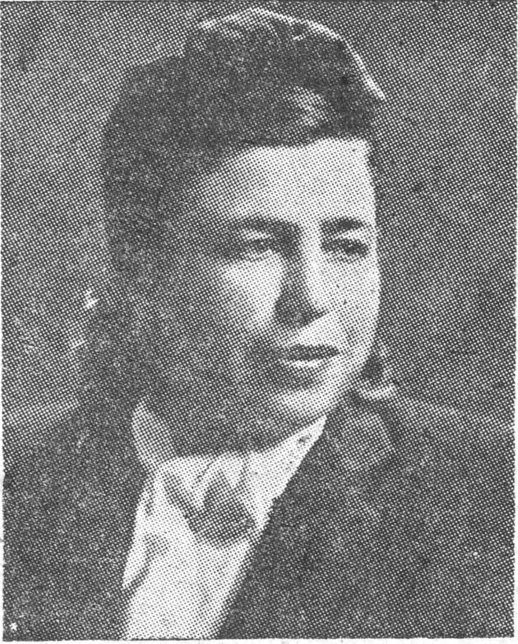
Miss Zahiyah Dughan
Principal of Makassed College for Girls
Tu'mah, who was newly come to Islam, stole the coat of mail of Qatadah, one of the Messenger's followers, and accused Zayd the Jew of the theft. Tu'mah and his people held fast to his innocence, supposing — and some supposition is sin — that the Messenger would condemn the Jew because he was a Jew, accept the Muslim's oath and the Muslims' testimony, and acquit the thief because he was a Muslim. The litigants brought their case before the Messenger, the just judge, and Tu'mah and his people set forth the case in the form upon which they meant to have the matter decided.
The Messenger pondered the case, uncovered its buried secret, consulted heaven, and called down revelation. Then the litigants heard the noblest judgment the dwellers of the earth had ever heard — clear
verses recited by the sweet tongue of the Messenger: "They hide themselves from men, but they cannot hide themselves from God; He is with them when they plot by night in speech that pleases Him not, and God encompasses all that they do. Here you are — you have pleaded on their behalf in this worldly life; but who will plead with God on their behalf on the Day of Resurrection, or who will then be their advocate?"
And thus he ruled in favor of that Jew and sent his Muslim adversary away disappointed and defeated.
As for equality, he set its bound upon himself before setting it upon his followers. When his she-camel knelt down, as he was emigrating to Yathrib, it knelt upon the ground of the sons of Amr; so the Messenger bought the
land, paid its price, and gave direction to build the mosque. And when the Muslims — Emigrants and Helpers alike — set steadily to the building, he made himself their equal, though he was the supreme commander, and worked at building the mosque with his own noble hands, to fulfill his noble saying: A man's faith is not complete until he desires for his brother what he desires for himself.
As for his sublime forbearance, it appears in the following incident:
One day a Jew seized the Messenger of God by the collar, demanding payment of a debt that had not yet fallen due, saying, "Give me my right, O Muhammad," and speaking harshly to him. At the Messenger's side was Umar ibn al-Khattab, may God be pleased with him, well known for his jealous devotion to the Messenger and his sincere love for him. No sooner had he heard the Jew address such words to the Messenger with insolence and coarseness than Umar sprang upon the Jew, meaning to repay him for his harshness and to teach him a hard practical lesson in respecting the Messenger of God and in observing courtesy when
addressing him. But the Messenger — the man of noble character and pure soul, of a forbearance too vast to be strained by such a Jew — looked at Umar, God's favor be upon him, with a look of reproach that