The Evolution of Fashion over a Century
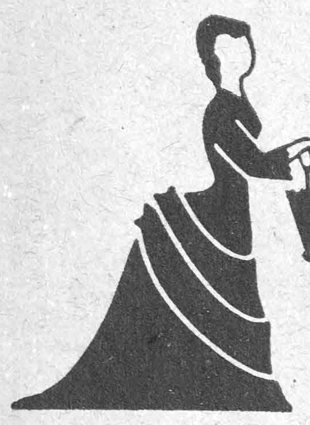
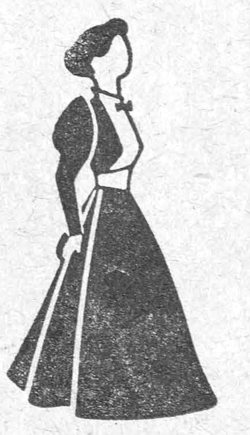
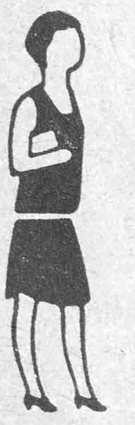
In the middle of the nineteenth century, women's fashions were marked by the narrowness of the upper part, the height of the collar, and the length of the sleeves, while the lower part of the dress was marked by fullness over the hips and even at the back. The elegant lady wore a number of petticoats so that her lower half might look plump and full, while at the same time she went to extremes in lacing in her waist so that it might look slim and narrow above the full, rounded hips. In 1875 — that is, twenty-five years later — woman kept most of the principal lines of her dress, except that the fullness of the skirt was confined to the back alone, the slimness of the waist, the length of the sleeves, and the height of the collar being preserved. In 1900 we notice that this fullness of the skirt, and the extravagance of its width, began to lessen and grow moderate, and to shift in the direction of the top of the sleeves, around the shoulders; and this sleeve, puffed at the shoulders, narrows gradually until it clings to the forearm and the elbow... As for the point of the great change, it is not recorded before 1925, when short dresses came into vogue — a little below the knee — and the waistline moved down below the hips, and sleeves disappeared altogether, along with a new indulgence in the 'décolleté' and a widening of the neckline. But woman was not long in feeling her mistake, and the unsuitability of this dress to the principal lines of her figure; and so the low waistline was not destined to live long, and it returned to its natural place around the waist, and short sleeves became general — suiting the practical life while preserving, at the same time, a lady's modesty...
As for the hair, which in the middle of the nineteenth century began long, parted in the middle, spread out and well combed on the two sides and rolled under, it developed somewhat toward the end of that century, and the lady came to have skill in dressing it, and in elaborating the kiss-curls above her forehead and around her ears, with padding for the 'bun' if the hair was not thick and abundant. At the opening of the twentieth century the lady kept her braids, but permitted herself to cut a fringe and spread it over her forehead, and her fastidiousness redoubled in rolling the hair at the back and lifting it higher than before. Woman did not bring herself to cut her hair altogether and do without the long braids until 1925 — the very period in which she shortened her dress and her sleeves and bared her neck... Today the hair ranges between the very, very short and the moderate in length; as for the sweet braids that were our grandmothers', hardly anyone keeps them now but a certain set of schoolgirls, at a certain period of their age, after which they proceed to cut off these braids and give their loose, tossing hair to the air and the rays of the sun, in keeping with the spirit of the age...
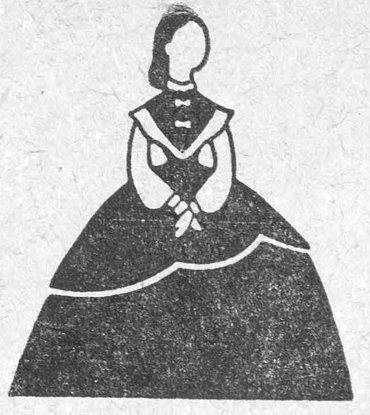
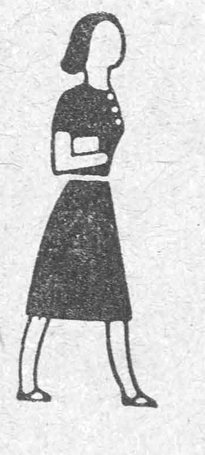
Around 1850
Around 1875
Around 1900
Around 1925
Around 1950