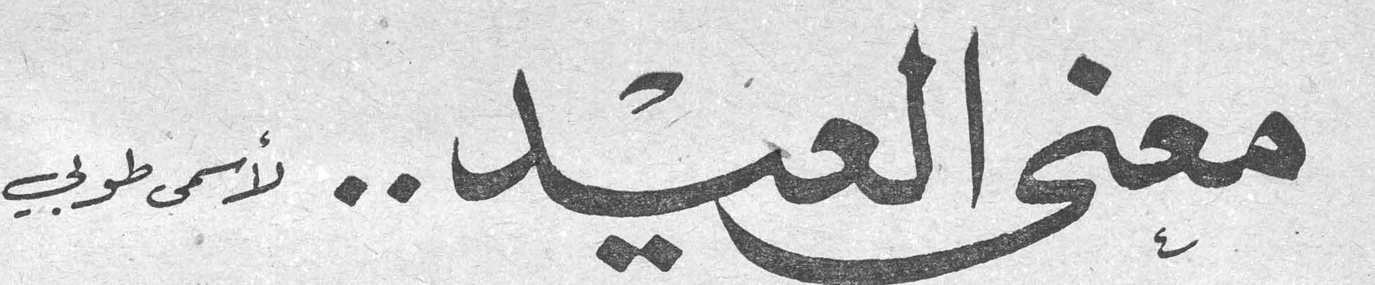
In the darkness of a certain night, when people had gone to rest and slept, the angel of peace descended to the world of sorrows bearing a child; and it seemed as though everything would remain as it was. The Romans, with their many gods, their savage cruelty, their pleasures centered on watching lions tear men to pieces, and men tearing bulls to pieces, and slaves whose bodies the whips set aflame, and wine and women... The Greeks, with their philosophers and their cultivated crowds gathered in the alleys, discussing and debating; the Hebrews, awaiting a king who would found them a kingdom and around whom they would rally — all of it seemed as though it would go on moving with the world in its accustomed course. None felt the great event but a few simple shepherds, who saw a strange star and heard an angelic choir singing; then they went after the star, and worshiped, and rejoiced, and returned to their sheep and to their work as usual.
And in the darkness of another night the soul of Herod Antias shuddered and his rage boiled over — that ruler surnamed the Bloody: red of hair and beard, red of the purple robe, red of the hand stained with blood... Herod had killed, among his victims, his own mother and his wife; and after that he killed John the Baptist, whom he loved. He killed these and their like in a mere caprice of his wicked soul — why, then, should he not kill, on this dark night, hundreds of innocent children...? The wise men of the East had told him that a strange star had appeared, pointing to a great birth. And the chief priests of the Hebrews told him that their awaited king would be born in Bethlehem. The birth of a king — and in Bethlehem — threatened Herod's throne. Then let all the children there be killed, and so the danger that might threaten the throne would vanish... And Herod's soldiers killed hundreds of children on that dark night; blood flowed, the wailing of mothers rose, their hearts were torn asunder — and then the world went back to its accustomed course.
And in the darkness of a third night the threads of a crime were woven, and a young man was condemned to death. It seemed to the rulers and the conspirators that everything was finished. He was merely a rebellious young man, around whom thousands gathered wherever he went; and his people, the Hebrews, were demanding his death because he was altering their law and touching their beliefs. Then let them have what they wanted... and they had what they wanted. And the world — so it seemed to them all — went back to its accustomed course.
The years passed, and behold, all that had happened was recorded on the most prominent pages of history; and behold, the child who was born in a grotto, and laid in a manger, and died between two thieves, overturned the established order, shook kingdoms so that crowns bowed before him, and changed every law — as though he had passed his tender hand over the brows of men and turned what lay within them into something gentler and more humane, or as though he had breathed the breath of mercy and turned the world, and the mere mortals in it, into beings in the image of God and in his likeness.
The great child had to have his feast; and so it came about that people have kept the feast of that lofty memory every year. But have we grasped the meaning of the feast...? It is the custom that people offer their gifts to the one whose feast it is — have we offered our gifts...?
The feast came, and we prayed — if we are among those who pray. We prayed to blot out the sins of the past from the pages of our book. But why...? Was it so as to find new pages on which to trace new sins, now that the book was full and its pages blackened...?
The feast came, and we carried out the accustomed rites and ceremonies. We lit the candles, and they lit only what was around them; we sent the sacred hymns up from our lips, and only the nearby corners echoed them back.
The feast came, and we ate heartily till we were glutted, and drank our fill till we were drunk. We put on the costliest clothes and walked about in them, strutting and proud; we gave gifts to friends who give us gifts in return. But the Lord of the feast, and what would gladden him — him we neglected.
And the Lord of the feast desires no gift for himself. From the moment he chose the cattle's manger for a cradle, he meant to make us understand that palaces and material things are worthless in his eyes; and from the moment he chose redemption for a path, he meant to make us understand that sacrifice and self-giving are the aim of his teachings and the purpose of our existence.
What matters to the Lord of the feast is what is more precious than money, and what money cannot buy: that you give — but with a smile; that you give from the depths of a contented heart, happy in what its hand bestows.
To give from your heart — a visit to a sick man, a smile for one wasting away, a word of tenderness for a wretched soul — reflects the love you have offered onto the face before you: the sealed lips part in a smile, the weary heart finds rest; and behold, the Lord of the feast accepts the offering with thanks, for what you have given is the very thing he desires, the thing that has remained through the years the lesson dearest to his soul — the one his followers repeated after him, saying: love can do all things.
And you may give of your strength: keep vigil over a weak one, or care for a little one, or enlighten an ignorant mind, and give rest to a tired body — and behold, the Lord of the feast accepts the offering, because you have consecrated your powers to the good of the society to whose good he consecrated his life.
And you may fight evil and the impulses of the soul that commands to wickedness until you conquer; then the light breaks forth from your soul to shine round about you, and your fragrance is shed abroad so that near and far breathe it in — and behold, the Lord of the feast whispers in your ear, smiling: Yes, my child, even so let your light shine before men.
Yes