To Miss Intisar Tabash
Mr. George Saydah is a poet, Damascus-born, who left Syria for Egypt and South America forty-five years ago; but that long stretch of time did not make him forget his homeland and his country. Rather, through his letters and his poetic gift he was the finest
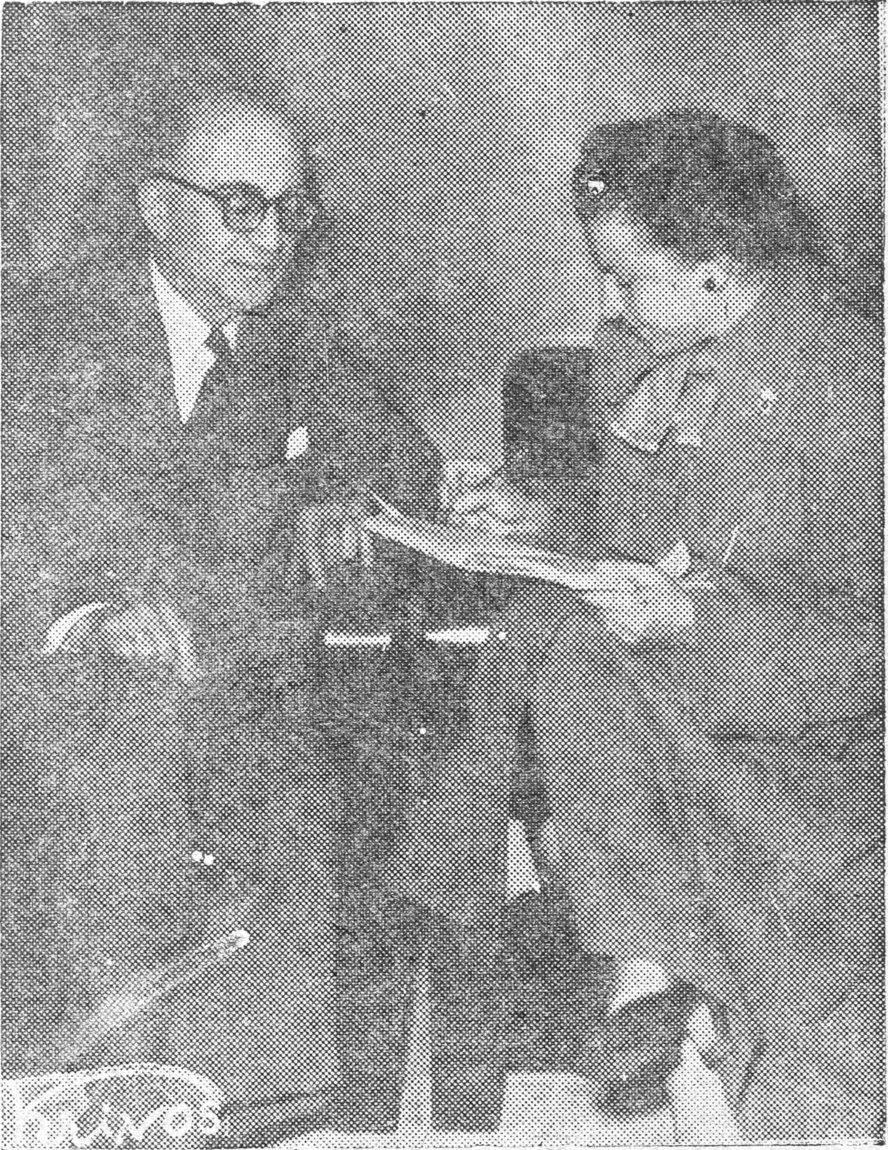
Miss Intisar Tabash records the talk of George Saydah
voice of the emigrants' hopes and aspirations and their love for their country.
I sat with him in the salon of the Normandy, and found myself before a man who has wrestled with time and known its sweet and its bitter. He speaks to you with a fluency and a sweetness through which shine his generosity of spirit, his kindness, and the delicacy of his soul. Although this was the first time I had met this gracious poet, I felt as though I had known him for a long while, for he talks with his companion far from any air of formality or affectation. And so I questioned him and he answered, and his answers had a ring whose echo still resounds through my soul.
— What is the course of your life today, after these long years in the Mahjar?
— For a year now I have been traveling around the world, my sole aim being to find a suitable place in which to spend the rest of my life. God has at last guided me to Beirut, and I intend to remain here once I have wound up all my affairs in the Mahjar. Lebanon
suits me very well: its spiritual atmosphere agrees with my nature as a retired man who has no goal but verse and the poem.
The poet Saydah is married to a French lady, so I wanted to know his family's opinion of Lebanon, and I asked him:
— And how did your good family find Beirut?
— They were all delighted with Lebanon, and by way of preparing to bring the plan of settling here into being, my daughter has begun taking lessons in Arabic from a teacher here. My wife came with me at first to please me; but now, having seen Lebanon and its beauty, she has no wish whatever to go back.
— And your work, between past and present — how has it developed?
— In Argentina in 1948 I published my first diwan, which I called "Al-Nawafil," and I dedicated it to the Palestine relief committees, to sell it and distribute its proceeds among the refugees. At present I have a small, elegant, illustrated diwan being printed in Paris, called "Al-Nabadat," which will appear shortly. I can say that it is the first artistic work I have produced, for I had not previously attended to the truly artistic side. Today, here in Beirut, I am composing a few poems, of necessity, for various occasions; I have given three lectures so far, most of which included some of my verse. And I shall soon recite a piece of poetry at the Children's Welfare Society in Tripoli, on woman's work in the field of social service and child welfare.
— May I hope that the magazine will have this poem of yours?
— I shall give it to you for the next issue, God willing.
— What is your opinion of the Lebanese emigrant, and what should his attitude be toward his first homeland?
— Man in the East generally, and in Beirut in particular, complains first of the scarcity of livelihood
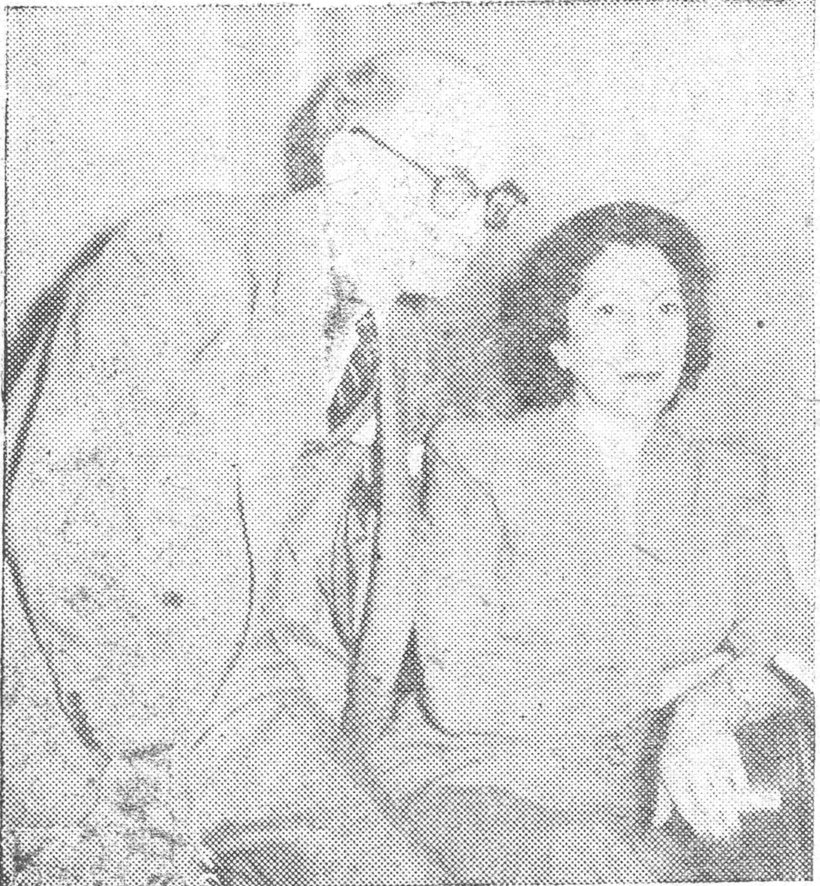
The poet George Saydah with his wife