A Great Guest Speaks...
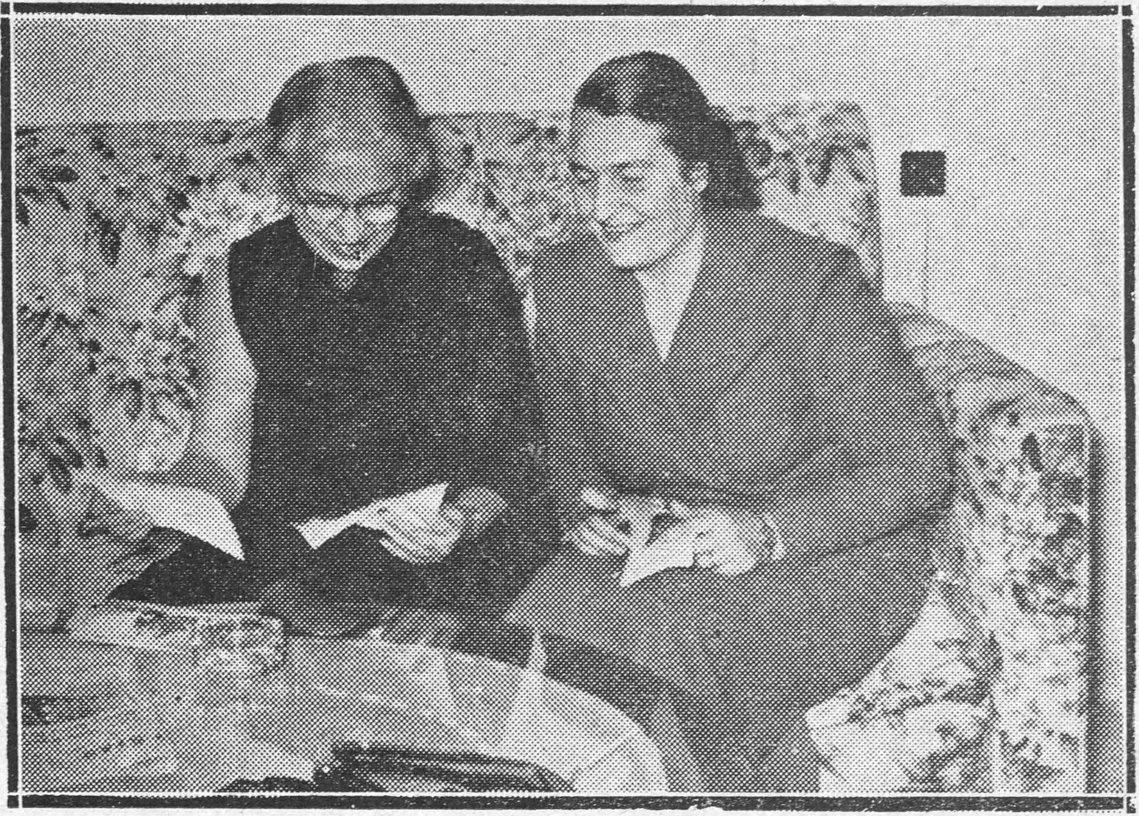
The event of the month, for the Lebanese woman, was the visit of Mrs. Vijaya Lakshmi Pandit, head of the Indian delegation to the United Nations at its latest session and sister of the leader of the house of Nehru. Lebanon prepared to receive the great guest as international personalities are received: Mrs. Pandit stayed as a guest of the government, and several receptions were held in her honor. And the women of Lebanon flocked to the two gatherings at West Hall and the Bristol, driven by an intense longing to see this eminent Eastern lady and to profit from her learning and her experience. Mrs. Zahia Salman succeeded in making contact with her and in learning the details of her private life — matters that will be of benefit to our gracious readers.
It was granted us to hear Mrs. Pandit speak in our women's circles twice, and on both occasions the great guest called warmly for the
dedication of oneself to a higher aim; she likewise explained at length the necessity of mingling with the deprived classes and of working to raise their level — intellectually, spiritually, and economically — and she demonstrated the necessity of union and cooperation among all the elements of the nation. She wished it had been possible for her to become acquainted with every Lebanese woman and to talk with her, so as to form beautiful and detailed recollections of woman in Lebanon. And in fulfillment of this wish, she set a special appointment for many of us to
gather with her in her private salon and converse with her — the talk of a woman to a woman who is her sister. Here I convey to the readers of The Woman's Voice, as I previously conveyed to the readers of Kull Shay', a summary of what Mrs. Pandit told us, hoping that it may be for us a strong incentive, driving us to positive and fruitful work in our social life.
"I did not enter institutions of learning; I did not obtain a university degree. Yes, that is the very truth, so do not be surprised. And for that reason it was not given me to take part in our women's associations or
to share in their charitable and social works; to speak still more frankly, I was not permitted to be counted among the members of those associations, for they were all of the aristocratic class and holders of university degrees. But today, now that I have become what I am by my own efforts and my own attainment, they race one another to confer upon me the honorary presidency of these associations; and I could, if I wished to boast and make claims, show you hundreds of bulletins and circulars of the various associations of the women of India in which my name occupies the first place among their honorary members — while the truth is that I have taken part in their work only for a short time, having presided for two years over the All India Women's Conference.
Among the reasons that kept many of the 'Nationalist' Indian ladies from taking part in the work of those associations was the English patronage of them and the English lavishness toward them, together with a small number of our ladies graduated from English universities. As for my friend Kamaladevi, a pupil of Oxford, her learning and her patriotism fitted her for work in the social and political fields; and she too suffered much torment, and was imprisoned more than once.
I began my public life with political work and the struggle against colonialism when I was eighteen years old, and I married a man who was among the richest of India's rich and the most famous of the fighters in her modern history; and always one of us would be imprisoned as the other was set free — until the matter ended with the death of my husband, the result of the life of hardship he lived in prison."
Mrs. Pandit sighed, and over her gentle jasmine face there passed a cloud of pain and sorrow; then before long she went on to say: "Do you know, ladies, that the Indian woman, despite being man's complete equal
in political rights, is still, in the matter of personal and economic