choosing a hen to sit on the eggs.
The second picture shows you how the egg, as a result of the warmth, forms a tiny germ on the first day, and it grows little by little.
This third picture shows you the egg in its second stage of becoming a chick; so look at the membrane, or sack, that surrounds the yolk, which the fourth picture shows you further grown. And you see it surrounding the whole of the yolk in the fifth picture.
Attend now to the sixth picture, and observe closely how the yolk, inside the membrane or sack, is joined to the chick's stomach — and this after twelve days have passed.
And you see in the seventh and eighth pictures how the yolk is drawn entirely into the chick's stomach.
On the twenty-first day it begins to breathe, which shows that there is life in it, and you see it in the ninth picture a fully formed chick.
The tenth picture shows you how, after its formation inside the shell is complete, it begins to break the shell with its beak so as to come out into the world.
And in the eleventh picture you see how it has broken a part of the shell, for it rests between one peck and the next, and cannot break it all at once.
Do you notice, dear child, that the chick does not break the whole shell, but breaks a part of it on all its sides, as is shown in the twelfth picture?
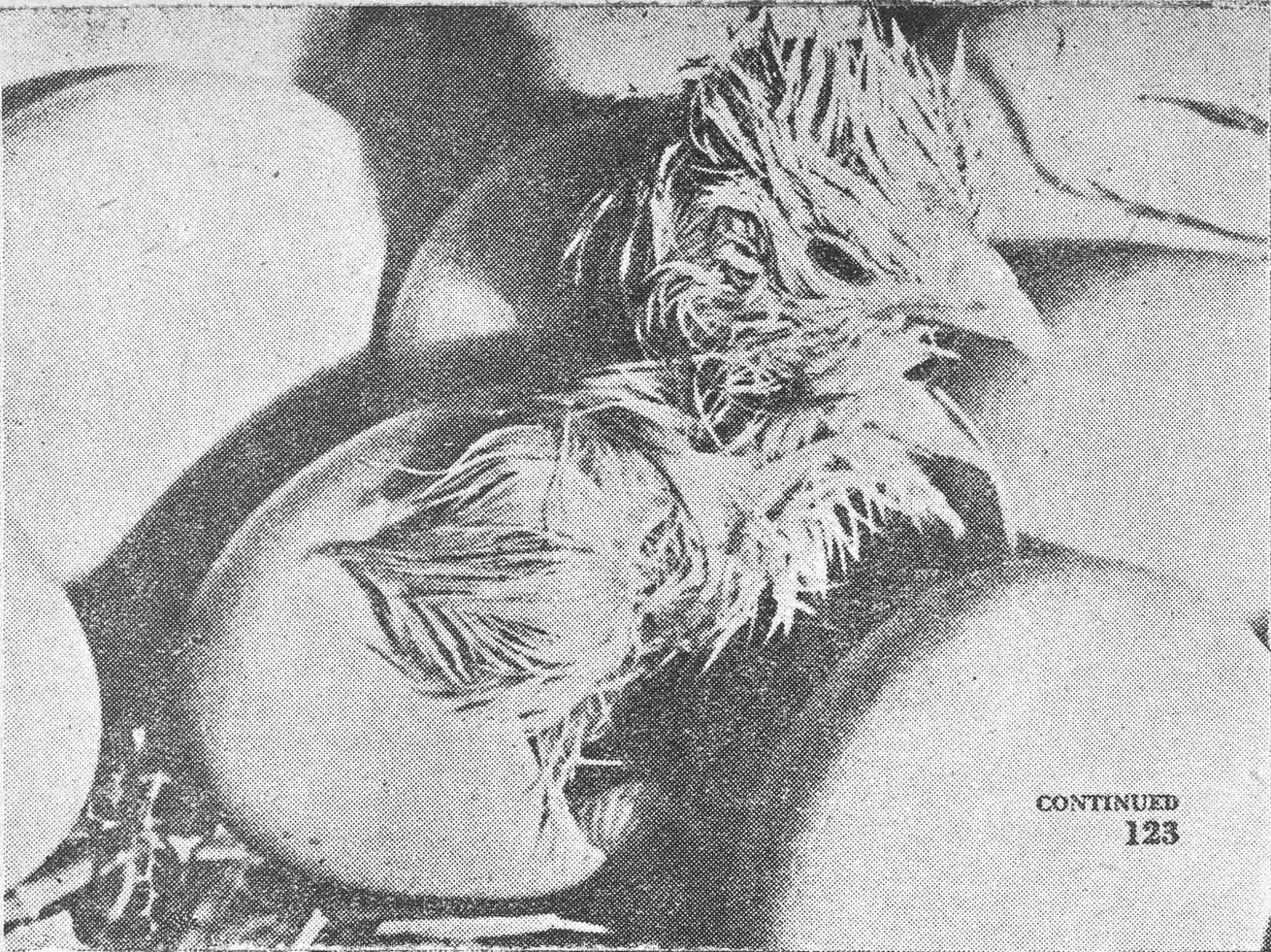
Now you see something new in the thirteenth picture — you see feathers, and this is the chick's wet wing, as it tries to come out of the shell; it dries after two hours.
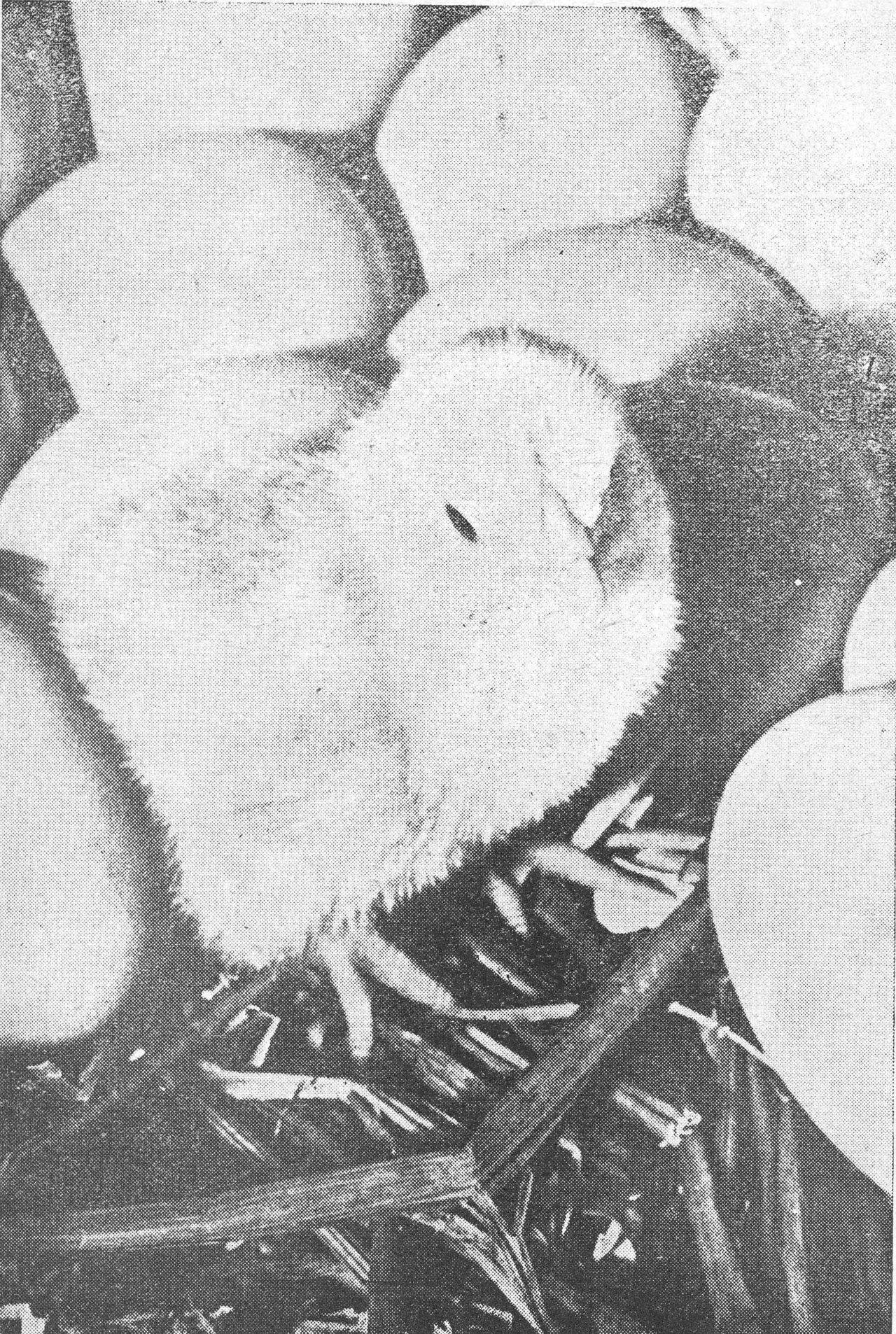
If you were watching in reality, dear child, how the egg becomes a chick, you would hear — instead of seeing, as in the fourteenth picture — the peeping of the chick announcing its arrival into the world!!
So look at it well: how it became a beautiful chick, after having been an egg!!
13
14