The Activity of the Syrian Woman During the Month of December
1 – The Syrian woman took part in the work and activity of the Social Studies Seminar of the Arab States in its third session, which convened in Damascus from December 8 to 20. The subject of this seminar was the means of organizing social solidarity, and the work was distributed among the following committees:
The first committee: research and statistics relating to social solidarity.
The second committee: the effect of economic development on the means of social solidarity.
The third committee: means of financing social-solidarity projects.
The fourth committee: complementary social services, governmental and non-governmental.
The fifth committee: organization and administration.
During the conference the participants visited the following social institutions:
The home for the aged belonging to the Kalima Society and the Salem Institution for Vocational Education, in Aleppo; the charitable home of the Special Governorate and the observation center belonging to the Juvenile Protection Society; the center of the Milk Drop Society; and the social center belonging to the Near East Foundation.
• The Syrian Arts Society presented an exhibition of oil paintings by the famous Yugoslav artist Mirko Putsusha.
This artist Putsusha was born in the city of Gorpic in 1915,
and studied the art of painting in the city of Zagreb, graduating under the famous master Tartaglia Marino. After perfecting his artistic means he devoted himself to depicting the various beautiful scenes of his country. Some months ago he came to Syria and Lebanon as a visitor and was captivated by their enchanting scenery, and among the fruits of this visit of his are some of the canvases on display. Mr. Putsusha pursues in his pictorial style all that is new; he does not adopt a single method, but strives always toward creation and perfection. Among the features of his art are an interest in light and a care for colors, quiet shadows, and forms. He is a realist artist, not extreme, far from the tendencies of the excessive, and close to the moderates and the conservatives in art.
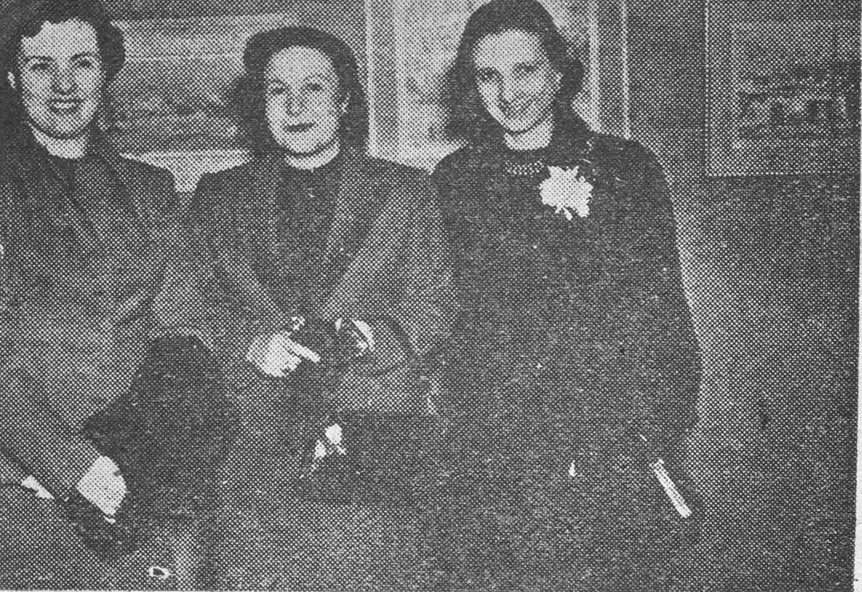
From the right: Miss Inaya Ramzi, then Mrs. Malak Diab al-Dassouki, then Mrs. Saadeh Kahhaleh; behind them appear the artistic canvases of the painter Putsusha.
This artist has admired our country, its brilliant sun and its vivid colors, as he has admired the generosity of its people and their fine hospitality.
It is expected that this artist will come to Beirut and present another exhibition there, in his certainty that art is an ideal means of drawing peoples closer together and tightening the bonds of friendship among them, and in the hope that the Lebanese public will find in his works and canvases an artistic pleasure and a message borne by Yugoslav art to the Lebanese.
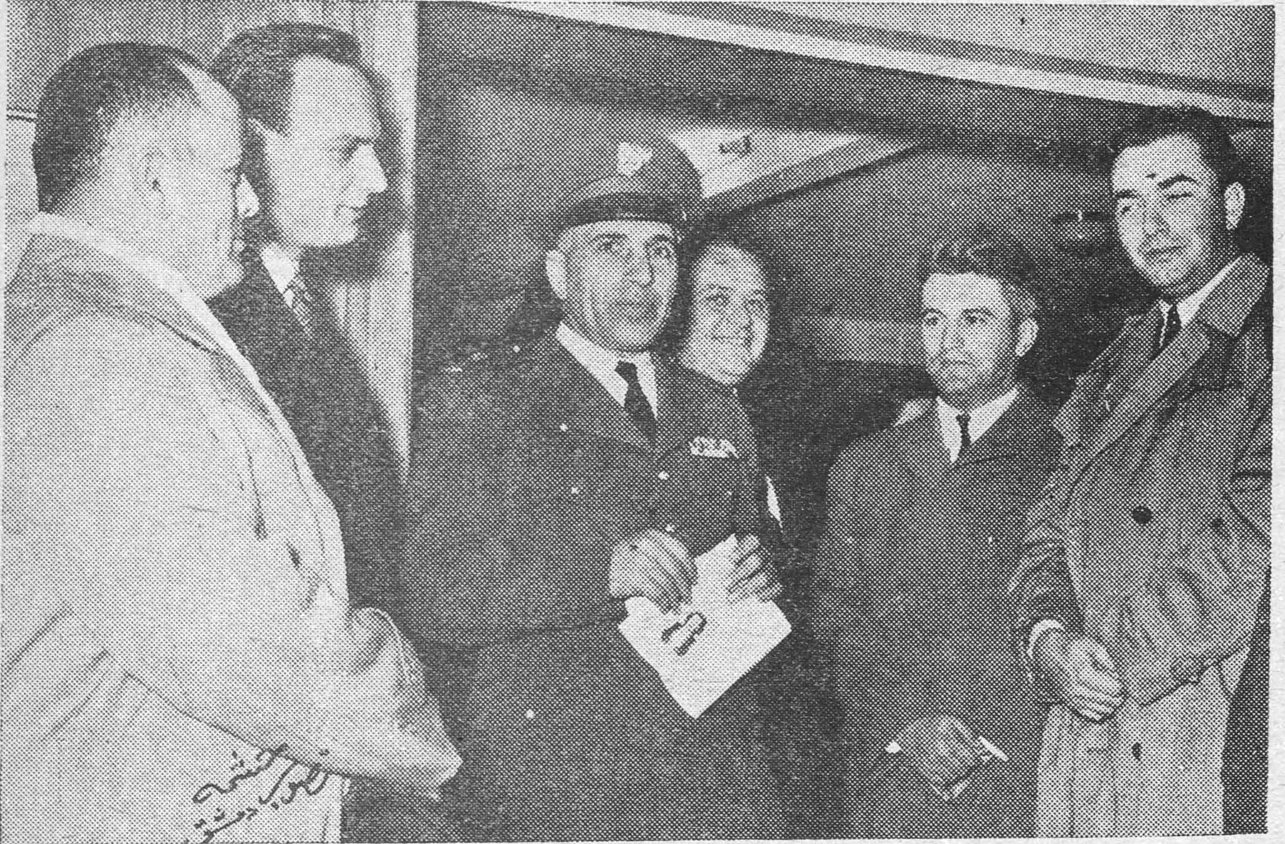
Colonel Adib al-Shishakli at the exhibition of the Yugoslav artist Mirko Putsusha; on his right, the Minister of Yugoslavia, then the artist Wardi; on his left, the artist Putsusha, then two members of the Yugoslav press delegation.