
3
When we furnish our homes, we take the furniture and its accessories and the colors, and compose from them a whole in which the soul finds rest, both to the eye and to the feeling. But how can we judge the beauty of a given set of furniture? And how can we determine whether one piece is in proportion with another? A knowledge of the basic elements of beauty resolves these questions and makes us able to appraise at its true worth a table, a sofa, or a chair. When
a room strikes you as natural and comfortable, you can be certain that it is well arranged, following the rules of scale, balance, and proportion. Proportion is a matter of contrasting sizes and shapes, and a matter of distribution. We want to secure in our homes a cheerful proportion; we want each piece by itself to be beautiful and attractive in size and shape; we want each piece to be in harmony with the others; and we want, too, to distribute the furnishings in the rooms and arrange them so that they form a pleasant, attractive group.
Fortunately, we are all blessed with an eye that distinguishes things and relates them to one another. Usually, however elementary our knowledge, we feel instinctively whether the furniture is in proportion, and our eye afterward confirms this feeling by the method of comparison with the neighboring sizes and shapes. A small lampshade on a massive base or column is like a tiny hat on the head of a stout lady. Proportion, then, is the bond among the members of a single body: it makes the relation of shapes to one
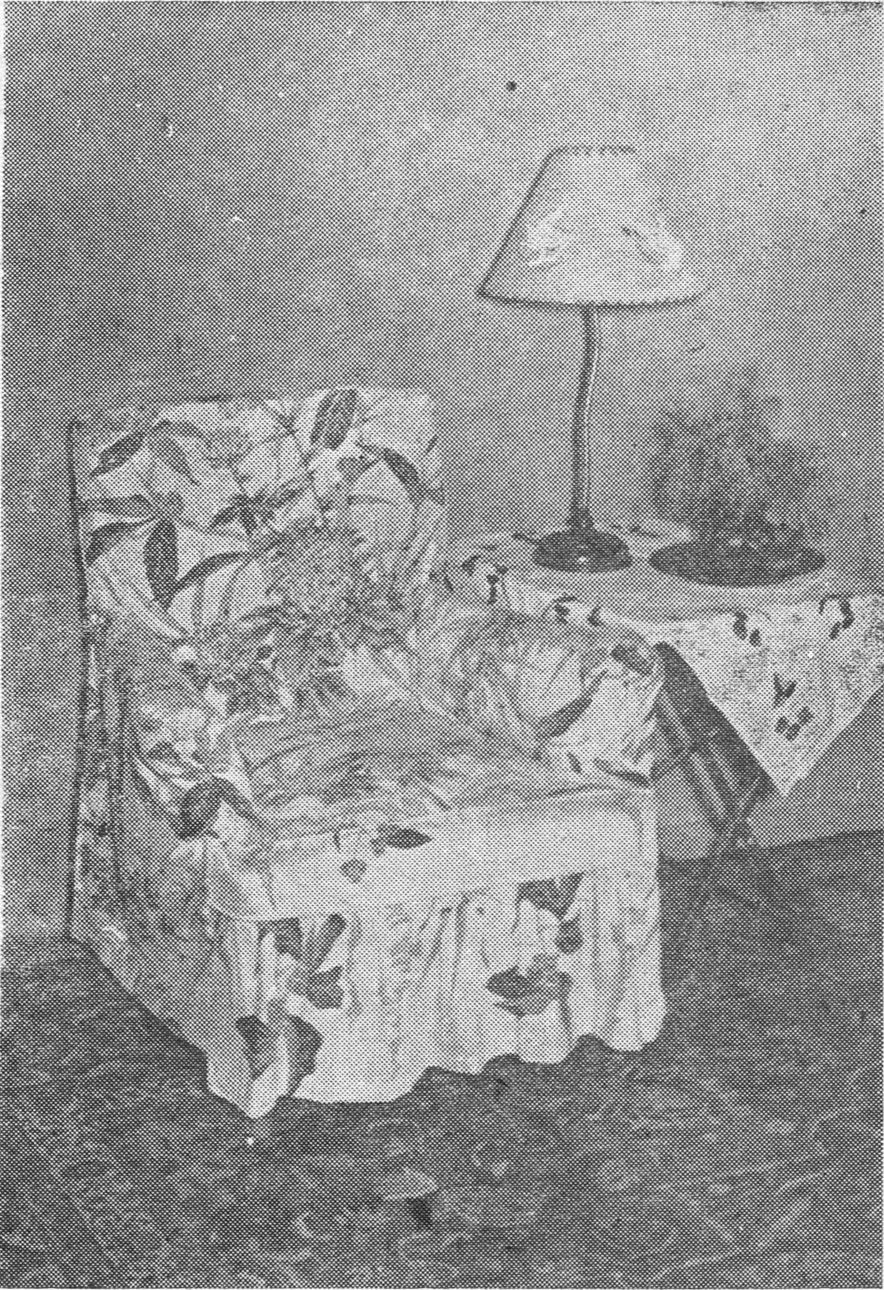
1 — Scale and proportion
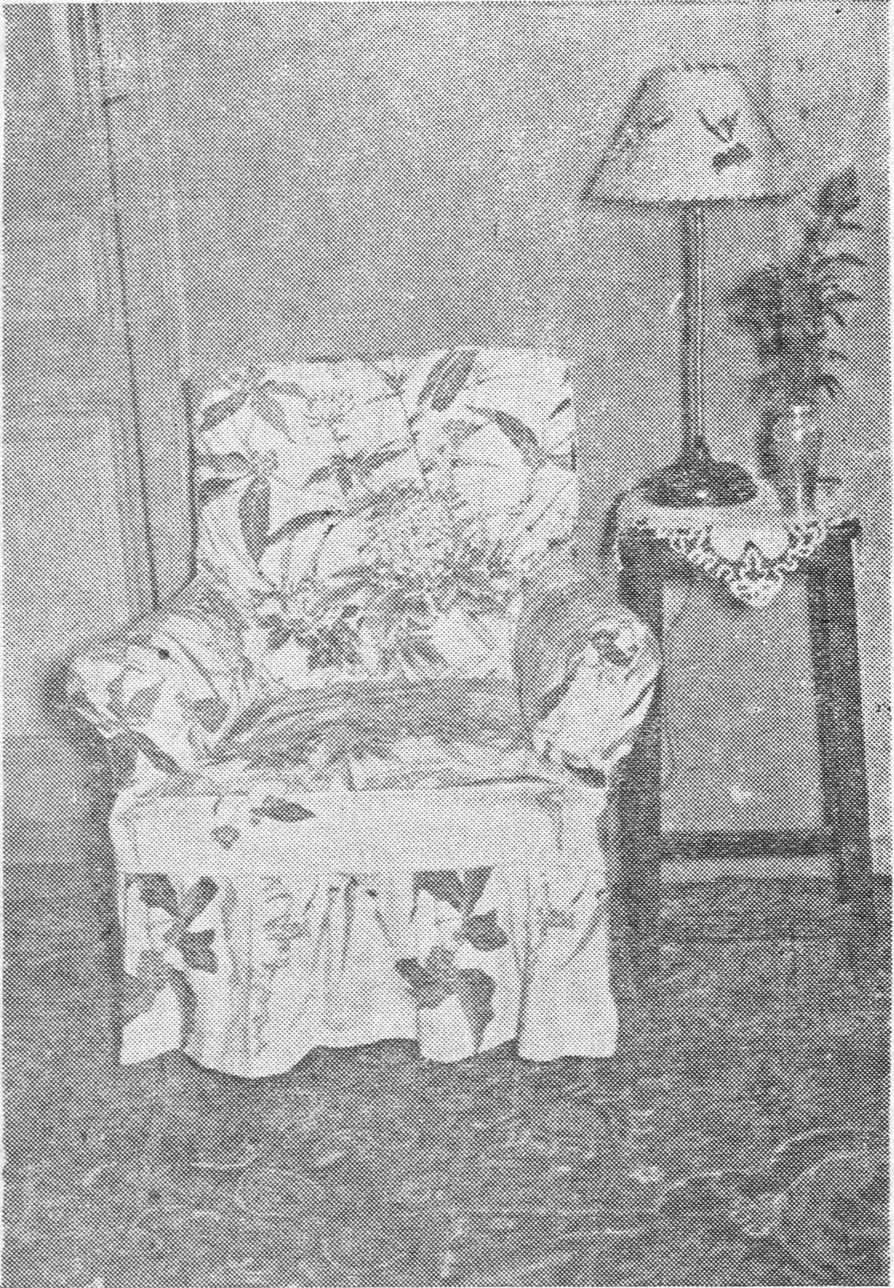
2 — Lack of proportion
When we bring together a variety of shapes, they compose either an attractive group, as appears in picture No. (1), or an unpleasing group — which is what we try to avoid — as in picture No. (2).