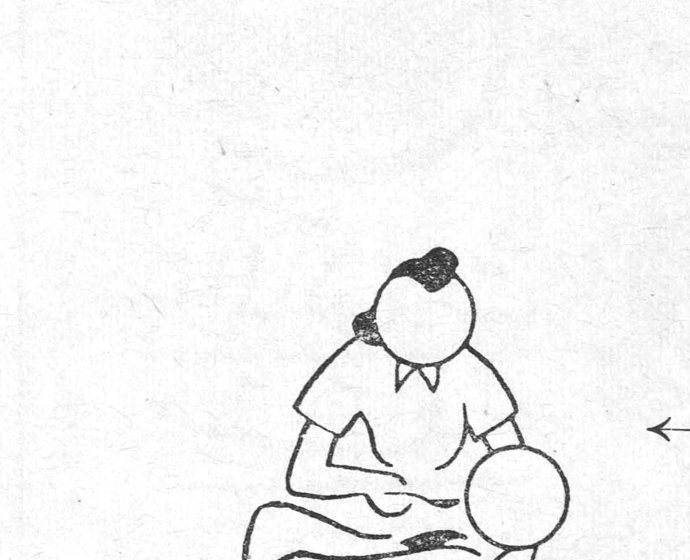
It is easier to relieve shock as far as possible at the outset than to treat it after the condition has grown worse. As for the causes of shock, they may lie in the failure of a sufficient quantity of blood to reach the brain and the heart. You must therefore stimulate the flow of blood to them. To perform this service, have the injured person lie down on a bed and cover him so that he stays warm. If he is lying in a cold place, try to slip a newspaper, a wool blanket, or some garment under him. Do your utmost not to disturb him more than is necessary. And cover him with covering enough to keep him warm, for that is what matters.
Do not try to pour any liquid down the throat of an unconscious person. If he is conscious, do not give him anything to drink if the doctor's coming is near; but if he is delayed some hours in coming, and the patient asks for water and insists upon it, it is well to give him a cup of coffee or tea as hot as he can bear, and let it be given with a spoon.
Shock appears at once from the harm that befalls a person, and fear makes it worse. Try your utmost to assure the suffering person that there is nothing to fear, and that nothing will happen if he waits patiently for the doctor's coming; and do not let him stare at the painful spot, for that increases the shock.
You must always assume infection
If a person's skin is wounded, cut, or torn, the entry of some germ into the wound is a certainty. The germ may produce a harmless discharge (or pus) on the surface of the wound; but when the pus spreads to beneath the skin, the germ can become harmful.
And although it is certain that some germs enter the wound, they nevertheless do not cause inflammation, and for two rea
sons. The first is that the blood flowing from the wound washes away some of the germs that have taken hold of it, and the healthy body has the strength to resist them. Your task is to make sure the wound is not soiled by any unclean matter, and you must stop the bleeding if it is heavy. But if you attempt to treat the wound yourself, you add further difficulty to the doctor's handling of it.
If the bleeding is not heavy
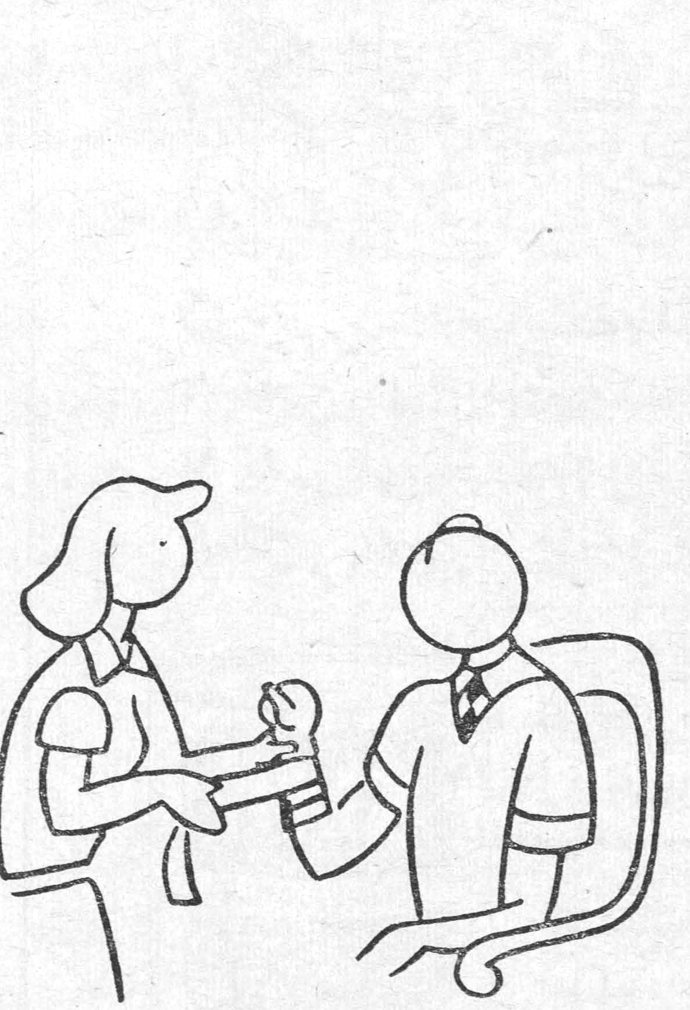
If the wound you are asked to attend to is bleeding freely, keep away from it every cloth that might touch it. Then cover the whole area of the wound with sterile gauze — and if no gauze is at hand, cover it with an ironed handkerchief — and simply bind it. Do not touch the wound with your finger, and do not let the wounded person touch it.
If the wound needs cleaning, it must be treated in a hospital, where all the necessary instruments are sterilized and at hand. And if you wish to help him, you must cover the wound with sterile gauze, the bandage being not tight but easy.
If the bleeding is heavy
If the wound is bleeding forcefully, you must first of all press directly upon the course of the blood, for severe bleeding is dangerous in proportion to the quantity lost. Remove the clothing from the wound so that you can see it fully. Keep away from it everything that might touch it; then cover it with a thick pad of sterile gauze, if any is at hand, or an ironed handkerchief, and press upon it firmly. Do not attempt to use an antiseptic or anything else — cover it and press. If the bleeding stops under the pressure of the hand, binding may be dispensed with until the doctor arrives.
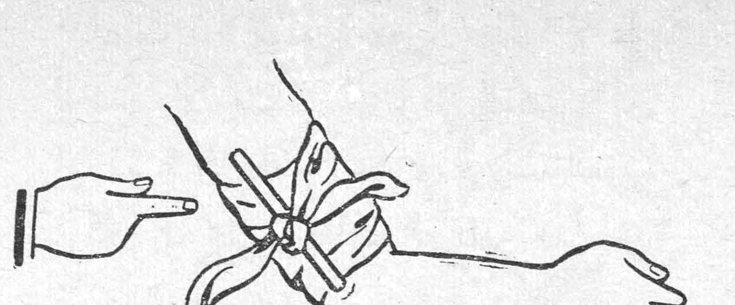
When an artery is cut and the blood runs in a regular gush,
The knotted band for stopping bleeding