Man demands, without being aware of it, that certain fundamental principles be applied in the ordering of the home's furnishing. And these principles are so utterly simple that when a person applies them he cannot account for the reasons of his pleasure; but when they are violated, one feels a kind of disappointment that he finds hard to explain. When a person enters a room most of whose furniture is massed on one side, it appears to him as though it were about to topple in the direction of that furniture's weight; he feels a certain inner uneasiness and wishes that the balance the eye demands might come about. The success of every design, whatever its kind, rests to a great degree on the correct balance among its parts. And balance is nothing but repose and stability. It is fundamental in all the visual arts and in life itself. This feeling of balance you obtain by ordering and arranging material, shapes, and colors around the central point, so that the attraction is equal in every direction in relation to the center.
The small boy can balance things if he knows that balance is the basis of the game of the seesaw. Thus things equal in weight must stand at the same distance from the center in order to balance.
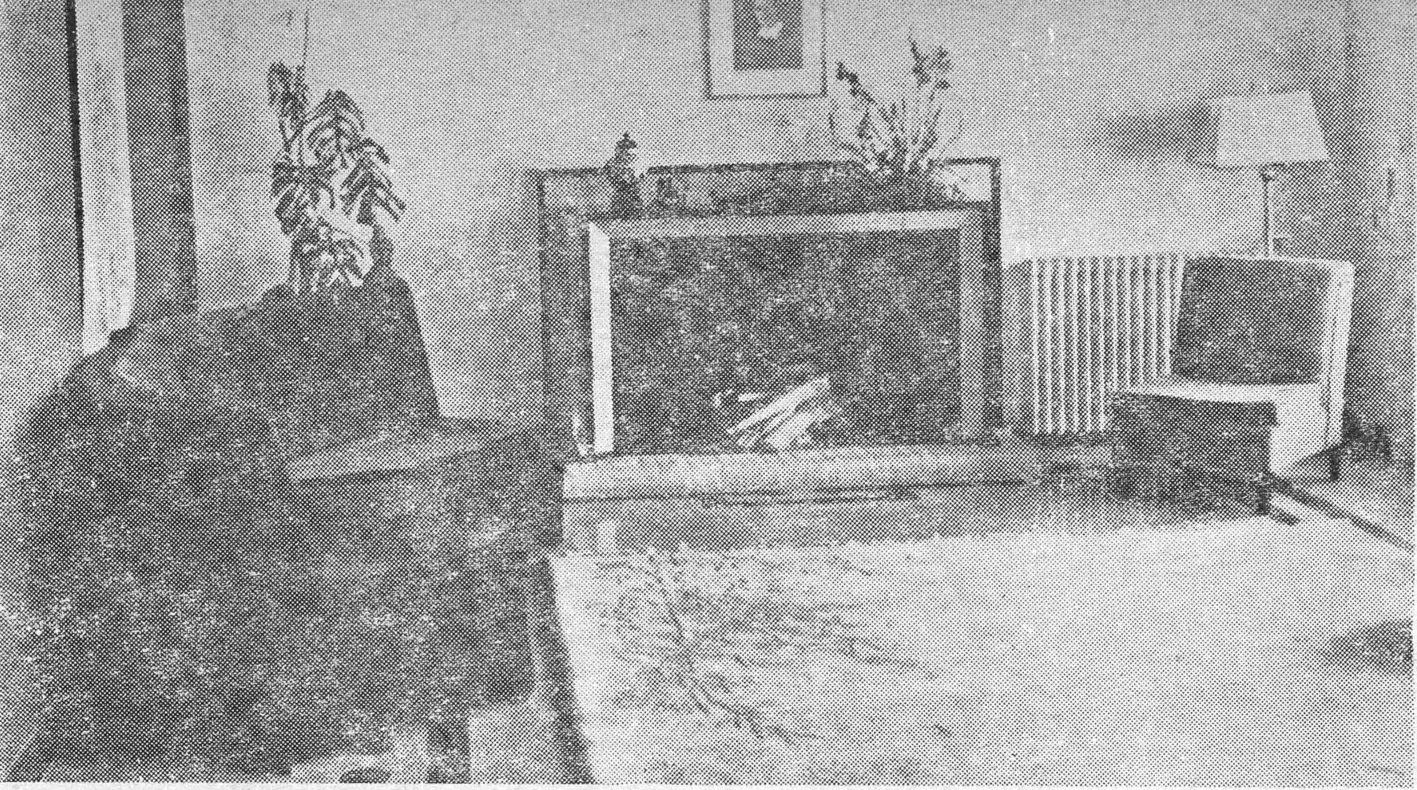
1 - In this picture you see that the pieces of furniture on either side of the fireplace differ in size, shape, and color, yet they draw the eye equally because of their balance. Look at the decoration of the fireplace, in which unlike objects have been used — but objects having the same power of attraction.
"Photographs — the photographer Chris"
With objects of different sizes, the heavier must come near the center and the light one move away from it. Balance in art is explained by the same theory, the one difference being that the question is not merely a question of the weight or heaviness of the object, but a question of the attracting power that the object possesses. Thus the greater a thing's power, the nearer it must come to the center — and the reverse likewise!
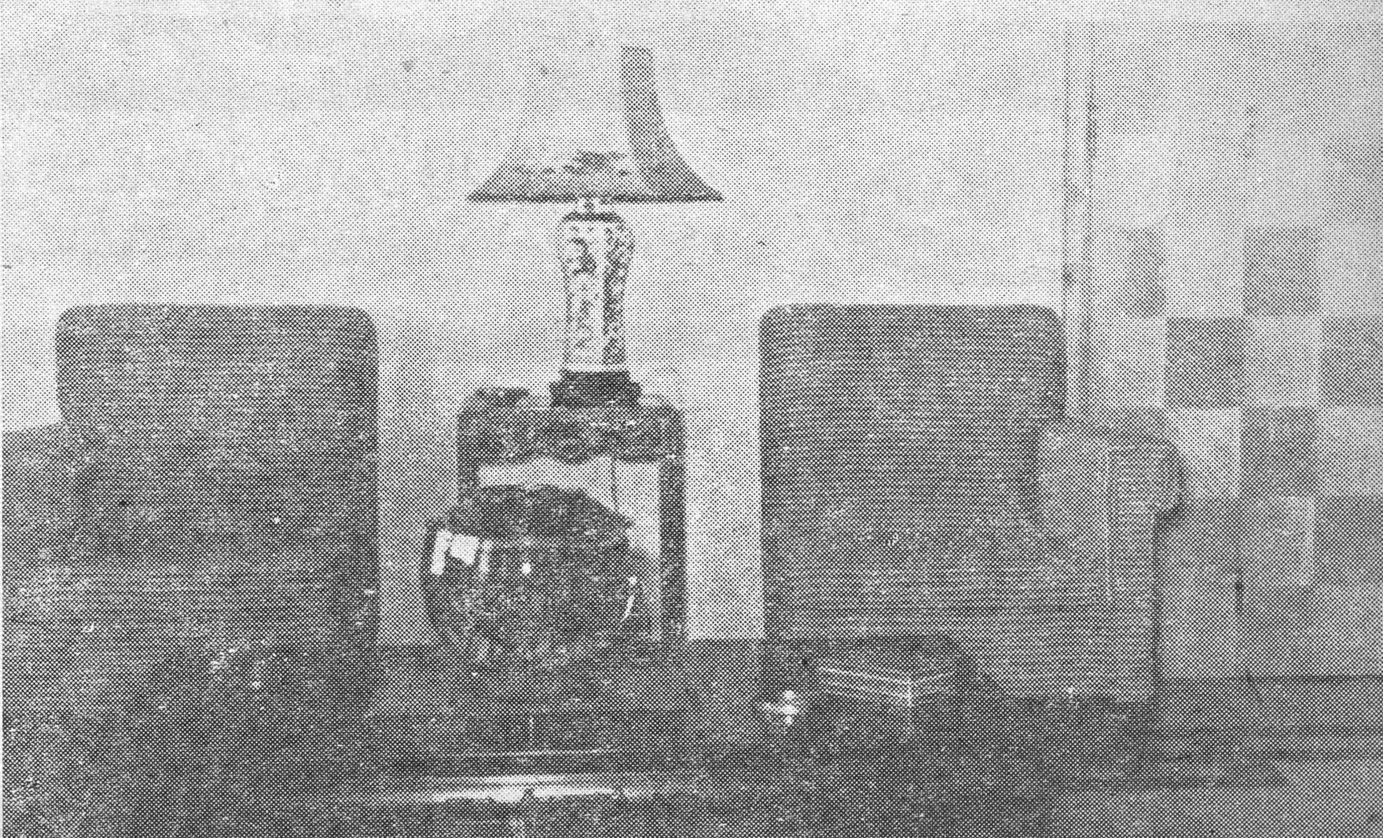
There are two kinds of arrangement, madam, into which you can introduce balance. In the first kind, the objects are either exactly alike or have the same power, and they are placed on opposite sides and at the same distance from the center. This kind is called 'formal balance' — it
2 - This picture shows formal balance.