being called identical balance when the objects are wholly alike. In the second kind of arrangement, the objects differ
in size, shape, or color — that is, they differ in their power of drawing the eye — and they are placed at differing distances from the center, so that the large size near the center is counterbalanced by the small size farther away. This kind of unsymmetrical balance is called 'informal balance.'
Among the merits of formal balance are calm, dignity, and stateliness; but it is mechanical. Whereas the balancing of things that differ in attracting power is more subtle and skillful, and opens for us many doors to original arrangements. The informal is more creative than the formal, because it is not bound by rules and laws to govern its execution. But the use of the second variety of formal balance — that is, when the objects used are not alike but have the same power — gives the room a special character standing between the precision of identical balance and the variety of informal balance. So the kind of balance you use inside the house helps to confirm the psychological effects you like to create. Formal balance in the arrangement of a room's furnishings creates in the beholder's soul a formal atmosphere, and this atmosphere is not usually wanted in the small or simple room, or in a place meant for gaiety rather than for formalities. The informal arrangement is on the whole more friendly, more intimate, and more varied.
If you want to have a balanced room, take care that the facing walls have approximately the same attracting power. The architectural openings in the room have their importance, and you must take them fully into account.
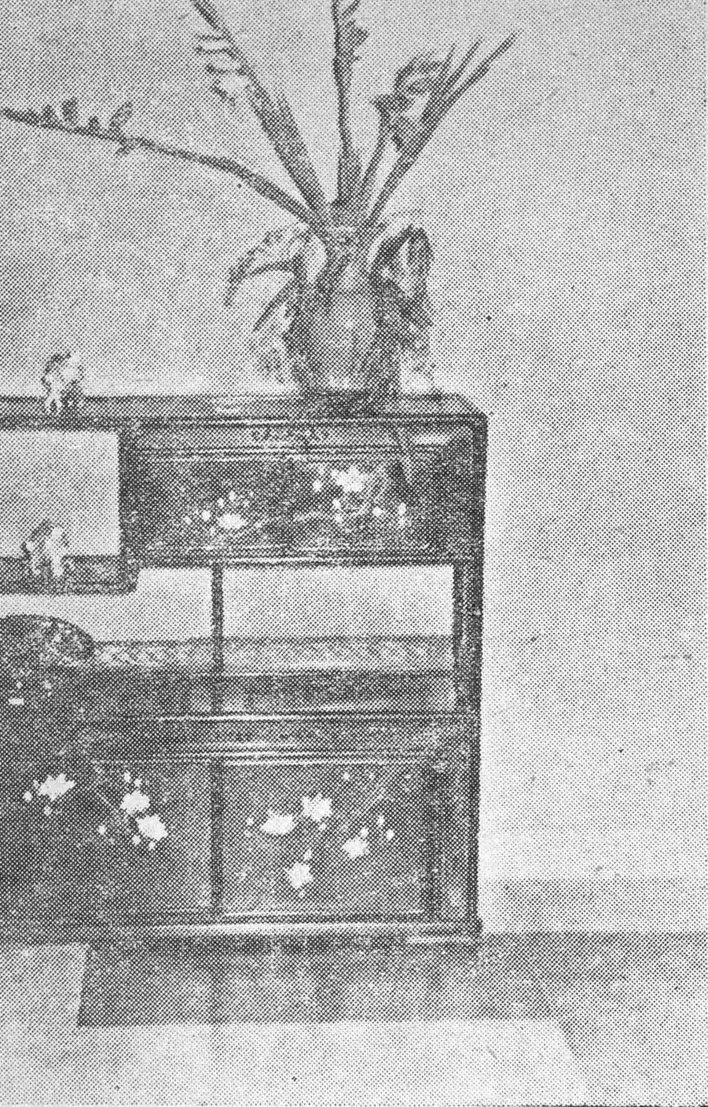
4 — This Japanese cabinet represents informal balance in all its beauty. Notice the arrangement of the flower vase, the small statuettes, and the soft lamps, and how they all preserve this beautiful balance.
Most often you can bring about balance by placing a large piece of furniture against the wall that answers to an opening in the facing wall. Remember, in arranging any room, that the large pieces of furniture are set in their places first; after them come the small, easily moved pieces, out of which groups are formed, balanced one with another. And the balance of colors has great importance in beautifying the house; it is very often used to add power to the weak corner of the room.
And for the arrangements to inspire an inward pleasure, you must use shapes and colors in the way that has the restful effect upon the eye. This restful effect, or balance, you can obtain if, in arranging sizes, shapes, colors, and material, you follow what has been said above.
*
Note — The photographs used to illustrate this study were taken in the home of Mr. Farnsworth, head of the Education Division of Point Four, which is a model of balance and beauty.
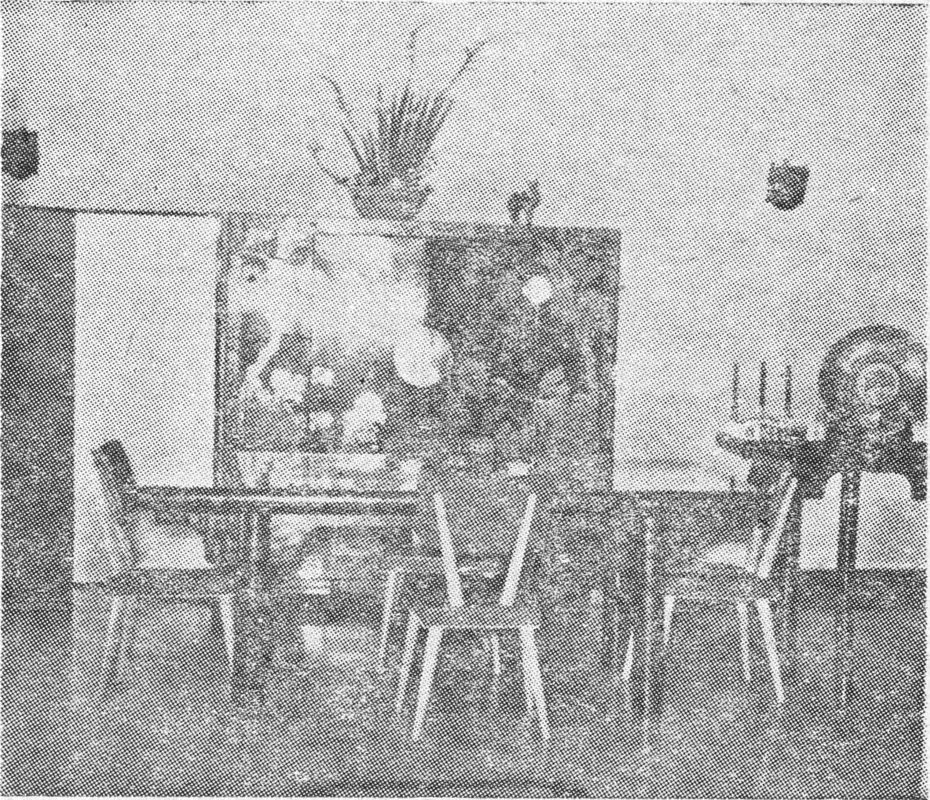
3 — In this dining room the two kinds of balance have been combined with art. The china plate on the small table has been set near the center, while the candlestick is farther from it. And this same table has been moved away from the cabinet, while the curtain has been brought near. Notice also the two matching faces which have been placed at the same distance from the cabinet.