
.. There, at one of the bends of Bishop Street in Tripoli, stands a modest building from whose shuttered windows plaintive melodies drift, rising violent at one moment and sinking soft at another. You hear them when you rise in the morning, and you hear them when evening comes; they lull the strings of your heart when you take to your bed late; and on certain stormy nights they pierce the walls to wake you from your sleep in the last watch of the night, as though, say, to disguise the pitch-black night for you, so that you listen to them without vexation or complaint; and before long they carry you, willing or not, on their soaring wings to distant worlds of thought — thought of love, of goodness, and of peace — until, when they bring you back from your roving, you are other than the one you were, and you hold views and theories of life which, but for these melodies, you would never have held in your wearied world.
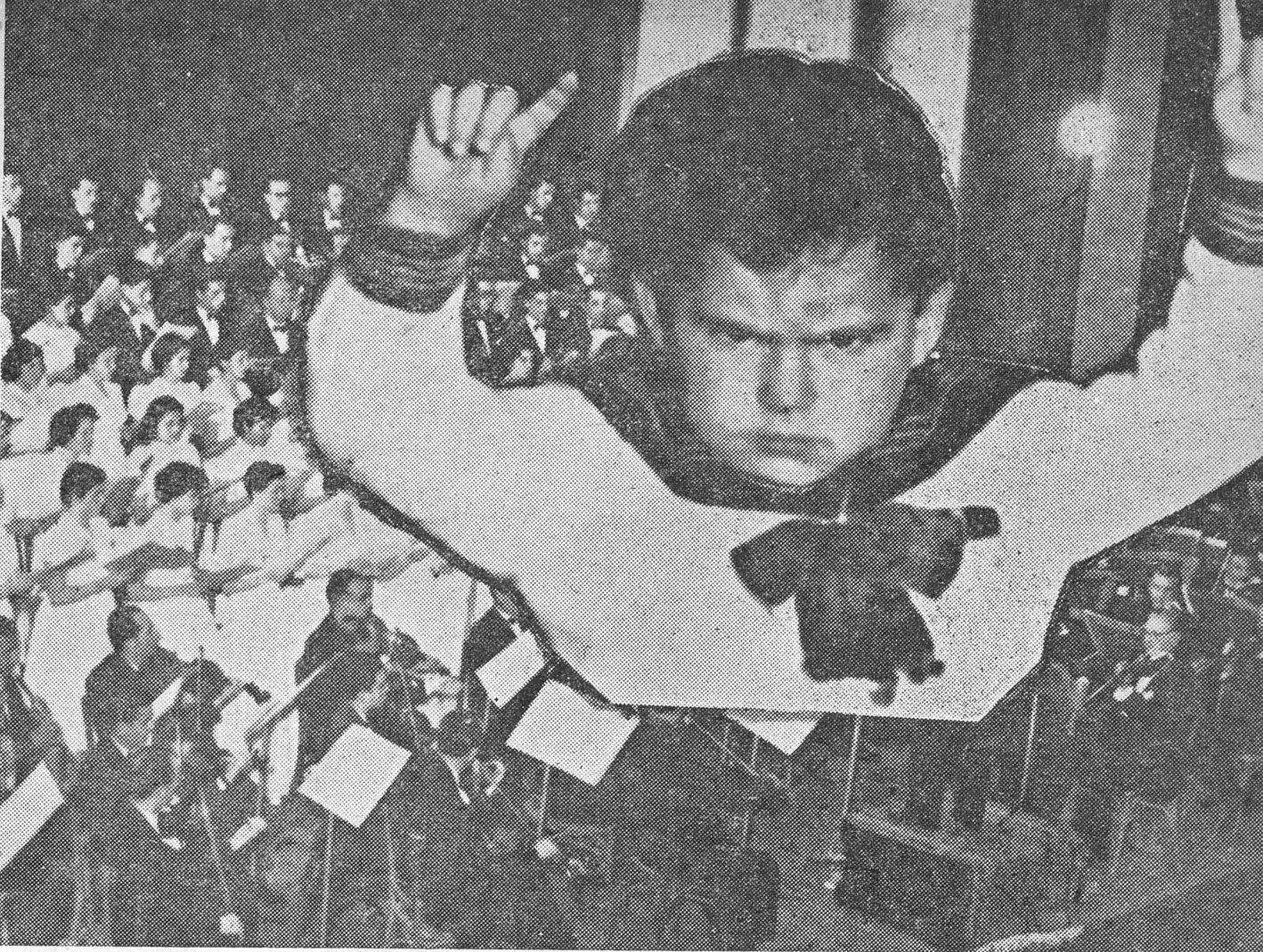
In this building, where classical music lives its free, unfettered life, there also lives a child not yet past his fourth year, whose whole concern in life is to listen to it, absorbed and pensive, until, when the artist's tremor seizes him, he rushes to his baton, snatches it up, and begins raising it and bringing it down — now deliberate and tender, his gaze reverent, now stormy and violent, sparks all but flying from his blazing eyes — and he remains so for long hours, coming to himself afterward only when he lies sprawled on his bed, overtaken by a doze of slumber after effort and toil.
His parents never knew how or when he came to love music. What they did know is that on one scorching summer day, when he was then a year and a few months old, he began to cry for no reason — as they first believed; but the insistent fit of crying showed her that this child of a year
and a few months was asking her to replay the "Beethoven" record, and no sooner had they replayed the clamorous melody than the child's face brightened and he stopped crying. Each time the record ended he pressed for it to be played again, and so on until listening exhausted him and he sank into a deep sleep, from which he awoke to a new stage of his artistic life. His father, an amateur with a keen ear, began to run his experiments on him — and behold, he was a musician, and what a musician! He has an ear of delicate sensitivity that never errs in understanding melodies, whatever their kind. He hates dance tunes such as the "samba" and the "rumba," and likewise hates Eastern music and will not consent to listen to it under any circumstances; and he loves classical music to a strange degree that lets him listen to it for long hours without wearying or tiring, no shadow of children's boredom veiling his eyes. He has his own expressions about music: if he wants a particular record — "Nitcher," for example — he says: put on for me the one that begins strong, like this — and he points his baton high; or for "Bach" he says: no, the one that begins as though it were a drizzle of rain falling slowly upon the earth. As for "Beethoven," he holds the loftiest place with him: he loves him more than his own parents. He has hung his picture in the family's small salon above the radio, and as he gazes at it you feel as though all the powers of the earth had gathered to burst from between his lips and say to him: I love you!
If you saw him for the first time you would realize that he is a genuine maestro wrapped in the mantle of a singular child, and you would know that he is so self-assured that he fairly extracts from you the address "Maestro."
What ordinarily tempts children — caresses, or calls, or sweets — does not tempt him; what