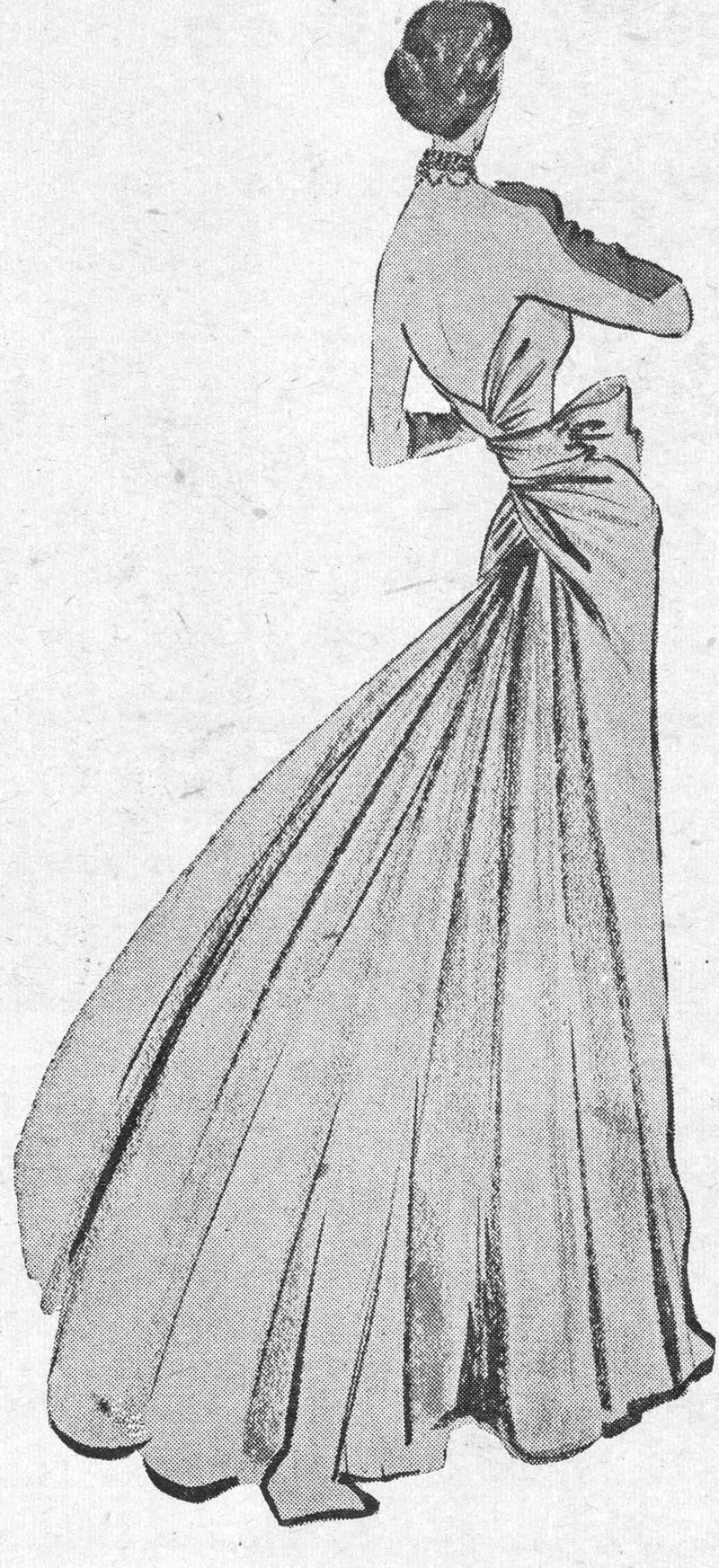
from the bosom to the back, and this spring the lady covers her neck and bosom right up to the top, leaving to her back alone the freedom of liberation and release. As for dress sleeves, they are disappearing little by little, and where they do appear they are short, and sometimes gathered in the peasant manner.
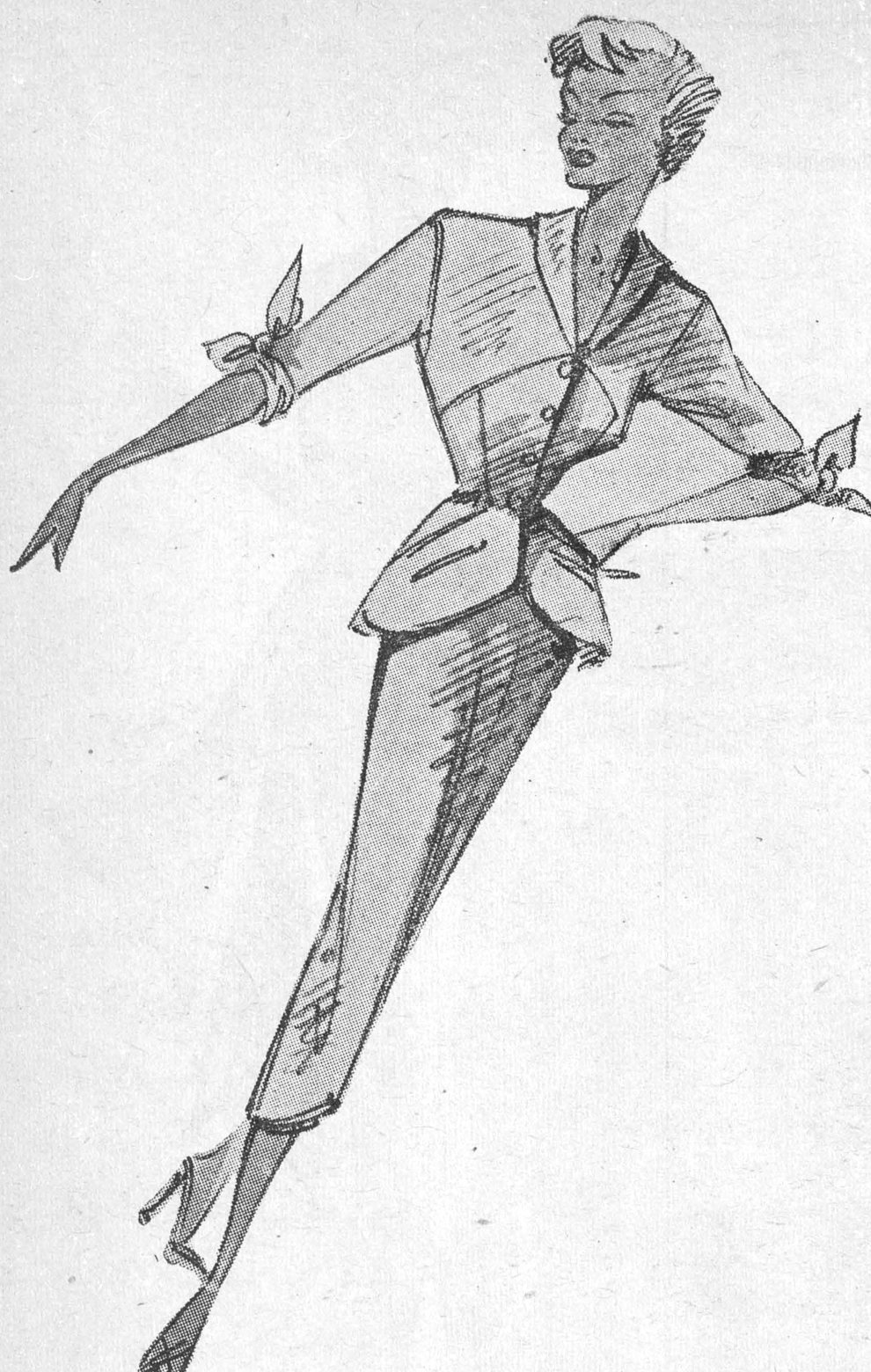
The tailleur: Dior, the greatest designer of Parisian fashions, insists that last winter's tailleur keep most of its principal lines, with the addition of pockets, darts, tabs, and similar extras; the sleeves and tabs are short.
The tailleur and the coat have special cuts — the sleeves are mostly japonais, or what is called kimono; the redingote, like the dress, is generally made of tweed or alpaga; and likewise the ensemble, composed of jacket and dress,
A tailleur of white linen, a creation of Carven
is made up in black-and-white alpaga, with the décolleté always at the back, while the front cut is closed high up.
On coats and tailleurs one notices corolle collars — clusters of cuts that take the shape of a fan... Tailleur sleeves are three-quarter, that is, reaching below the elbow... Buttons on coats have grown fewer, the pockets are hidden, and this spring the elegant lady will carry in the pocket of her tailleur a handkerchief stamped with the couturier's signature!
Evening gowns: In evening gowns there is an abundance of tulle, mousseline, and organdy, and sometimes veined linen, taffeta, the silk known as soie sauvage, and finally velvet.
As for the new fabrics, silky wool and woolen silk are plentiful, besides the fabrics already mentioned; cotton fabrics, too, have returned to take their former first place.
The spring colors: Black is still the king of colors without a rival; in second place come lead gray, wheaten beige,
An evening gown by Monheim, made of soie sauvage and black linen