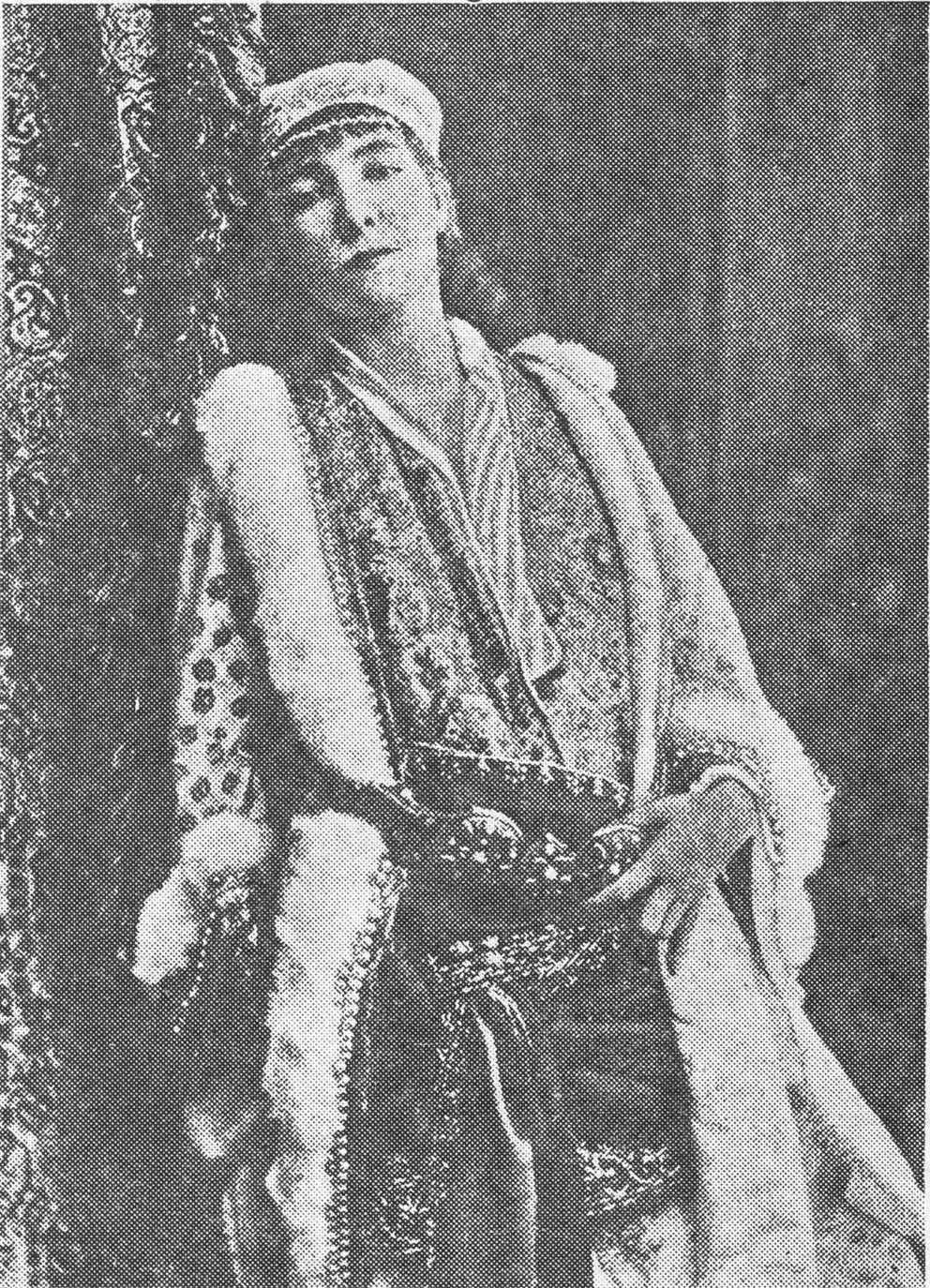
After the death of Sarah Bernhardt, Maurice Baring wrote: the greatest statues of the world, the most astonishing wonders of beauty on earth, the noblest things artistic genius has produced, are nothing but shattered fragments borne along on the millstream of time; and to them is added today a flower that withered a while ago — namely, "Sarah Bernhardt."
Sarah had passed seventy, and was a helpless, crippled woman, when this English man of letters wrote of her, voicing his deep regret and profound sorrow at her departure from the stage of life. She was a historical accident, a patent set upon the emptiness within her, a striking figure, resolute and managing, laying down with her own hands the designs of the rules of her life. She dominated the European stage in all
its phases throughout her working life — successful at one time, failing at another. It is known that only in this period she was baptized in the Catholic Church and entered the convent, which before long expelled her. And how should the likes of Sarah settle down in a convent!
A short while afterward she studied the art of drawing, and won the first prize for some of her work at the Columbia school of arts. But the Duc de Morny, a friend of her mother's, advised her to enter the "Conservatoire." It is related that at the entrance examination she read some pieces of "La Fontaine," whereupon one member of the examining committee cried out: "This girl has a voice of gold" — and the
world thereafter was not to contradict that saying.
Sarah was of a difficult, stubborn temper during her first years at the Comédie Française, and failed in many of her undertakings. In this same period she loved — and it was perhaps her first love — a Belgian aristocrat, the Prince "Henri de Ligne," and bore him a child whom she called Maurice. Here begins her earnest struggle and striving in life, for the sake of her son's livelihood. In 1869, before she had reached twenty-five, she acted in François Coppée's play "Le Passant" at the "Odéon" theater, and gained extraordinary fame in a single night. This was surely the happiest period of her life: she was young in years, gay, wrapped about with esteem and vitality, and she had lifted the veil from her artistic genius; and
what added to her happiness was her son, whom she loved with all her being — though he did not distract her from her love of "Pierre Berton." In 1870 she threw herself into supporting every current that worked to fight Prussia; she was ardent for her nation and her homeland — so much so that she reached old age before they could persuade her to visit Germany. When the siege closed around Paris, the "Odéon" theater was made a hospital, and Sarah Bernhardt was a nurse in that stretch of time. What further spread her name upon the lips of every European was her acting in Victor Hugo's play "Ruy Blas," and her return to act at the Comédie Française, opposite the great "Mounet-Sully." She was likewise known for
Sarah Bernhardt