On my way back to Lebanon, as the airplane bore us through the vast open sky, I was going over the short days, so full of events, that we had spent in London... How beautiful are the memories I keep of them.
The Queen's guests were the object of the care and attention of the personalities charged with guiding them and easing their movements, and these personalities showed the utmost graciousness and tact. We personally (we members of the Lebanese delegation) offered them our deep thanks for the signal services they rendered us in smoothing our stay.
As for the feeling that coronation day stirred in our souls, it was a feeling of power and grandeur; and it also stirred in us something of deep reverence.
The foul weather, the rains, and the freezing cold did not prevent millions of people from keeping places for themselves on the sidewalks from the evening of the day before the coronation.
We crossed the city at five o'clock on the morning of that day. From that early hour the whole city was already awake, and we watched with great admiration all these people waiting for the procession — some with their oilskins, some with their umbrellas, and others spreading out newspapers to lay on them the food they had prepared the day before. All of them — young and old, women and children — were making tremendous efforts to keep their places on the sidewalks so that they might see well the scenes of the festival
and the passing of their beloved Queen. I knew of young men and girls who spent 27 hours in the rain so as not to miss any of the pomp of the royal procession.
But the Queen did
not take her place in her gilded carriage until 10:26, as laid down in the program. This carriage was drawn by eight horses, mounted and escorted by horsemen of the guard in their beautiful ceremonial dress.
As for the royal guard in their sumptuous uniforms, they marched along the two sides of the route, their red coats mingling with the colors of the geranium flowers — red, they too — stretched along both edges of the road as well.
The procession began to extend along the avenue from eight in the morning, made up of contingents of sailors, army, and air force, and of the carriages carrying the official personalities and the princes of the royal family.
After the Queen left Buckingham Palace at 10:26, she arrived at Westminster Abbey at exactly eleven o'clock, having passed through the decorated streets and answered the cheers of the massed crowds.
As for the coronation ceremony, which was of the utmost solemnity, it
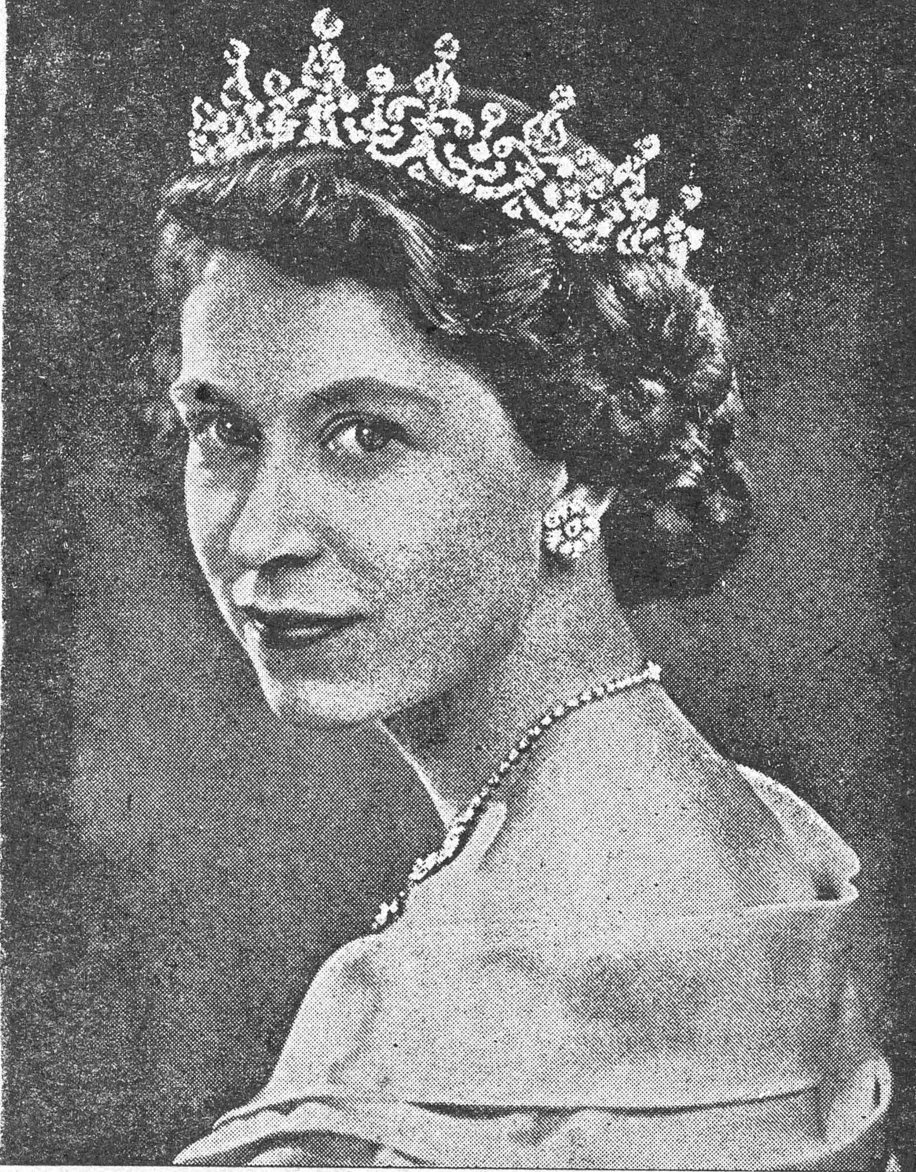
was transmitted to the whole of England, to Europe, and to the United States by television; the Queen's movements and words were carried in the very same minute to all quarters of the inhabited world. Thus the world was able to see the Queen swear the oath in all reverence and emotion, receive the holy oil and the insignia of royalty, and receive the homage of the prelate who set the crown upon her head, and the homage of her hus
band and of the princes of the royal families.
At the moment the crown was set upon the Queen's head, the sound of cymbals and the voice of the choristers' anthems rang through the abbey, and the guardians of the throne placed upon their heads the coronets their pages had been carrying on cushions of silk. There were 7,500 persons in the abbey seeing these historic scenes with their own eyes, just as millions of human beings saw them too by television.