Rumors have been circulating in electoral circles about certain women's names that will be the vanguard of the women candidates for the Chamber...
There is Miss Ibtihaj Kaddoura, president of the General Arab Women's Union and leader of the Lebanese woman, whom the Muslim women's organizations are pressing to stand, and whose position has not been finally settled up to this hour; and Mrs. Laure Tabet, president of the League of Women's Organizations in Lebanon, who has decided against nominating herself and has issued a statement to that effect on the following page; and other ladies besides...
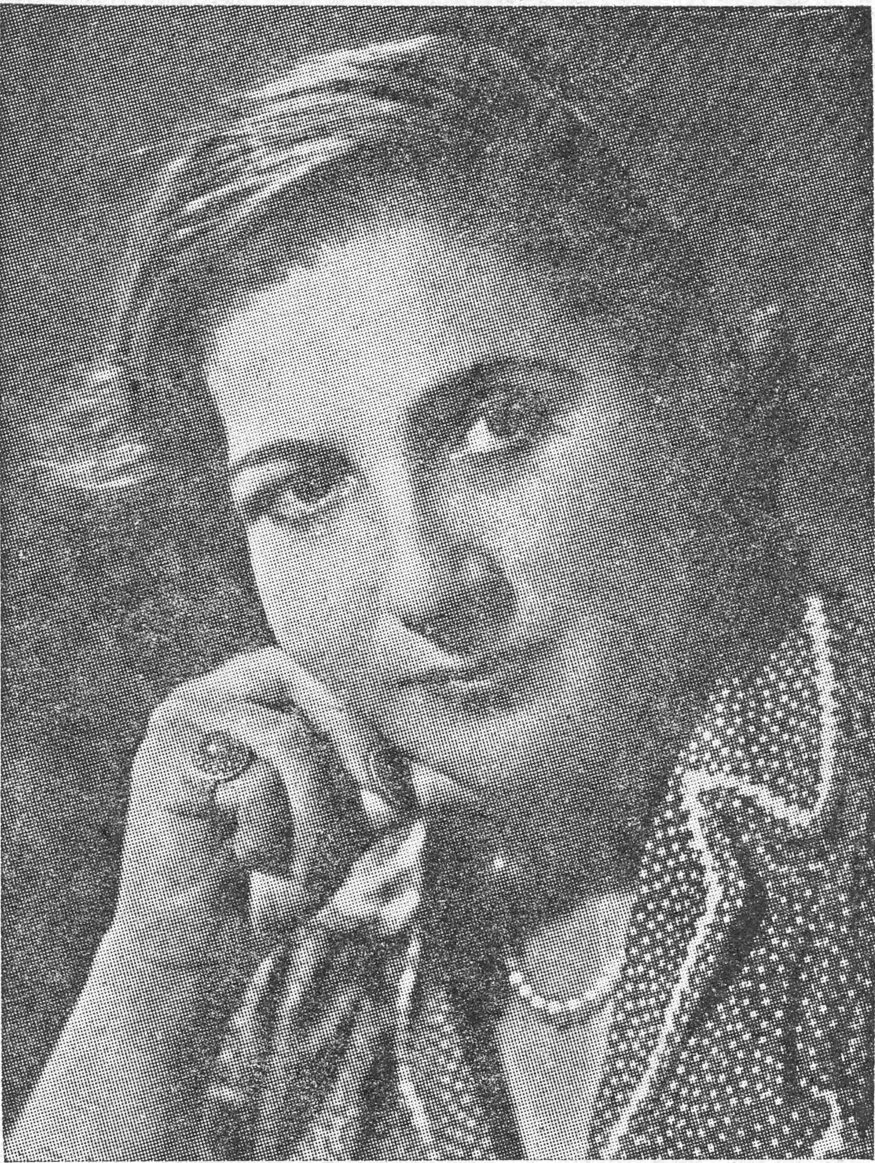
And there is only one lady who has had courage enough to stand firm in the face of the opposing currents and to enter the electoral battle, for the Beqaa: Mrs. Emily Fares Ibrahim.
Contrary to what Mrs. Laure Tabet has decided, I have resolved to enter the electoral battle, because I hold that it is not permissible for woman to be absent from the first of these battles after she has won her rights in full.
I do not say that the matter of my winning or my failing occupies no place of concern in my soul; such a claim would be proof of insincerity and untruth. I very much hope to win — knowing that I consider a seat in the Chamber not an end in itself, but a means of making my voice heard and of serving my country from the rostrum of the Chamber. Yet I see in my failure no calamity or tragedy from which I must run away... Woman's taking part in this privilege is a duty as a matter of principle, like everything else — lest our holding back from taking part in this privilege be understood in the sense of what Mrs. Laure Tabet indicated in her statement on her reasons for not entering the electoral battle: that woman's "preparation has not yet been completed." By acting so, we would be as good as telling the authorities: you were too hasty in giving woman rights for which she has not yet reached a degree of maturity sufficient to make her worthy of exercising them.
In such a position there is a strange contradiction with the efforts woman has expended to wrest these rights; and would that those who send out statements by the light of personal mood or private circumstance understood that pronouncing on public questions requires stepping far outside the narrow bounds of private life.
Has Mrs. Laure Tabet forgotten that she is president of the League of Women's Organizations, and that it is not permissible for her, in such a case, to voice such opinions as she has voiced on the level of the Eastern woman (the Lebanese among them) — even if these opinions were issued by her merely in her personal capacity as Laure Tabet?
Woman has won her rights, and she knew how to struggle for the winning of them, thereby giving proof of
a vitality and a maturity that qualify her to exercise these rights. On this basis I have decided to enter the electoral battle, even if no woman candidate should remain in the field but myself.
And I say again: I see in the possibility of my failure nothing to make me shrink from the battle. And if this initiative of mine were to have no result but the creation of a new current in women's ranks — new in their belief in their right, and in their duty to exercise this right — that alone would be justification enough for my venturing into the electoral battle.