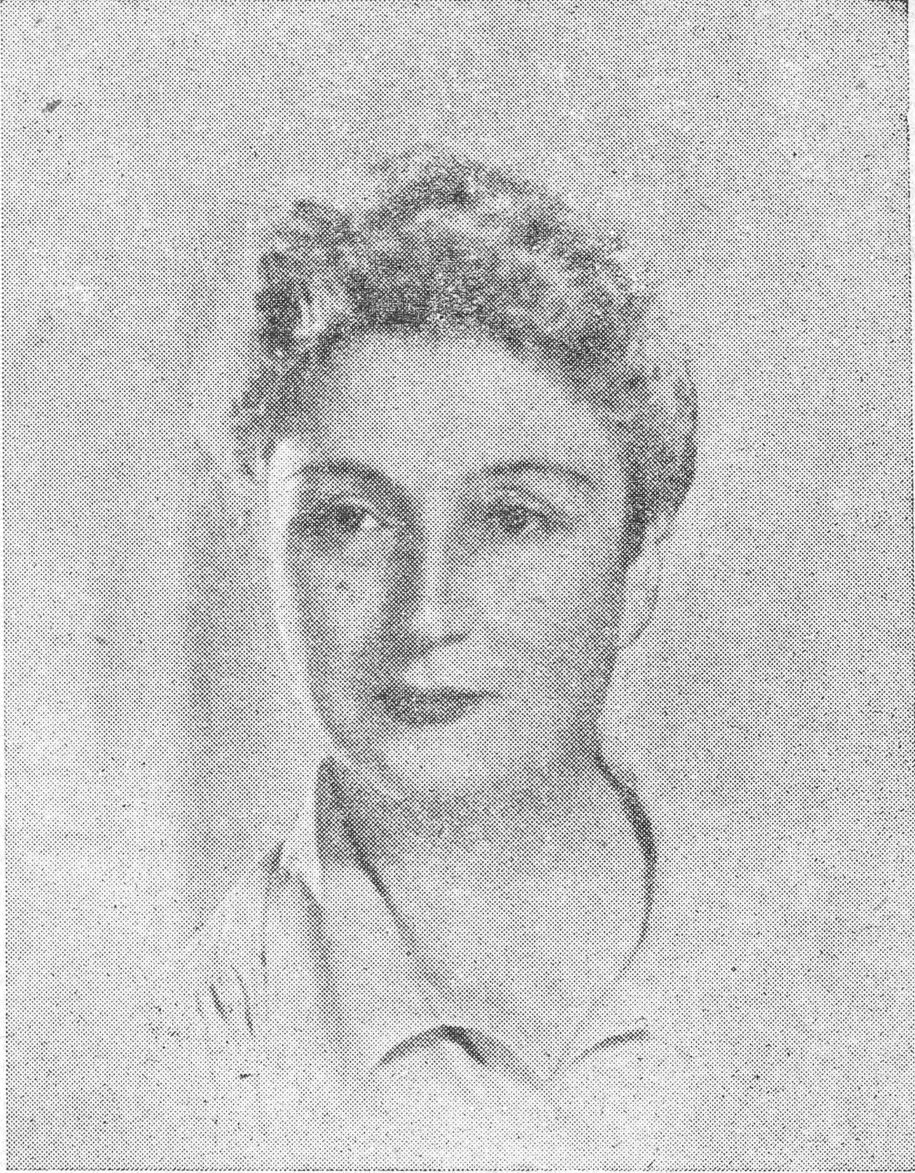
People are asking about the Lebanese woman's nomination of herself for a seat in the Chamber in this session. Many friends, and much of the public, expect my candidacy and my descent into the parliamentary battle now raging.
But after due deliberation, and for reasons I set out
here, I have decided against my candidacy. It is better for the Lebanese woman, in this period, to complete her preparation and to ready herself to carry out her mission in the future in the most perfect way possible.
And this because:
First — because the Eastern woman, in her political era today, is still at the beginning of her ascending path and of the exercise of her civil rights in full. This being so, her training has not yet been completed, as is the case with her Western sister; she must therefore have time to spend in serious, constant preparation and in unbroken activity in all the
fields of social work, so that when she reaches the Chamber she will be able to carry out her great mission, to command respect, and to attain her goal.
Second — because the man in the East has not yet, to this hour, grown accustomed to look upon woman, upon her conduct and her opinion in politics, with a sincere and lofty regard, and to see in her, in his political life, an indispensable helpmate who cooperates with him and bears the heaviest burdens. The first slip she makes swells in his eyes into a grave deficiency and a political incapacity; he then reckons her unworthy of exercising her political rights and unfit to take charge of the great affairs in the nation's life, and so he carries her backward from the very point at which she wished to advance.
For this reason I have thought it my duty to state my personal opinion and to address my call to my sister
the voter, inviting her to work first of all, and to deliberation and earnestness as she faces, for the first time, her political rights in this dear country. Let her know that it does her no harm if she cannot reach the parliamentary Chamber in this session. Here is a favorable opportunity that allows her to study the situation deeply, and to profit from the present for the
sake of the future.
This opinion of mine does not mean any attempt to put an end to women's self-nomination in this session. I congratulate from the bottom of my heart — and there is indeed room for congratulation, truth be told — every lady who finds in herself the competence and the courage to nominate herself for the Chamber and to come forward to take up this great responsibility, whose burdens she is bound to carry, hoping that success will be her ally.
And here I must likewise address to my sisters, the Lebanese women voters, a warm appeal: that they proceed only to the choice of
upright representatives who will secure for the country free education, the improvement of the condition of the schools, and the raising of the teacher's moral and material standing; the revival of the country's resources; and the granting of wide powers to those first responsible, so that they may feel themselves directly answerable for the people's interests, and so choose the fittest to work with them, and so that all may feel the greatness of their national duty and perform it in the best way. Then every official will be able to carry on his work in tranquility, paying no heed to the interferences and intrigues of those who by this method have corrupted the machinery of the state and dragged it into confusion and chaos.
My heartfelt thanks to all who have given me their precious confidence. May the Almighty grant us the power to serve our dear Lebanese homeland.