It may be more widespread than you imagine, Madam!
"Is it true that my child suffers from anemia?" This is what one mother asked the doctor, in astonishment, forgetting that this disease is not confined to adults but extends beyond them to children. And how great was her disappointment when the doctor began explaining it and its prevalence among children. The color of the face's complexion is not to be relied upon in knowing whether or not a child is stricken with anemia. Pallor of color is not necessarily one of its signs, just as a radiant face does not indicate its absence.
What is anemia? It is the absence of a sufficient
quantity of red blood cells in the body, or a deficiency in the quantity of Hemoglobin in those cells. In the case of severe anemia, the deficiency occurs in both substances, the hemoglobin and the blood cells, and the name Primary Anemia is applied to this disease.
As for Pernicious Anemia, it is among the worst cases of anemia, and it strikes adults. The disease that usually strikes children, however, is milder in its weight, thank God, and if it is discovered early its cure becomes easy by means of the necessary diet and medicines; this type of anemia is known as Secondary Anemia.
If we tried to learn the first signs of anemia in children, what must we observe in order to detect them?
1 – Constant pallor of the face.
2 – Loss of the redness of the lips and beneath the fingernails.
3 – The turning of the red color to gray on the tongue and the membrane of the mouth.
4 – A slight yellowing of the eyelid.
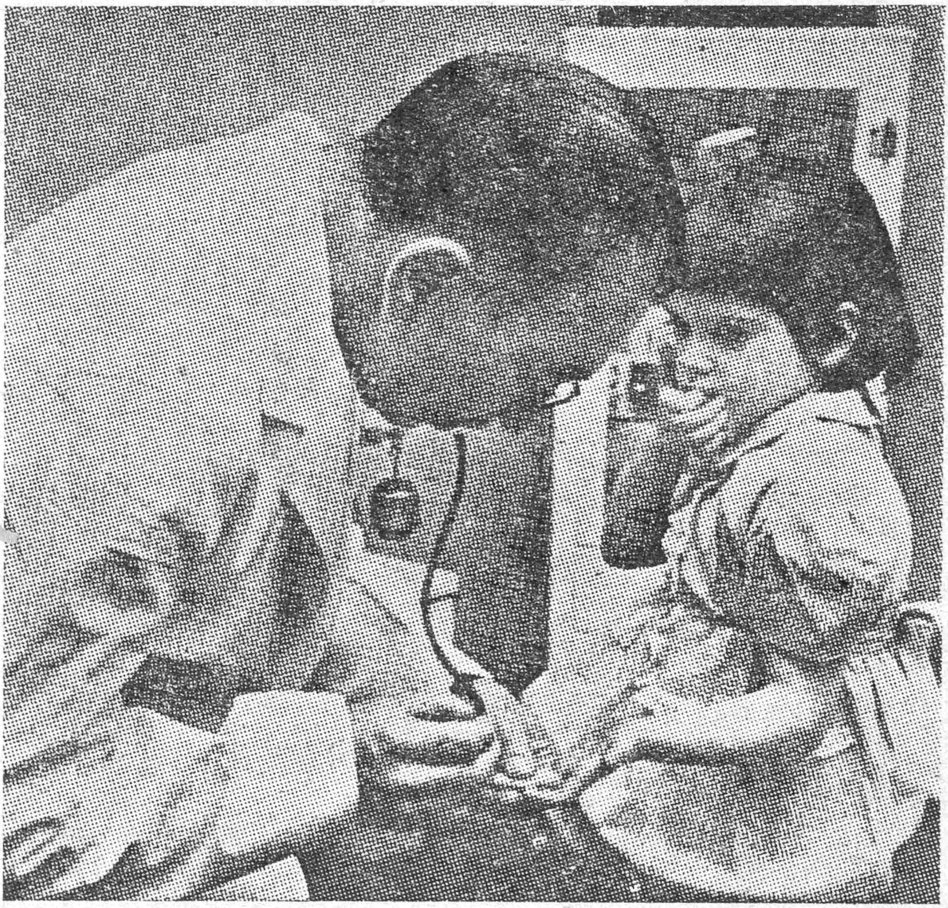
5 – Excessive and continuous fatigue.
All the points set out above are early tokens of the disease. The tokens of the disease's aggravation are these:
1 – Shortness of breath, so that when the patient climbs the stairs he feels a tightness.
2 – Palpitation of the heart; and if the mother cannot detect this, the doctor can detect it by means of his Stethescope, and it may not be difficult for him to detect it also by feeling the pulse, thanks to his experience.
3 – A rise in the patient's temperature at times.
The first stage the mother must pass through for the sake of the soundness of her child's health is to have him medically examined and to learn whether or not the disease of anemia is present. If its presence is established, the second
stage is the discovery of its cause. The balance tips, as the cause of anemia in a child, toward continuous bleeding or other accidents, such as wounds and the like, that entail the shedding of an ample quantity of his blood. Some may wonder at small infants being stricken with anemia, but that results from the cause of cutting the cord immediately after birth.
Children of strong constitution are able to recover the blood they have lost by eating kinds of food rich in protein and iron—the substances necessary for the formation of the red cells in the blood. Protein is abundant in meat, eggs, and cheese, and in a small quantity in vegetables. As for iron, it is found plentifully in meat, especially in liver, and it is likewise found in an ample quantity in spinach, bread, eggs, and milk.
The second cause of anemia results from disease caused by germs.
The diseases that strike the upper part of the respiratory system, the Upper respiratory tract, have a direct effect on