educational sides, in man and in woman, meet on one ground.
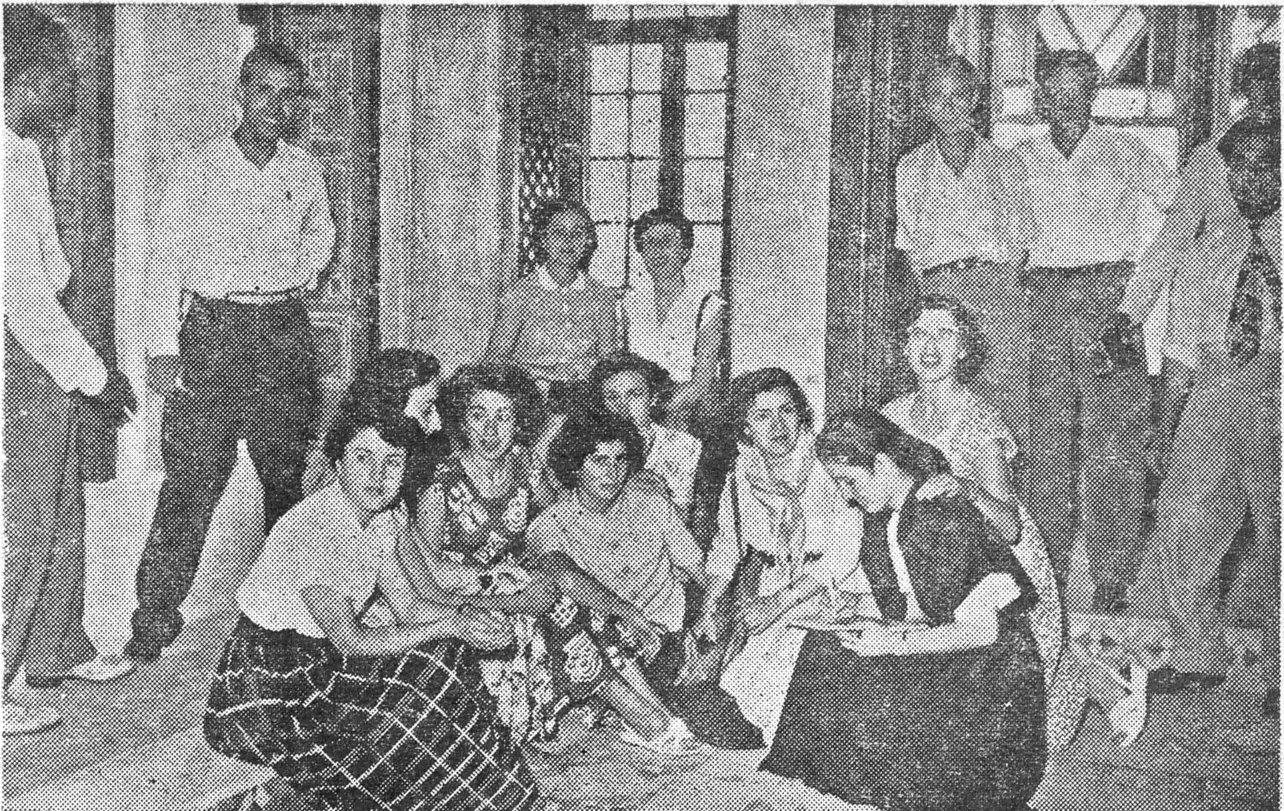
In one corner of the teaching building stood Mr. Ahmad Yatim, our colleague and owner of the newspaper al-Qafila in Bahrain, debating with a group of teachers. I seized this favorable opportunity to put my question to him, though frankly I doubted whether the answer would be candid; but the first word he uttered convinced me that the journalist, wherever he may be, is a social reformer, freed from every bond.
— How does the woman in Bahrain help the renaissance of her country?
Mr. Yatim rubbed his brow, then set about delivering a lecture, from which I gathered the following:
— The woman in Bahrain is your Arab sister — would that you could see her! She is fettered; she tries to break her shackles and to take part in any activity, and she cannot, for impregnable barriers stand in the way of her goal. Yet I am optimistic that they will be removed, with the help of everyone who aims at liberation and release.
Al-Qafila has stood by woman at every stage: it has written several articles urging her to rise, and prompting those in authority to relinquish the right they have usurped. Fanaticism against women grows the higher their social station rises: the emiras do not learn, nor do they join in some of the development projects that have begun to appear through the enthusiasm of the awakened youth.
•
I put the same question to some of the Iraqi and Jordanian teachers, who answered with pride and enthusiasm about the renaissance in their countries, and the renaissance of woman in particular. In Iraq she competes with man in the universities and the institutions and the fields of specialization; and in Transjordan her present renaissance is no less than that of her other Arab sisters — save that progress in the countryside dwindles beside the national renaissance in Amman.
Suddenly I awoke to my neg