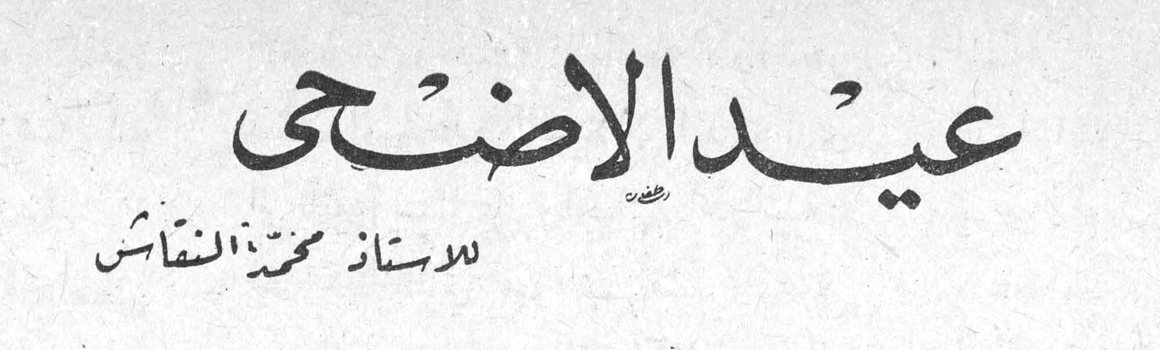
God is greater. A prayer that bursts from thousands of throats, in strength and faith before man, and in lowliness and reverence before the Judge. God is greater than the gods carved as idols in stone and marble. God is greater than kings, all kings, and greater than tyrants, all tyrants; greater than the Caesars and the Chosroes. God is greater than money and pride, than lineage and pedigree, than the sword and oppression, than lust and sin. God is greater than the jahiliyya, all the jahiliyya, however fierce it grows, however it arms itself, however far it spreads. God—with all that His name enfolds of the meanings of goodness and virtue, of love and beauty—is greater
than all the material powers that make their assault as falsehood does, and then soon scatter into dust before the truth of the One God.
This prayer, so brief in its wording, so far-reaching in its aim and its meaning, bursts from the throats of thousands of people, come from the four quarters of the inhabited world. Their faces differ and their tongues are many, yet they have put on a single garment—the simplest garment possible—and set to repeating, with one heart and one tongue: God is greater. And so the message of the Divine Unity is fulfilled in essence and appearance alike.
The French philosopher Bergson—one of the spiritual philosophers who believe in God—says: every religion must have its rites and ceremonies. Human beings, on the whole, cannot give themselves purely to God unless this is accompanied by movements and stillnesses in which beliefs take body
and by which faith is nourished; and prayer and fasting, according to systems, rules, and appointed times, are precisely of this kind. And when I review the rites and ceremonies of Islam, I find the pilgrimage—the fifth pillar—great among these rites and ceremonies, abundant in effect in carrying out religion's message: that is, in refining people spiritually and cultivating them socially—that is, in making them happy in the next world and in this one.
The pilgrimage is, before all else, a goal hard of attainment; it is not within the reach of every Muslim, as fasting and prayer are. It is fraught with hardship—above all in the days when it was made on the backs of camels—and it demands expense. That is, it is reserved for the striving, struggling Muslim,
and closed to the idle stay-at-home. Whoever would enjoy its blessings, would see from close at hand the qibla toward which he turns every day in his prayer, and would dwell beside the place where the revelation came down, must go forth in the land and earn an honest living that will provide him the costs of the blessed journey.
And he must at the same time be of such strength of mettle and resolve as to bear the toils of travel and its dangers.
Then comes the running between al-Safa and al-Marwa seven times, which reminds the pilgrim in a practical way that our lady Hagar would never
have found the water to slake the thirst of her child Ishmael, had she sat down to bewail her lot and despair of water's existence. He remembers that in movement there is blessing, and that resolve triumphs at the most critical of moments and over the worst of circumstances.
And in the stoning of Iblis with the seven pebbles there is a splendid symbol. O Muslim, it is not enough for you to curse Iblis and flee from him; you must wage against him an all-out war, and feel in yourself the power to defy him and strike him—once, and twice, and seven times if need be—until you destroy him: that is, vice and lust and folly; that is, everything that troubles the serenity of this life and disfigures its beauty and its harmony.
As for the ihram—how magnificent an emblem, in which humanity reaches its utmost limit. With the ihram the pilgrims cast off the clothes they are used to, as though they were casting off their stains and their sins; they cast off ease, lavishness, and luxury, and put on austerity and plainness—white cloth, symbol of purity, simple, unsewn, without trace of craft or ornament in it—and they all appear, rich and poor, princes and paupers, white and yellow and black, Arabs and Tatars, men and women, as equal as the teeth of a comb; and they learn by tangible means that thus they were created and thus they stand before God, none having merit over another by his lineage or his pedigree, his silk or his velvet—merit lies only in piety and good works; and that the ihram is a kind of general rehearsal for the Day of
• The twentieth of last August fell on the blessed Eid al-Adha, and over Mount Arafat there rose the deep, far-carrying calls from thousands upon thousands of throats: God is greater!.. And the plains of Mecca the Ennobled echoed back the magnificent phrase: God is greater!!
So The Woman's Voice extends to all its subscribers and readers among our honored Muslim brethren its warmest congratulations and most sincere blessings, asking the Lord Almighty to bring this great feast around again to them, and to our Arab and Islamic world, with a fuller share of happiness, good fortune, and prosperity.