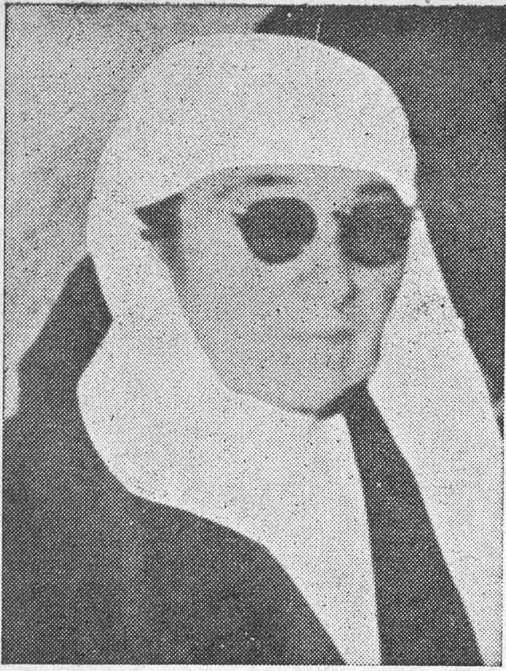
An illustrated report by Mrs. Layla Fakhoury Kurban
It gives me pleasure to bring to the readers of "The Woman's Voice," from time to time, word of the noble works that woman is carrying out with energy and zeal in the city of Aleppo. It has become clear to me, after living there for some time, that it abounds in benefactors and benefactresses, in good citizens, men and women alike, whose hearts beat with human feeling and love of their people, and who exert tremendous efforts to bring relief to the wretched and
to prepare them to be firm props and pillars in building the edifice of the Syrian nation.
It pleases me today to send a word about the "Women's Charitable Association" in Aleppo, presided over by the venerable Miss Faiqa Mudarris. This institution also runs the school of women's crafts. I visited the institution and found it a large old building in the Eastern style: a spacious open courtyard with a pool of water at its center, and ranged along its sides numerous rooms open to light and air. Miss Mudarris is trying to move her institution into a modern building in the center of the city, fulfilling all the conditions of health and beauty. A resolve like hers will surely overcome all the difficulties that stand as obstacles to this aim. Yet the most important thing is not the shell but the pearl settled within it.
The directress showed me into the reception room to await the arrival of the president, whom I had not before had the honor of knowing. Hardly had I settled in my seat when a dignified lady entered the room. I rose in respect, introduced myself, and then said: Are you Miss Mudarris? She answered graciously, in an accent that was a mixture of Egyptian and Iraqi together: "You mean Miss Faiqa? No, I am not she — I am a visitor
like yourself." I then understood from her that she was Mrs. Shahira, wife of Mr. Said Fahum, counselor of the Arab League, and that she was now paying a visit to Miss Mudarris, to whom she is bound by ties of friendship and fellowship in women's social services. When she learned the purpose of my visit, honesty and duty would not let her keep from saying: "Do you know whom you are about to see?... A lady who is the first of the ladies of Syria and Lebanon to found women's charitable associations concerned with the wretched laboring classes of her own sex. That was thirty-four years ago, when neither men nor women were thinking of such work. She was then in the prime of her youth and beauty, and she comes, as you know, of the distinguished Mudarris family. But the general condition of woman, sunk as it was to the depths of misery, robbed her of her rest, and she knew no peace of heart until she had turned away from her own personal, human claims and vowed herself to the service of unfortunate women — the women of the towns, who had no land to cultivate and no craft by which to earn an honorable morsel. Their husbands had left them and gone off to the war, and on their heels hunger and disease advanced, ravaging them and their children."
While I was absorbed in this fascinating account, a lady approaching her sixth decade appeared before us, in modest dress, with a cheerful face and eyes radiating light and self-confidence. It was Miss Faiqa Mudarris, president of the association.
We sat talking of her project, and I understood that her resolve to open a crafts school had hardened during the First World War, when she was in the town of Manbij on a visit to her brother and saw with her own eyes
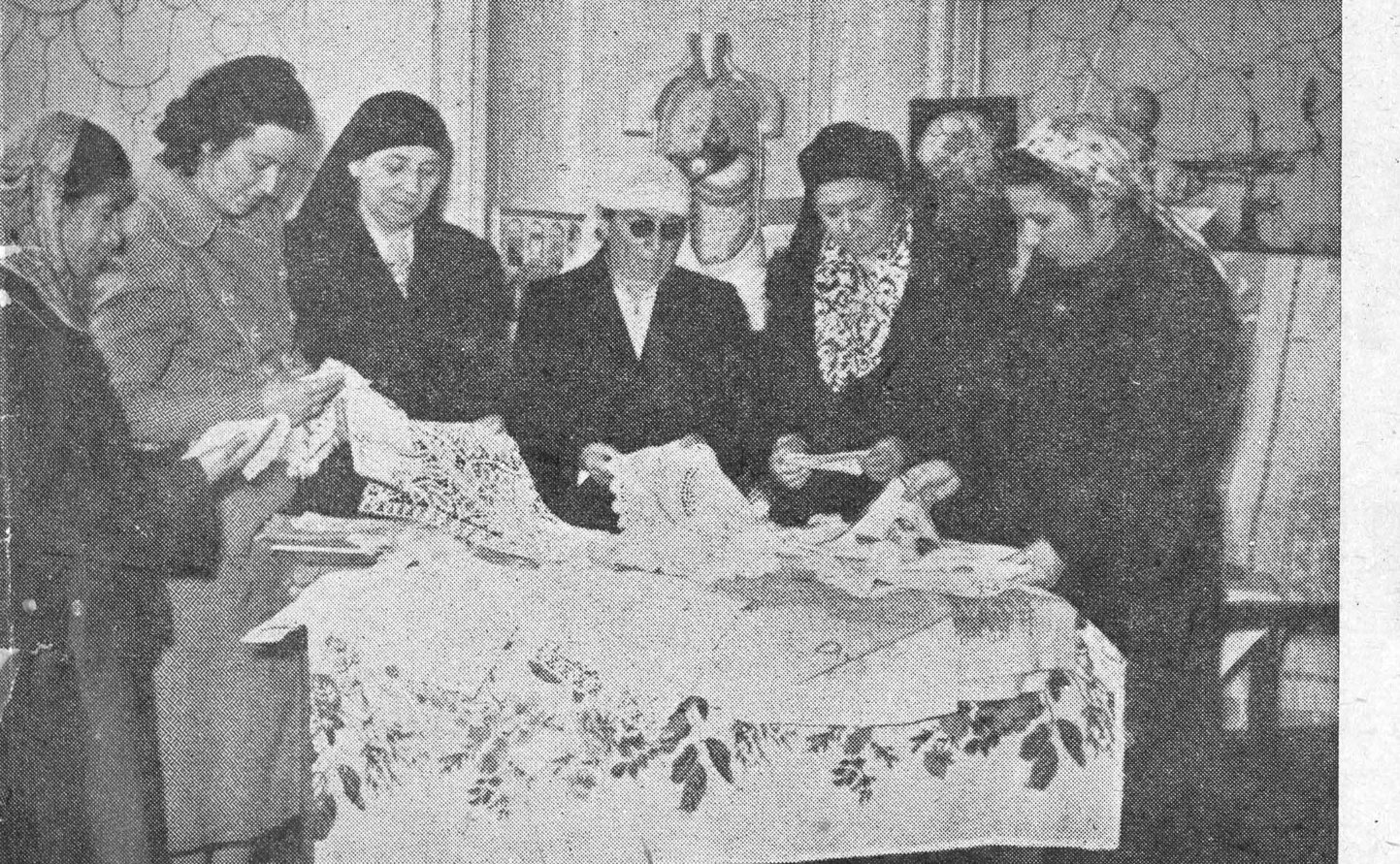
The administrative board of the association; Miss Faiqa appears third from the right (see photo)