Today we are gathered by the memory of the great woman of letters who is absent from us in body and present before us in spirit. Her works are immortal, her deeds manifest, her opinions speaking with all that was begotten by that inspired genius of a mind — true in delivering its intellectual and cultural message, frank in its political and economic opinions, sincere in its social and humanitarian duties.
Can I, in a few minutes, encompass every side of our dear departed one, render her her due of esteem and
honor, and analyze a personality of such power of guidance, such delicacy of expression, such precision of portrayal — one that gave so very much of dazzling literature, of enchanting eloquence, of wakeful awareness that saw and was moved, perceived and appraised, spoke and alerted and warned?
Can I, in fleeting moments, review the life of my friend and all the images and memories of her that live in my soul? Can words express the deep pain and intense sorrow I feel? And so I find myself unable to perform the duty, grudging to take a feeling that has its own sanctity and dignity, fashion it into words, and display it as merchandise for lament, mourning, and eulogy.
Yet this helplessness of mine
before our noble departed does not fetter my frankness, nor tie my tongue from saying what I hold to be a duty binding upon me, which I perform and discharge with all honesty and sincerity.
People are accustomed, on such occasions, to hold ceremonies to revive a memory, to immortalize personalities, to esteem talents and abilities, to acknowledge kindnesses and recognize services. They sanctify spiritual values, bow before the powers of the soul, magnify brilliance and genius, and exalt sacrifices and services, counting them a symbolic offering the departed made as ransom for a homeland, a creed, a project, or principles in which he believed and which he preached.
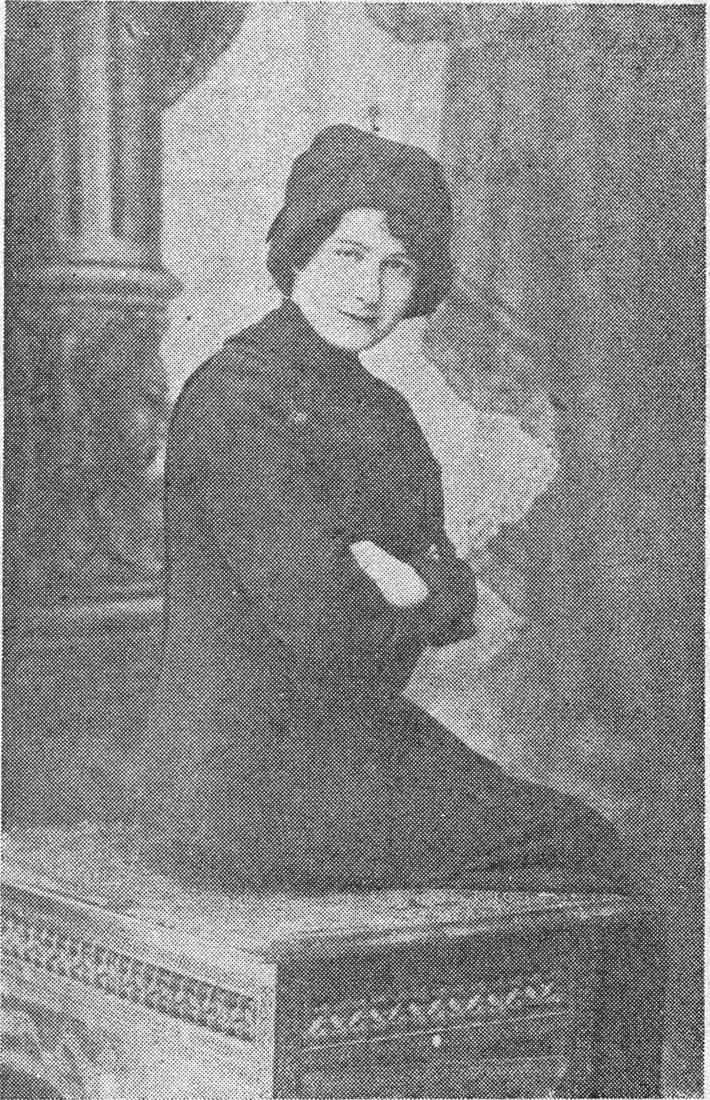
Salma Sayegh in her youth
But let us return to that scale on which we weigh talents and abilities and the services and sacrifices their possessors have rendered. Has the giving and the bestowal been matched by esteem and praise? Have the sacrifices and gifts been balanced by fidelity and reward? Has this generously giving human being been dealt with justly — given the place befitting him in life, so that he feels a contentment of soul as he sees the echoes answering, the horizons widening, the atmosphere opening; so that his powers are
renewed and the springs of his production and his goodness burst forth; so that sacrifices come easy to him, giving grows light, and bounty and bestowal become sweet to him, knowing that his effort was not lost and will not go for nothing?
Let us honor those who are generous to society in life, not after death; let us pay now a debt we owe, and not defer it until it is too late. Let us render, in the world of the living, the price of the talents and creative gifts we have harvested — upon my life, that is the least of fidelity. Our dear departed gave society the essence of her mind and the overflow of her heart, and these are the most precious things a human being possesses in this life. She wakened a people, guided a generation, and enlisted herself in defense of a language that is the instrument of understanding and all
that remains of a bond among a nation upon which division has been decreed, and in whose face dams, frontiers, and obstacles have been set.
So in the name of the General Arab Women's Union, which gathers the women's unions of the Arab lands, I bow before the memory of the dear departed who inscribed a shining page in Arabic literature, lighting the paths of the sincere who labor to build a better society and a sounder world. What you gave is in the keeping of history; and in the keeping of the generous God — who lets not the reward of one who does good work be lost — are you today, my friend.