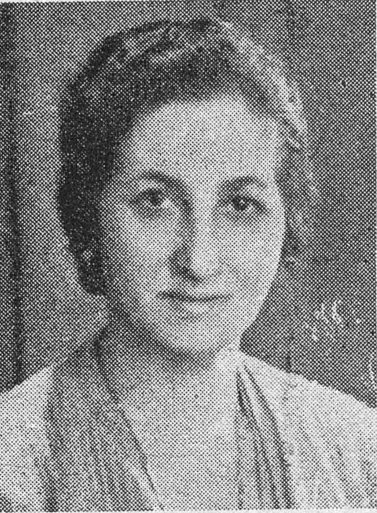
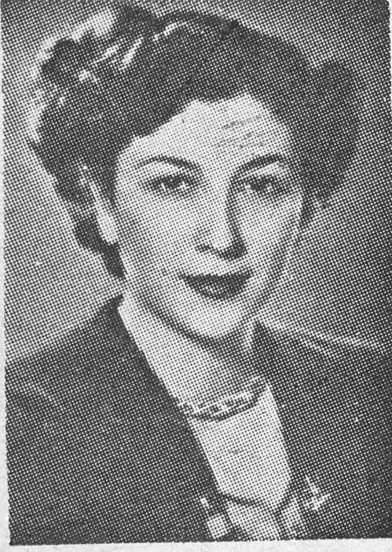
My admiration for Salma began with my love for her essay “Motherhood,” which was a literary event in its time (just after the Great War). I loved this essay because it expresses my own feeling as a mother.
And perhaps this piece is one of the unique pieces in all Arabic literature — I do not say
our contemporary literature, nor do I say women's literature; I insist: “all Arabic literature” — that give sincere utterance to a true feeling...
The first distinction of Salma's writing is that she writes from her “heart,” not from her “mind” nor from her learning (and how great Salma's learning was!).
But I do not suppose that my admiration for the piece
“Motherhood” proves it has an absolute, abstract literary value: I am a mother, and that is my feeling. Yet what will you say to this — that this piece stirred the admiration of Gibran Khalil Gibran, who was a very stern critic, and whose admiration was not easily stirred; and who, for all his breadth, found pedantry wearisome and did not forgive it, above all when it came from a woman's pen. And what need has woman of literary pedantry? Gibran used to say to me: “Tell Salma to write, every day, a single line out of her own feeling; by the year's end she will have gathered 365 immortal lines.”
No sooner did the news of the great departed woman of letters reach me than I fell into stunned silence at the tidings, and from my eye there sprang a tear of anguish and sorrow over a human flame extinguished, a solid pillar of women's letters vanished and fallen.
The loss contemporary literature has suffered in Salma Sayegh cannot be made good.
By her loss we have lost a lady of high worth, of gracious character and gentle temper; we have lost a citizen conscious of her homeland's worth and aware of its message, who lived away from it for some years, and whom that exile only made love it the more, and cling the more to its soil, its paths, and its sons. And we have lost in her an accom
plished woman of letters, bold in speaking the truth, of piercing insight and delicate feeling, who from her earliest youth worked with devotion and sincerity in the service of her society and its uplifting, and who fought a long fight for the cause of her sister, woman — now silent, now vehement — and who through all the years of her blessed life put her keen pen at the service of defending the wretched, the wronged, and the deprived: a noble, humane defense that bespoke the great heart fluttering within her and the good soul which shone in every deed our departed writer performed, every word she uttered, and every work she set down, and which the rising Arab generations will immortalize.
Her precious book Suwar wa-Dhikrayat is the greatest proof of the mastery of her style, the sincerity of her tone, and the soundness of her nature. And the article she published a year past in our dear magazine The Woman's Voice, under the title “Pictures That Will Not Return,” is a masterpiece of splendid pictorial literature — nay, a masterpiece of that realistic, humane literature which guarantees, to whoever gives forth such radiant expression, immortality through the days.
Salma Sayegh died content of eye, after the efforts she had made with a band of her Lebanese sisters to press those in authority to recognize woman's full rights had borne fruit. And she died content of eye, too, having discharged most excellently her mission as a conscious woman of letters and a model mother. Yet her pure soul will not decay, and her good memory will not die.
Salma al-Haffar al-Kuzbari Damascus