Our acquaintance goes back to a little before the First World War. I listened to her for the first time at a literary festival held at the Sunday School club in Beirut; what I heard pleased me, and I admired Salma Sayegh as an eloquent speaker possessed of charm, grace, gentleness, and beauty.
Then the four years of war passed, with their tragedies and calamities, and there was Salma Sayegh living with her little girl, her only child Aida, in a house near ours; and her home was filled with people of merit and letters.
Then more years passed and I came to know her better, especially the day she honored us with the printing of her book "The Breezes," into whose folds she had poured her heart and soul. And as I remember Salma Sayegh I can only say that she commanded respect and affection by the loyalty, the sincerity, and the nobility of character that were hers.
She was, moreover, ahead of her age; for in the days when she was lecturing and calling for woman's freedom and demanding her full rights, there was in the Arab East only a handful of ladies of that first generation. The merit of Salma Sayegh — in addition to her abundant learning and her fruitful culture from youth to maturity — lies in her having expressed, before others of her sex, their needs and their national aspirations; so that when the generation that came after her grew up, it found itself, in the nature of things,
schooled in her principles, and many girls besides those who had taken lessons in her classes felt themselves her pupils by an indirect path.
Perhaps the most striking thing that distinguished our departed one is that, while demanding woman's rights, she never renounced her femininity, neither in her private life nor in her writings. In the presence of Salma Sayegh we always felt ourselves before a true woman, not before a mannish woman! In this respect she was sensitive to a high degree, and this sensitivity doubles her reward for what she suffered in her trials — indeed, she taught courage and patience; and withal she would not hide what she endured from her most faithful friends, men and women, for one must needs complain to a person of noble heart.
Then, too, Salma the writer understood, in the period of revival in which she found herself, that the Arab writer is called upon to give sound opinion on the affairs of the country and of society. She was not a writer of flowers and sun and moon and nature and the other fields of fancy; she was the writer of erupting feeling, in revolt against injustice, demanding justice and equality. And the ill-omened incident that befell Ameen Rihani in the days of the Mandate, his banishment beyond Lebanon, and Salma Sayegh's rush to oppose the decree of exile, are the most eloquent proof of her patriotism, her courage, and her standing up before the authority of
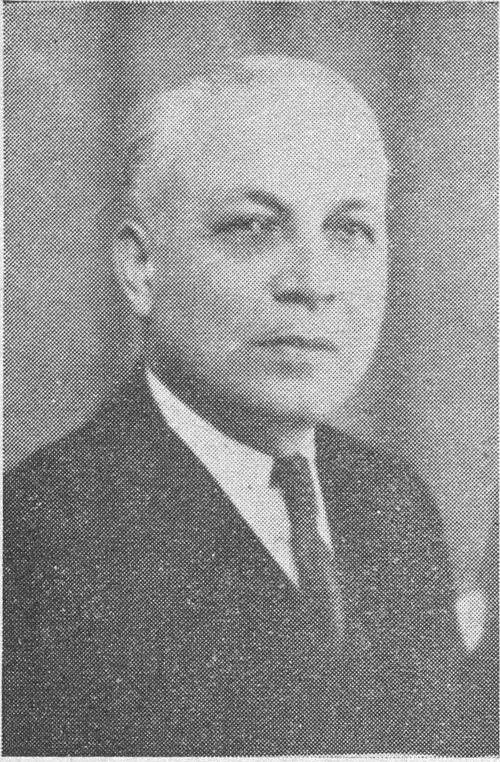
a ruler who held in his hand the solution and the destiny!
And there is another point I have not mentioned: Salma Sayegh is one of the few women writers who hold respected standing in the homeland and the Mahjar alike. She lived in Brazil no small time, and her countrymen there — and others besides — came to know the brilliance and intelligence that were hers. Thus in both homelands, the resident and the emigrant, she registered excellence in character, in sound thinking, and in the service of all her people.
And now — this is a tribute of loyalty, not a lament; a word of truth and justice about the departed one of Arabic letters, who has vanished from us and left behind her the memory that endures.
There is no doubt that life belongs to blossoming youth, and that a nation whose sorrows are not washed by the great waves of joy is a nation walking toward extinction.
For the first mark of life, and the last, is “life” — and life is something other than defeat, then disappointment, then humiliation, then weeping.
Yes, we are in aching need of joy and gladness. But how shall we rejoice when all around us are weeping? Our weeping has risen so high that its lament has drowned out all the voices of nature laughing around us without end.
For this sky, blue as the eyes of golden-haired children; this shining sun; the trees dew-fresh through a long count of many days; these starlings whistling in the tops of the pines; the birds singing over the grape trellises and the fig branches; the brook murmuring among the grasses; the waterfall crying out over the rocks; the waves of air whispering in the forests — all these sing the song of life, radiant and jubilant; and we alone weep.