

Christmas is the feast of hope, founded upon the birth of the Child-God, accompa
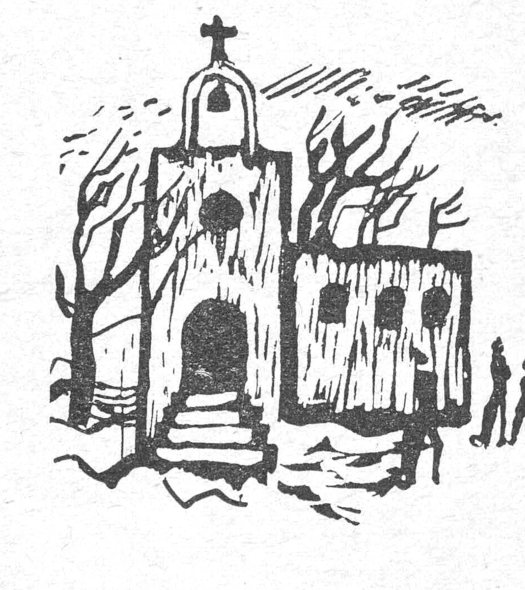
nied by the birth of the new year. It has rightly been said of it that it is the springtime of the soul, just as we call April the springtime of nature. Nature's spring is easy to grasp, plain and clear; but for a man to feel the springtime of the soul, he needs faith and hope to carry him through the gloom of a long night, past the sight of bare, darkened trees and the whiteness of snow covering the fields... trusting that the year has come round its circle, that the shadows grow less drawn out as they retreat, that the pale winter sun is climbing little by little — and that though the firmament stay dark, within it the soul yearns toward the light and keeps the feast of hope.
If we contemplate the ornament and decoration of Christmas, we find them a symbol of hope and reassurance: like the pine, ever green of leaf, a sign of youth amid the barren white of the snow; and the myrtle and the wild mistletoe, adorning winter's grayness with their red and white berries. The flames of the hearths rise and dance, lending hearts warmth and heat, scattering the glooms of rain and fog. And the merriment and kindliness that fill and flood all hearts at this season of the year are nothing but tokens of man's victory over nature, and of love's over hatred.
A brotherly truce — such is the spirit of Christmas, which steals into personal and family rancors, penetrates into the quarrels at the heart of divergent organizations and parties within a single homeland, and seeps into the disputes that impose their collective injustice among nations which, though they affect solidarity, persist in their old enmities. And yet, from beneath the malice and the wrong, that evergreen feeling shines white — love
itself — before which the snows of old grievances melt, and the grudges of hearts shrink away; for there lie hidden, even in the harshest of creatures, aching longings for the sweet trust of childhood. So faith returns, once every year, for a few days, unfurling the banner of love.
Those who keep the feast in France, as in
the southern countries of Europe, have made it their custom to distribute gifts
on the morning of New Year's Day. But in the Anglo-Saxon and northern countries, in the week before Christmas, the glittering streets are thronged with men and women coming and going, wrapped and muffled, the bitter cold reddening them with its bite, joy carrying them off on its wings; going and coming, laden with heaps of gifts. And how sweet a season it is, when the human creature's selfishness grows too small for him and he yearns to please others — at least once a year — with a sincere and heartfelt pleasing; and often a man spends to excess, beyond what wisdom and good management dictate. But love floats above matter, for generous giving is to man a kind of refuge amid a selfish, utilitarian civilization.
How the Christmas trees delight us! Lights quiver in them from thousands of candles — or, if we fear fire from them, we replace them with little electric lanterns: blue, red, and white. Then the lights disclose the most delicious of sweets: chestnuts glazed with sugar, and walnuts steeped in candied syrup, wrapped in silver leaves. Trees whose branches are laced with shining threads like 'angels' hair,' their recesses dotted with patches of cotton sprinkled with boric acid, like snow upon them; and their trunk watered by a rain of gifts — each gift marked with a name. Among the old customs is that the children set their shoes near the hearth, and in the morning hurry to them early in their nightshirts to find them filled with the gifts of the Christmas man; and upon my life, it is the family's sweetest joy to repeat these simple, sweet rites year after year.
Our modern life has come to stagger under its burdens, until time itself has grown too narrow for us to carry to our loved ones the most sincere of
what our hearts hold. There are friends and kinsmen whom busyness has hidden from our sight; and there are the married children of the family, dwelling in far-off towns — and Christmas is nothing if not the ring of their reunion [...]
...the happy one. It is