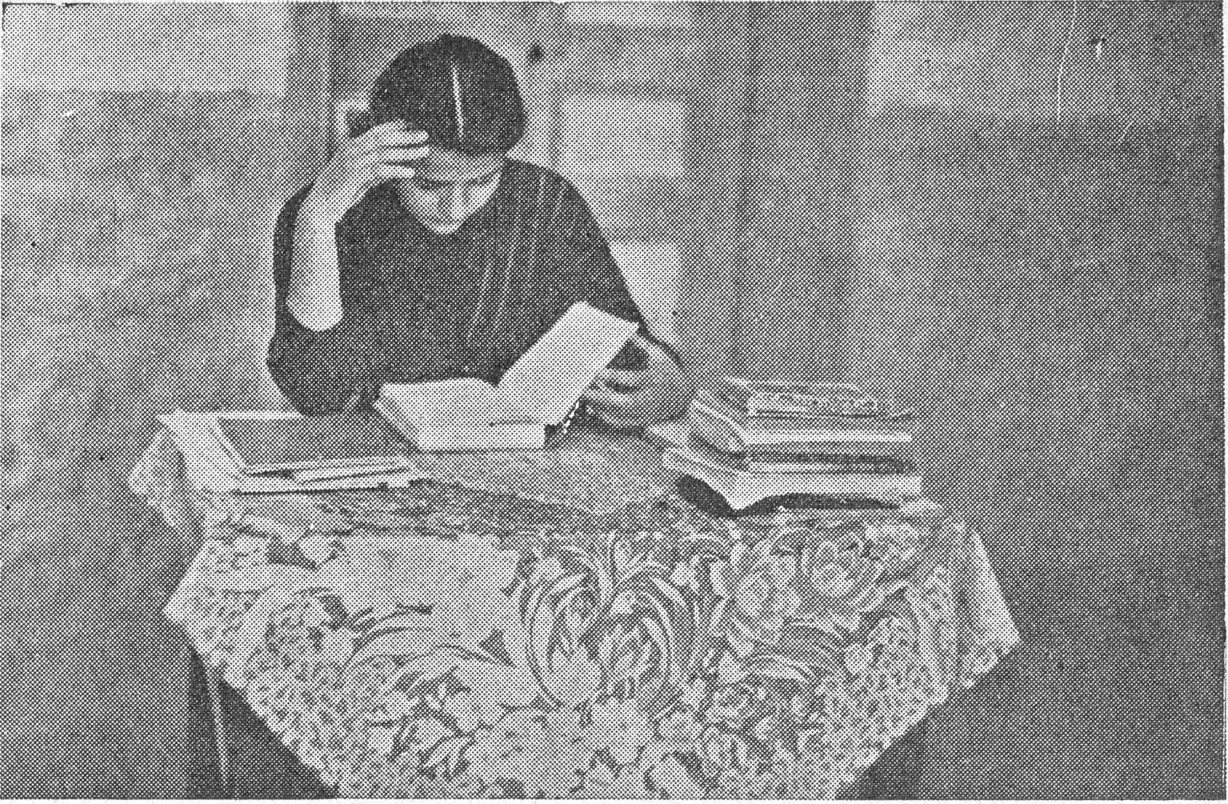

The world confronts us at every moment with strange inventions, modern innovations, and new opinions, which we find palatable when they harmonize with our natures and inclinations, and which we cast aside if our thinking cannot take them in or if they conflict with our taste; but we do not deny that every novelty has its supporters and its opponents. Among these is an idea at once new and bold, published by the magazine "Your Life" under the title "We Do Not Learn by Experience" — an idea that undoubtedly contradicts what the generations have handed down to this very day. For the writer does not trust experience, and declares it the foremost guide to error: a man can learn by experience not to sit on a furnace of fire, or not to walk twice under a downpour of flood, but he has not learned things deeper and more valuable.
A question was examined concerning the teacher, and what factors help toward his success — the measure of this being the degree of the pupils' progress. The result was utterly astonishing: the teacher rarely learns by experience. He who has taught
for twenty years has not proved an ability surpassing that of a teacher who has practiced three years, unless he has gone back to studying the newly devised methods, which are the summation of the criticisms of educators and psychologists. Likewise experience does not teach the physician, the preacher, the politician, or the writer: after a year or two of practicing their work according to their scientific training, experience avails them nothing if they do not acquaint themselves with what is new in everything. Of marriage itself the writer says:
A man may learn from generation to generation, the son avoiding mistakes his father fell into; but has this produced any change in the soul of the man of today, making it happier than his forebear's? The astonishing thing is that man has not learned from experience to master his will and govern his emotional feelings; to this day researchers have not arrived at what we call "emotional maturity," for we find emotion blazing in the soul of the grown man just as in the soul of the
adolescent. And if we truly learn by experience, why do we find grown adults more wretched than the young? Or why do we call youth the happiest stage of life?...
The "Ladies' Home Journal" answers the question of a certain lady, and so solves a family problem that confronts many of our young women in the first days of marriage. Nadia said: "I feel the bond of our marriage dissolving, now that two years have passed since we first knew each other. My husband is absorbed in his work and notices nothing of this, and the only tie between us now is our little daughter. We are, moreover, still in debt for the house furniture, which, along with the child, keeps us from sharing in social life. My husband treats me coolly, and in spite of this I find myself longing for family stability, for I love our little girl, and I know that I am the one to blame — but what is the way to set things right?"
Nadia's case is not unique of its kind; rather it faces many of our young women. Its cause is that the wife who enters upon the new life with a blazing emotion expects everything from it without exerting the least effort; so she never feels settled at all, and doubts whether this man harmonizes with her personality, while he senses her anxiety without knowing how far its effect reaches into their life. So no remedy comes about, and the marriage naturally fails if this state continues.
A married couple need a long time before each comes to understand the other's temperament and nature; and the deeper they go, the closer they draw together, moved by a lofty impulse that spurs them to understanding, consultation, and inquiry. The root of the quarrel here comes from misunderstanding: Nadia and her husband went into debt to furnish the home, and the child came to make bad matters worse, increasing the expenses and hindering her mingling in society. But many couples overcome situations harder than these by reaching understanding during the engagement, which serves as a lesson teaching them that partnership is a bond, not a