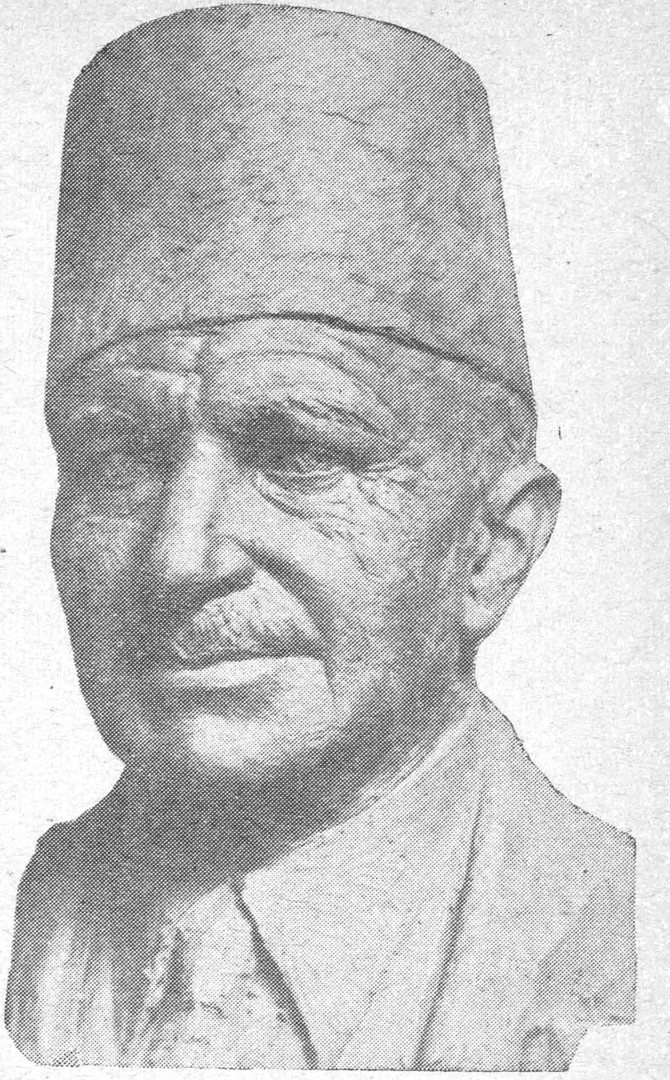
Omar Daouk
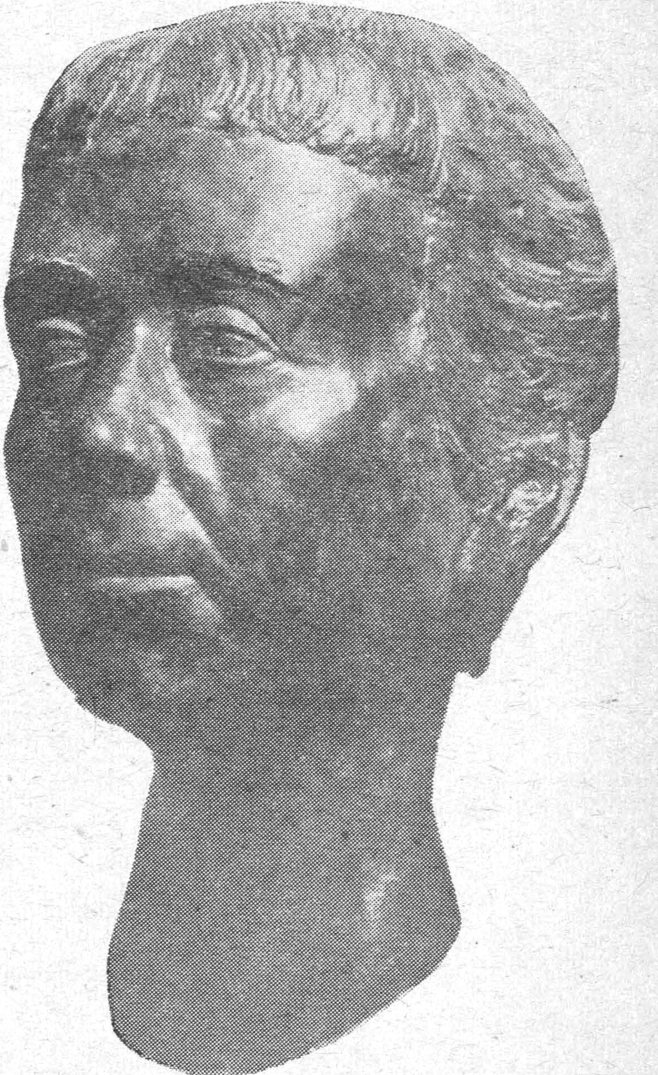
Head of a French Woman
these institutes he graduated with distinction, standing out above his fellows...
After an absence of two years, the artist Samih returned
Crafts, as head of the casting and sculpture department, and as a specialist in the making of ceramics... And in the hall where he works with his pupils, and where plaster heads and commercial clay models lie scattered about, the young artist displays some of the statues he has made since his return, of well-known personalities; the visitor can only feel admiration at the great resemblance between the “likeness” and the original, and then acknowledge the gifts of this rising artist, and the swift strides he is taking, in the art of sculpture, toward the fields of fame and glory.
...Here is Riad al-Solh, and there Sheikh Beshara El-Khouri, and that is Omar Daouk, and Khalil Mutran, and Rashid Baydoun... as though, from the heart of lifeless matter, they were breathing their own breath again!!... And the first monument among his works is the statue of Sheikh Farid al-Khazen, raised before the Jounieh serail in 1952.
*
...And now, it is as if the wings of the artist Attar were about to beat and soar into the skies of art, for he is looking for an atelier in one of Beirut's suburbs, where he can settle into quiet, draw his inspiration from models of living beauty, and turn them into brass statues within everyone's reach.
“I shall let no beauty pass without seizing hold of it,” says Attar. “I shall bring to market Lebanese artistic statues no less splendid than what we get imported from Italy and France... And I have it in mind to immortalize our personalities — poets, men of letters, and artists — by raising their statues in the public squares and parks, as is done in Rome and Paris and other European cities.”
And the artist answered a question put to him about his own method of making statues, saying:
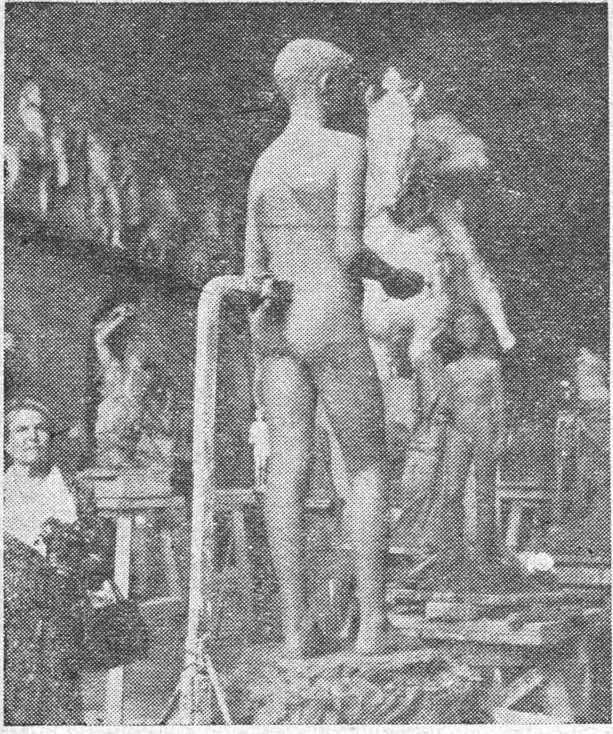
In the atelier of the Academy of Fine Arts in Rome
“When I design statues, I do not aim to please public opinion so much as I care to satisfy my artistic feeling.
People here, for instance, want their statues polished and smooth, with precision in the details, like the mannequins displayed in shop windows. My heart tightens when I feel forced to go along with them, and I long to be freed of this thing I call a yoke and to take flight in my own artistic skies. What matters to me most in a statue is truth of expression — the “Expression” — and the spirit and the vitality. As for details and polish, they no longer hold any importance in my eyes.”
Here is a Lebanese artist, in the confident stride of his youth, looking out upon the hard and thorny life of art, with a ray of green hope on his brow, skill in his fingertips, and faith and confidence in his head. Do not crush his resolve or humble his ardor — for God's sake — you who are responsible... And you, Lebanese, have you resolved to remain illiterates in art, and so never advance a single step forward??