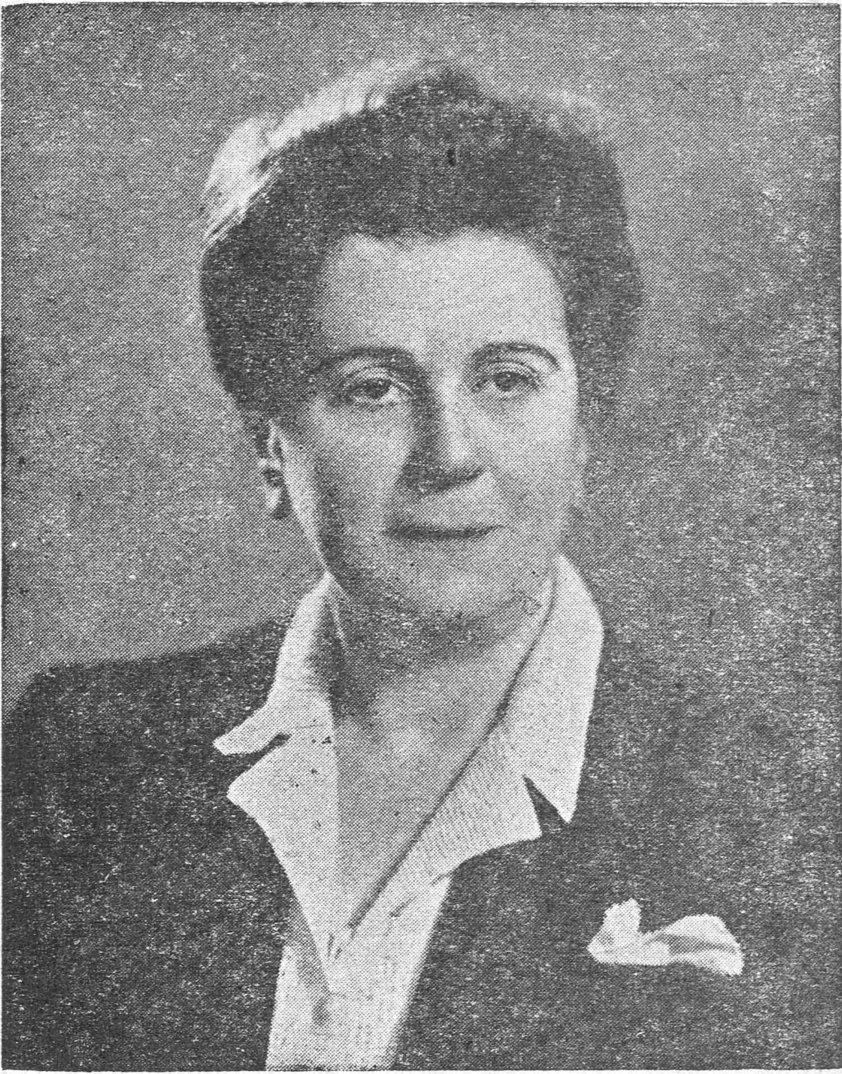
We published in the previous issue the news of the convening of the "Conference of Social Studies on Delinquent Juveniles" in Cairo, between December 5 and 17 last, at which Lebanon was represented by Mrs. Alice Nakkash, president of the Union for the Protection of Juveniles, who delivered at the conference a statement in which she answered a number of questions that had been put to her.
In fulfillment of our promise, here we publish Mrs. Nakkash's statement, serially, in three installments, with renewed thanks to Mrs. Nakkash for favoring her magazine with this precise and important statement.
It is clear that social service which does not rest on spiritual foundations remains an inert body without life in it, and remains an inhuman endeavor. For social service is before all else a profession that must rest on a natural disposition to do good; it is the pressing desire to see right prevail, and the giving of love to all, that inspire a person to undertake social services.
Justice requires that every individual have his right, that every one have his chance, and that every one have his personality and his standing.
Every individual has a right
Every human being has the right to life, and the right that his family and kin should live a decent life; and the individual must not seek to profit from the misery and wretchedness of others. There is no doubt that to reform everything in the twinkling of an eye is impossible; the least we can do, then, is to study the subject of this misery and this wretchedness whose existence everyone acknowledges, and to apply thought and planning to the ways of combating it, without departing from those fundamental principles.
Every individual has his chance
Aid and assistance must be extended to capable workers and employees who wish to develop their personalities, by enabling them to pursue higher studies that will allow them to rise and advance to higher ranks. Everything must not be sacrificed for the sake of preserving rigid, antiquated administrative systems. For the method of pressing individuals into a narrow, confined circle and preventing them from advancing and rising is not the road that leads to order. Order is achieved, rather, when every individual is allowed to reach the level, and the degree of culture, for which his natural