
Every day millions of tourists — lovers of art and sightseers — visit the “Louvre” museum, and its fame is heightened by the presence of the two magnificent pieces of art, the “Mona Lisa” and the “Venus de Milo,” besides its great size, its wealth of art collections, and the age of its building, which contains various paintings by the most famous artists of the world, ancient and modern.
Eastern treasures have an ample place in the museum, and we also find there the most precious jewel in the world, the “Regent” diamond, and remnants of France's grandeur, from “Napoleon's” crown to the spur of “Charlemagne's” horse, and from the woolen hat of “Corot” to the hat of Napoleon III.
Despite the repairs and the innovations made to ease movement inside the museum, the visitor is still obliged to go on foot and climb stairways. Whoever wishes to enjoy the sight of the “Venus de Milo” must descend a staircase leading him to a long corridor; then he climbs stairs and crosses three rooms to see the “Mona Lisa.” And if any vigor remains in his legs, he continues his journey to another wing.
This stillness that reigns over the museum today makes you forget what the Louvre was seven hundred years ago. Even its name, it is said, is taken from the French word Loup, meaning wolf, and the legend goes further still, adding that its site was a ground for wolf-hunting in the Middle Ages.
A hundred and fifty years ago the “Louvre” became a museum, having been in the twelfth century a storehouse for money and precious objects; its situation, built as a fortress, led the kings to store their most precious possessions in it, and to lodge
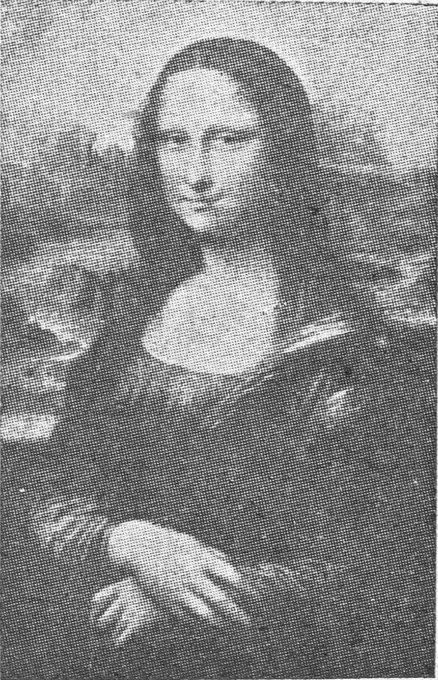

With this enigmatic look and dreaming smile, the “Mona Lisa,” the famous painting by “Leonardo da Vinci,” greets you.

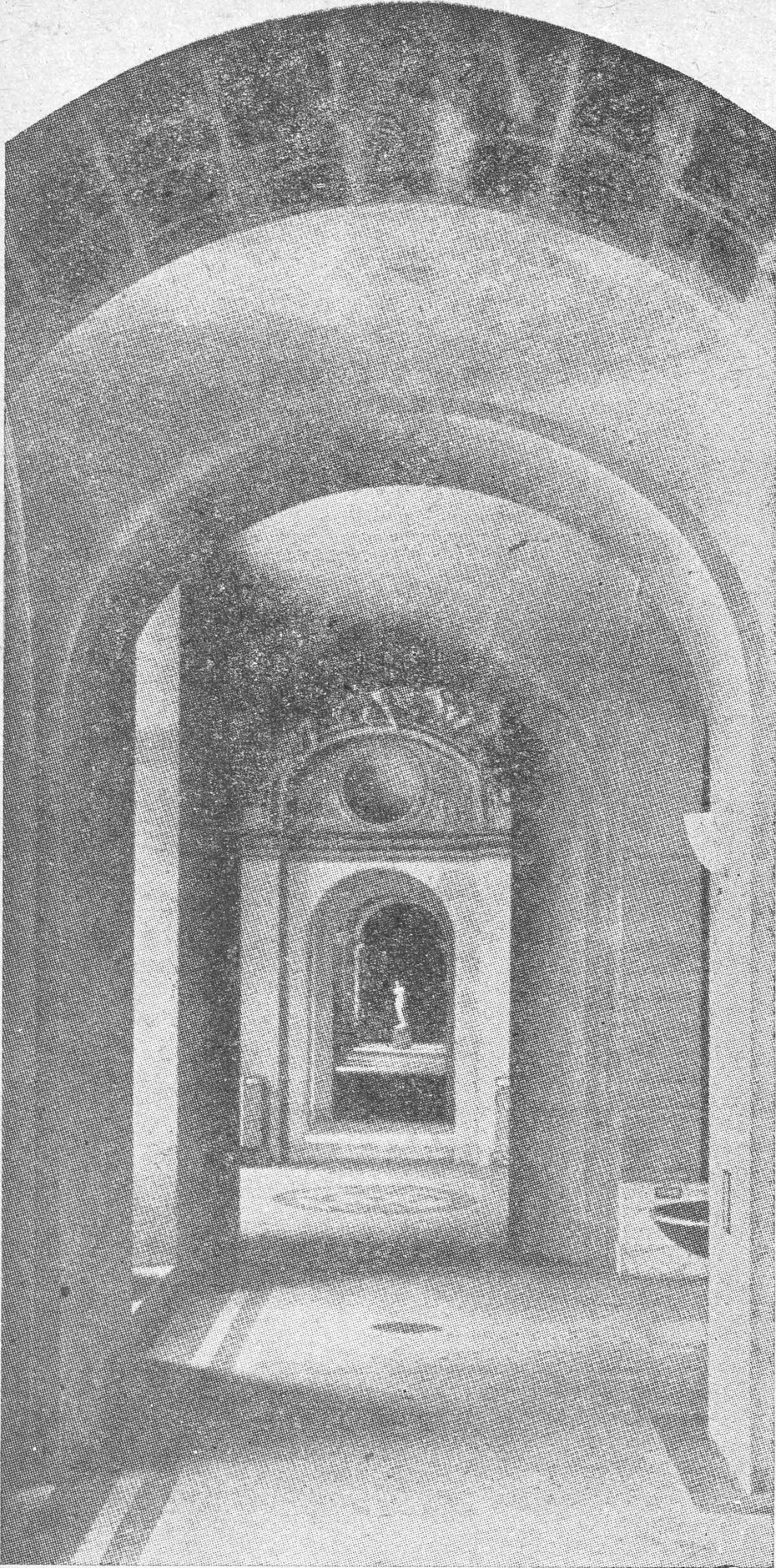
Thus stands the “Venus de Milo” in a dreamlike solitude, and the visitor will never forget the first glance he sends toward her through a series of arches stretching the length of the hall. She was found in 1820 and bought by Louis XVIII.
their prisoners there. In the fourteenth century King Charles V turned the fortress into a royal residence, after restoring it and repairing its gardens; then he gathered into it jewels and precious books, which soon disappeared in 1415, after the English entered it in their victory over the French at the battle of “Agincourt.” And when Francis I ascended the throne in 1515, he ordered a great part of the Louvre demolished, and this stirred the resentment of the French; one of them wrote: “O impregnable fortress! How it has been torn down — it was in truth the most secure