prison in France.” But Francis I gathered artists to restore the museum's splendor, and that was the first nucleus, with four paintings by “Leonardo,” among them the “Mona Lisa,” and six paintings by “Raphael.” The “Louvre” afterwards became the seat of royal banquets, and a ballroom, and a church; Mary Stuart, later queen of “Scotland,” was wedded in it, and it turned into an altar upon which the “Huguenots” were slaughtered when they tried to flee through it, leaving their traces in letters of blood staining its walls.
When Louis XIV came to the throne, he took an interest in the wing containing the works of art and gave over the rest to the Parisians; and it remained a refuge for criminals and a market of trade until after the Revolution, when the government made it a public museum. It quickly filled from the conquests whose spoils Napoleon carried home from Italy, gathering everything precious in Europe; but the museum lost part of its wealth again after the battle of “Waterloo,” when Napoleon was broken and the Allies descended upon it, recovering some of what it had cost them.
There is nothing worth mentioning after that date until the Franco-Prussian War, when the great “Gallery” was turned into an arms factory. Then the “Louvre”
was burned after that, but a great part of its wealth was saved, and peace hovered over it until the two World Wars, when the paintings were removed to be placed out of danger's reach.
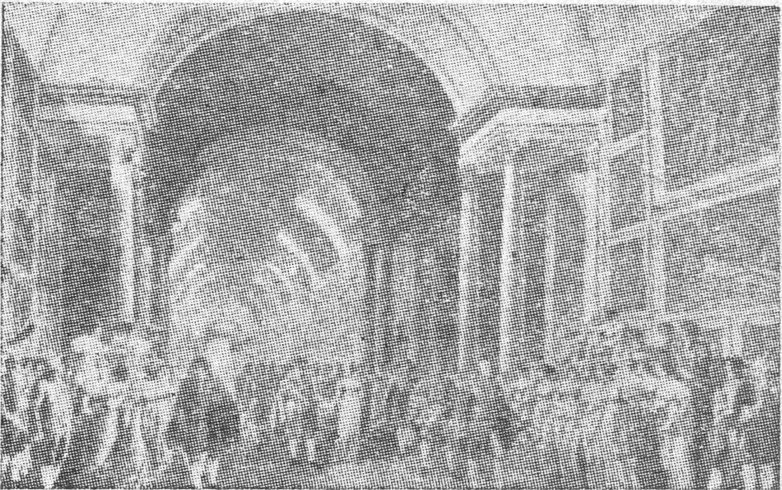
These classical statues, consecrated to Greek and Roman art.
In 1810 Napoleon led “Marie Louise” of Austria to the Salon Carré, and here their wedding took place.
In 1830 the soldiers defended the “Louvre” against the insurgents who entered it, but these did no damage worth mentioning.