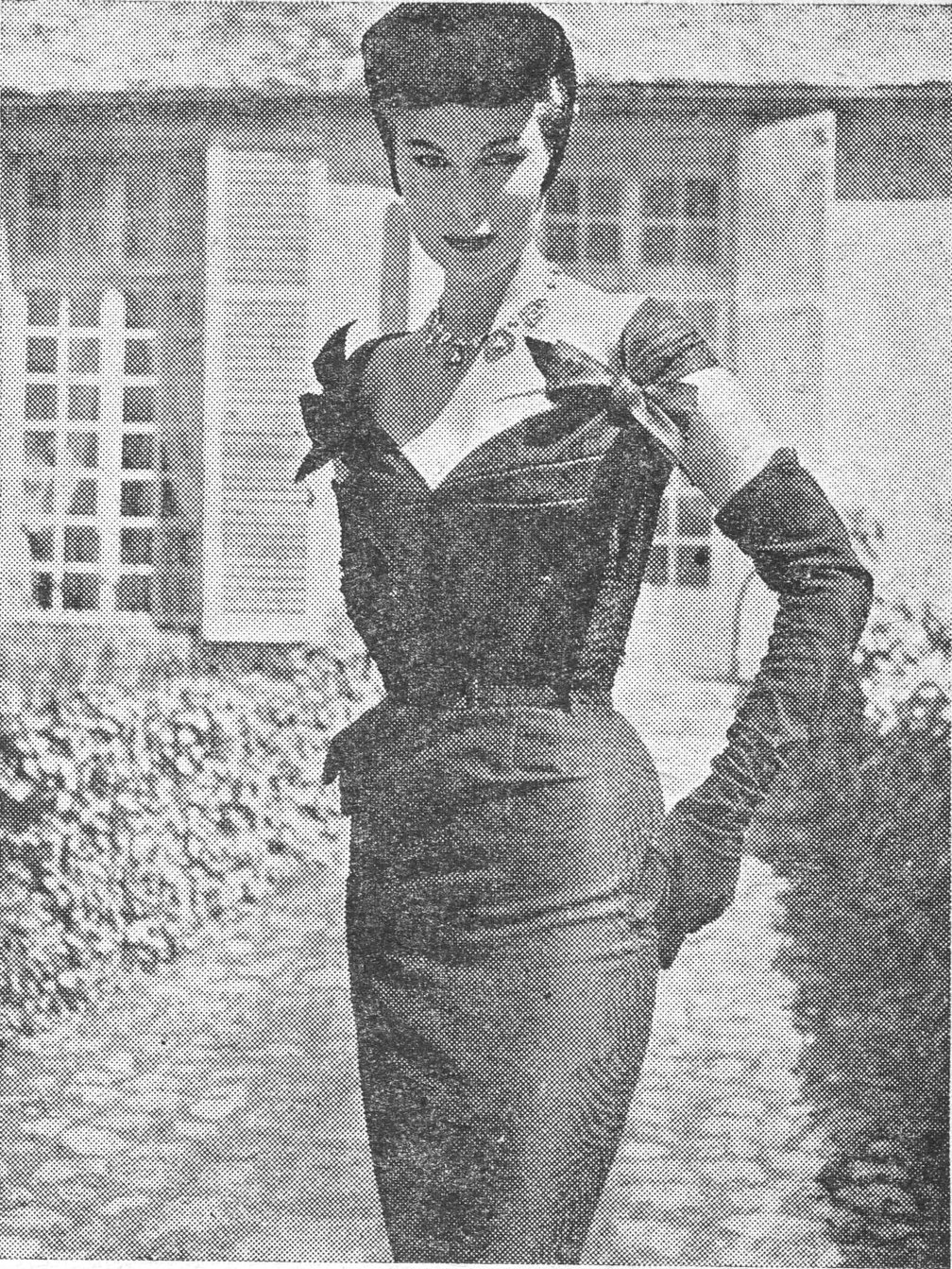
A dinner dress of black moiré broadcloth, by “Jacques Fath”
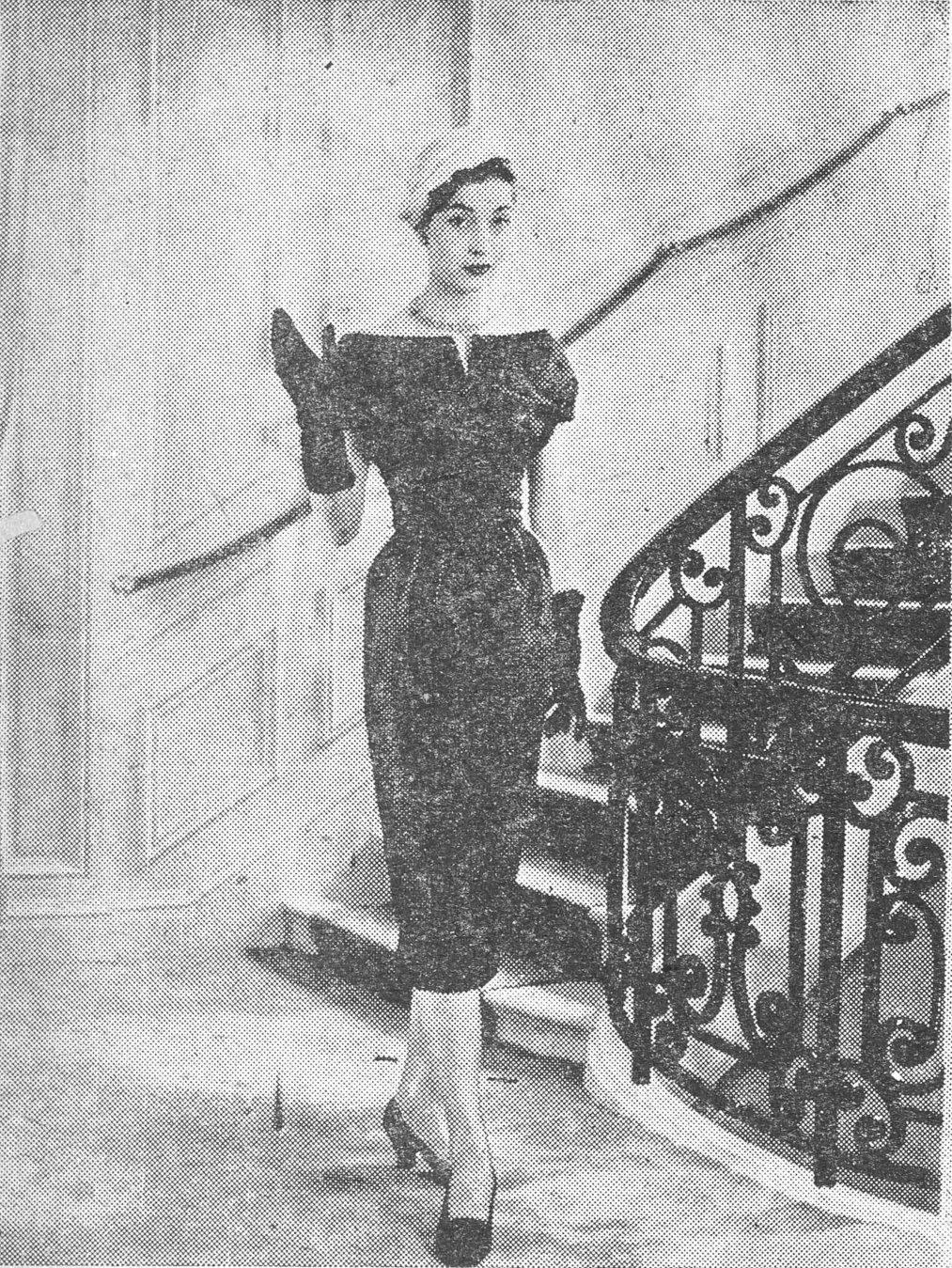
A cocktail dress of black silk, by “Dior”
a visible seam, contenting itself for the most part with a light, imaginary line merely showing where the waist lies.
As for the fabrics, they are all woven of wool and silk together, and this winter they are distinguished by being printed with pictures of wild animals, or showing certain rare and precious metals, which most often give the cloth the look of a fur suggesting leopard skin — while velvet or tweed is adorned with designs of mother-of-pearl or tortoiseshell and suchlike strange, wild things.
Black keeps first place among the colors this winter, followed by green... and red the color of wild cherry, and brown... and steel blue, and gray, and beige.
Among the features of winter fashions, too, are puffed sleeves in the shape of a half-moon, low rounded necklines shaped like a basket, and small collars turned down.
With the tailleur the elegant lady wears openwork scarves of organza, or of other fine, transparent silks, or of damask threaded with gold or silver.
Most of this winter's coats are without a belt at the waist, contenting themselves with a few unpressed pleats falling from the waist to complete its roundness.
As for the tailleur, it is generally egg-shaped at the top — the shoulders are not padded vertically, as usual, but horizontally, to keep them from rising and to suggest their roundness — and in this costume a woman looks like a basket of flowers...
•
On these principles, Madam, the fashion designers of Paris are proceeding, to carry women's dress to the summit of perfection, in answer to the demands of refined elegance and taste.