In what follows, Mrs. Karam Tanir Shouman puts to the agricultural engineer Hasan Shouman a set of useful questions on preserving milk and eggs. Every wise lady would do well to give them the attention they deserve.
Q — We have heard a great deal about the sound scientific methods for cleansing milk of microbes without its losing any of its beneficial qualities. But these methods are difficult to apply in the modest kitchen, such as the kitchens of most of our ladies. What, then, is the scientific method by which we can do the same work and reach the desired result of purifying milk without going to trouble or spending money on apparatus more suited to laboratories? What is the method at once ideal and simple, so that our ladies can follow it at home to boil milk without losing its natural qualities and benefits?
A — Boiling milk is almost the only method of treating it in the home, unlike the case in most European countries. This familiar operation is carried out by setting the vessel directly over the fire until the surface of the milk rises, whereupon it is taken off the fire and the vessel is left uncovered to cool.
Q — And what is the harm in this method? You know, of course, that most of us use it when we buy milk?
A — You will observe that the milk does not actually boil. Rather, it is merely heated, and that method does not destroy the microbes. It has been found that the microbes contained in the skin are, generally speaking, less
affected by heating than those microbes present in the milk itself beneath the skin. Therefore, to ensure the destruction of disease-causing microbes, the milk must be stirred while boiling, so that its contents are evenly distributed and all of them are exposed to a high temperature.
Q — And do you think it necessary to cover the milk vessel after boiling?
A — Leaving it uncovered exposes it to contamination by flies, which sometimes carry dangerous disease microbes into it. And the milk must be cooled at once. One of the chief causes to which the spoiling of milk is attributed is its not being cooled with the necessary speed, for it is often left after heating to cool of its own accord.
Q — And is there anything wrong in that?
A — Yes; the result will be that the remaining microbes multiply rapidly once the temperature falls to the degree that suits them, for moderate warmth helps microbes to multiply.
Q — Let us suppose we have finished boiling it and cannot put it in the refrigerator, since no such luxury exists in most of our modest homes. How do we make up for this unavoidable lack?
A — We must take care to cool it under running water immediately after boiling. Then we keep it at the lowest possible temperature, especially in summertime; and care must also be taken that the container into which it is transferred
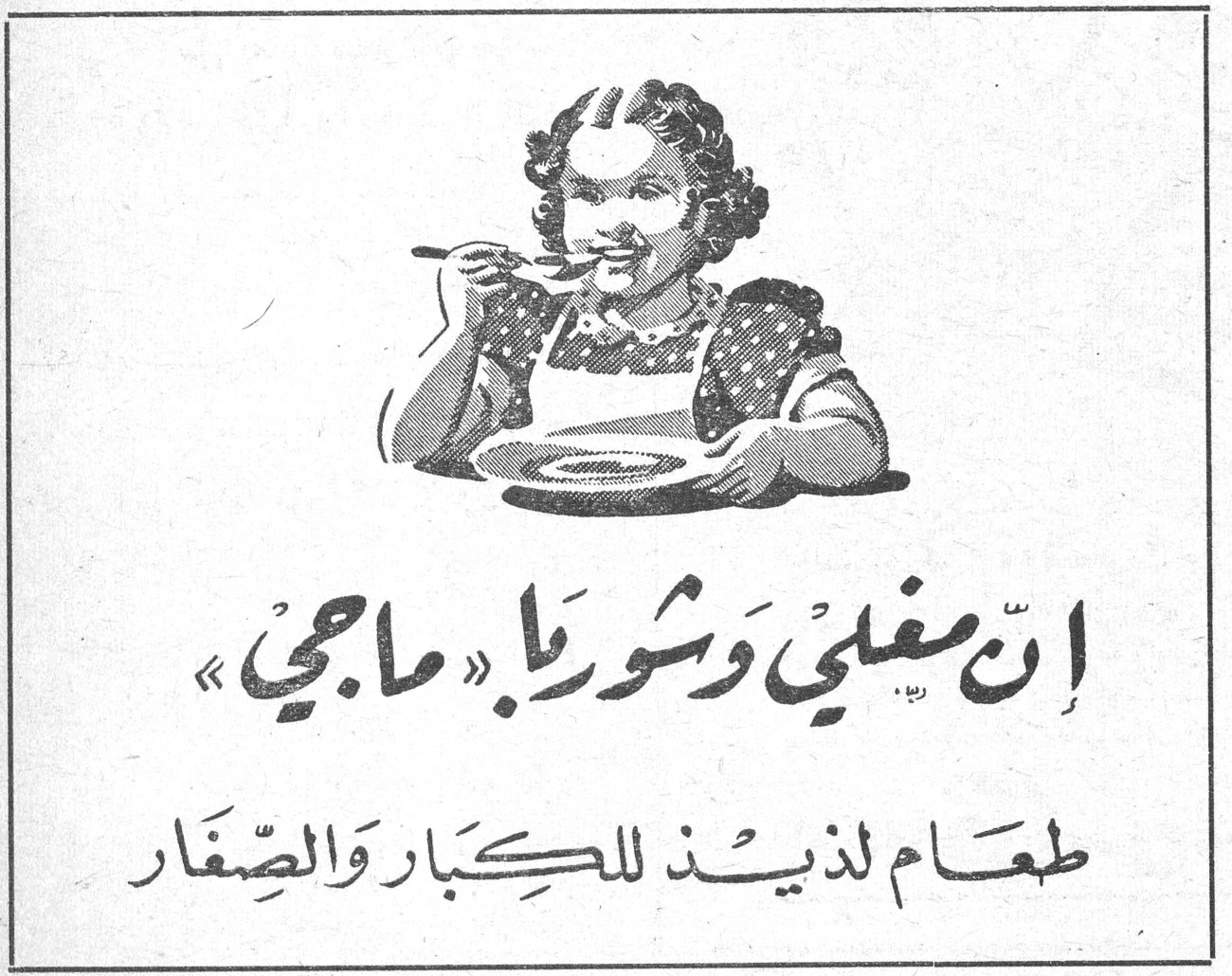
"Maggi" bouillon and soup
are delicious food for grown-ups and children alike