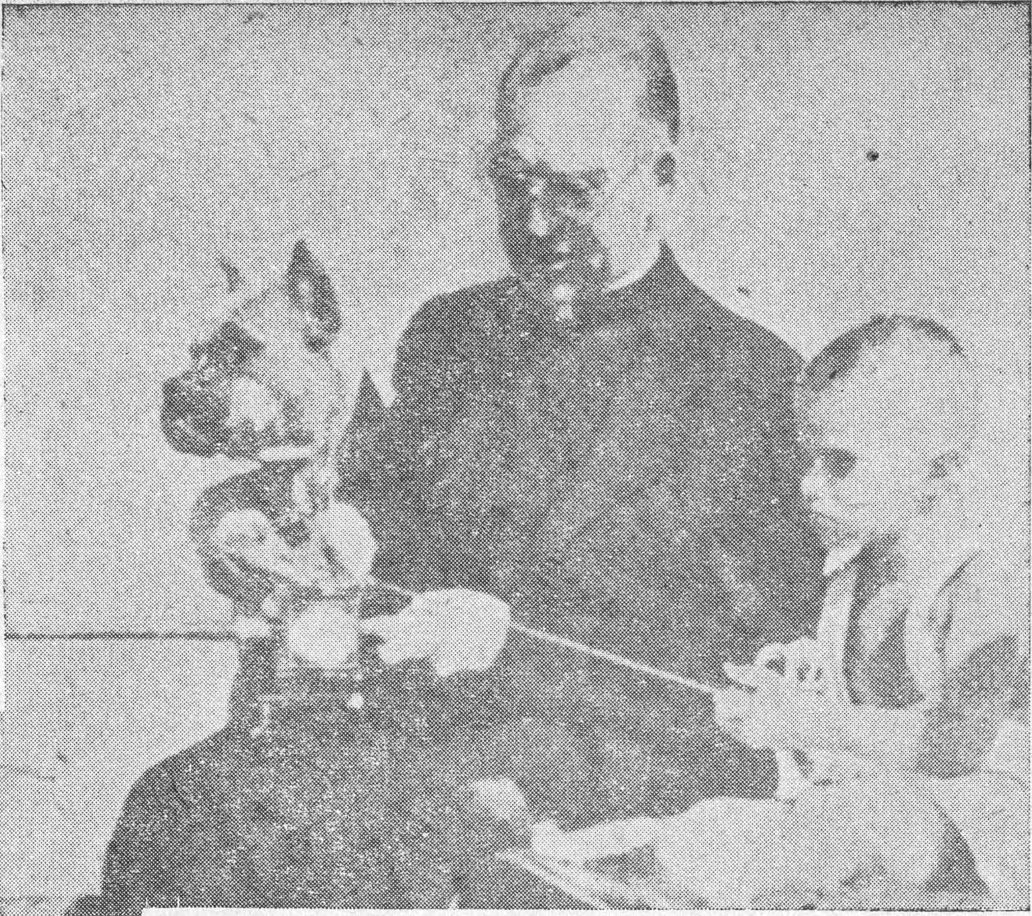
... Father Flanagan ... as the world will remember him
Among the greatest marks of his personality was that he knew how to love, and for this people of every class loved him!
Eddie Flanagan was born in Ireland on July 13, 1886, and was the frailest member of a large family. Even so, he spent part of his boyhood tending his father's sheep, and they nicknamed him 'the bookworm,' because he would not part with the stories of Scott and Dickens even in the fields. His mother always took him with her to the village church, and one day she stopped to talk with the priest, who passed his fingers over the little boy's hair as if prophesying, and said: 'He will become a priest one day.'
The years passed swiftly, and Eddie did not forget what had rung in his ear. Whenever the matter of his future was discussed, he would declare his single aim: he wanted to become a priest. No one opposed him in this; his mother, indeed, believed that he was born to be one.
Few men have faced the obstacles that stood in the way of Eddie Flanagan, and his unceasing struggle to attain his ambitions in the service of religion was the ladder of his ascent. He pursued his studies for four years in Sligo, and by the time he reached eighteen he had finished; at the same time he had experienced the harsh system, far removed from the love for which a boy of delicate feeling like himself longed, and had tasted the atmosphere of institutions and found it soulless. Even so, he graduated with distinction!
It was expected that he would go to Dublin to complete the study of theology there, but the situation changed with the coming of his elder sister, Nellie Flanagan, who was emigrating to New York — and why should Eddie not go with her and finish his studies there? So the sister proposed, and his parents did not object to sending him, in 1904. In New
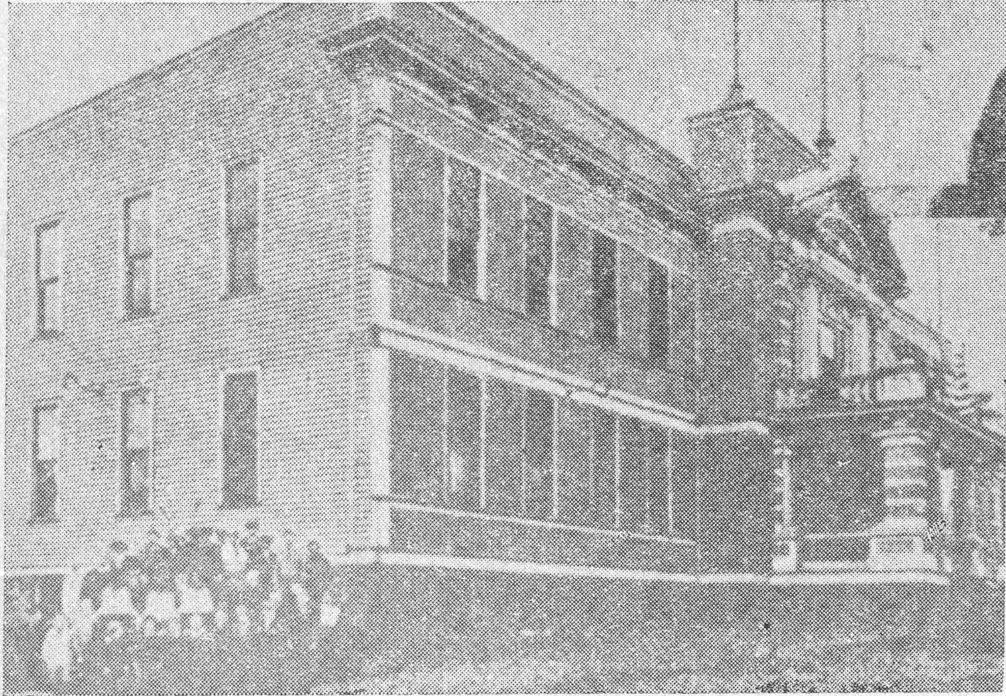
The 'second house' of Boys Town, built by will and by faith
York the young Flanagan became a discoverer of the misery strewn along the breadth of the streets. He had come to know poverty in his own country, but not in such abundance nor of such harshness. 'I used to look at the boys of the alleys with a sorrowful eye,' he would say. 'They were strong, despite the scantiness of their food, like any other boy — so where were they to show that strength? The street was their playground, and they had no occupation but the expression of their mischief, their bad conduct, and their vagrancy. Is it any wonder that they were wretched, and without morals?' This feeling went on sinking deep into his life, and the years followed one another only to add to his bitterness, his despair, and his distraction of mind. His road toward ordination as a priest took shape, and his first struggle was at college, to obtain the certificate that would qualify him to enter the seminary of Dunwoodie. At the seminary he labored continuous hours at exhausting study, and in his free hours he went about among the hospitals for consumptives in the city. Then came the terrible hour when he found that he himself had been stricken by the malignant disease, and this time he set himself to fight to save his lungs. Even this did not stop him or weaken his resolve: he would stay in bed and go on with his studies, and he passed his examinations with distinction — but he paid the price dearly. The doctors