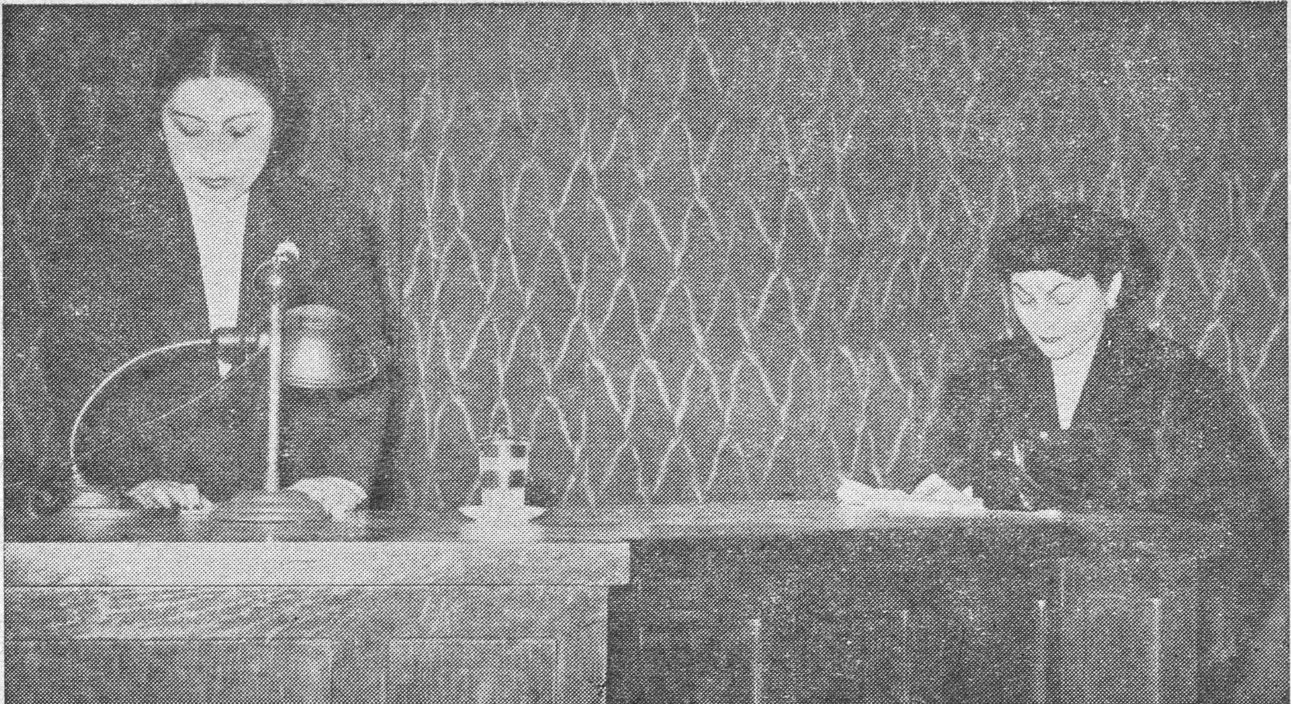
Dr. Zahia Kaddoura presenting the lecturer, Dr. Doria Shafik
We spoke in the last issue of Dr. Doria Shafik's visit to Beirut, at the invitation of the University Women's Association headed by Dr. Zahia Kaddoura, to deliver a public lecture in the hall of the Ministry of National Education on the subject 'Woman and the Arab Cause.' On the margin of this lecture the magazine The Woman's Voice addressed several questions to her, in her capacity as an Egyptian leader devoted to the welfare of the Arab woman, and in the front rank of those struggling for her emancipation.
Dr. Doria Shafik apologized to the editor-in-chief of this magazine, saying that time did not allow for preparing the answers, and promised, in a written word, that she would 'dispatch' her frank opinion on the subject as soon as she reached Cairo. The days have passed without the awaited answers arriving! The truth is that we are at a loss over our promises to the readers, and we shall be obliged to publish the questions while awaiting the answers to them, as our gracious colleague promised.
Q — You said in your lecture that constitutional rights are the mother of all rights, and in this you avoided touching upon the rights of the religious law. Are you, we wonder, among those who believe that matters of religious law may not be taken up?
Q — Do you not see in certain texts of the religious law a fundamental injustice to woman, one that touches her cause to the quick? What is your opinion of the disparity in inheritance, for example, and of the discounting of a woman's testimony merely because she is a female? And of the man's
right to plural wives, and to divorce?
Q — Do you not believe that these questions have their deep and far-reaching effect upon the soul of the Arab woman, and that treating political questions alone is like one who tries to treat the branches while leaving the root?
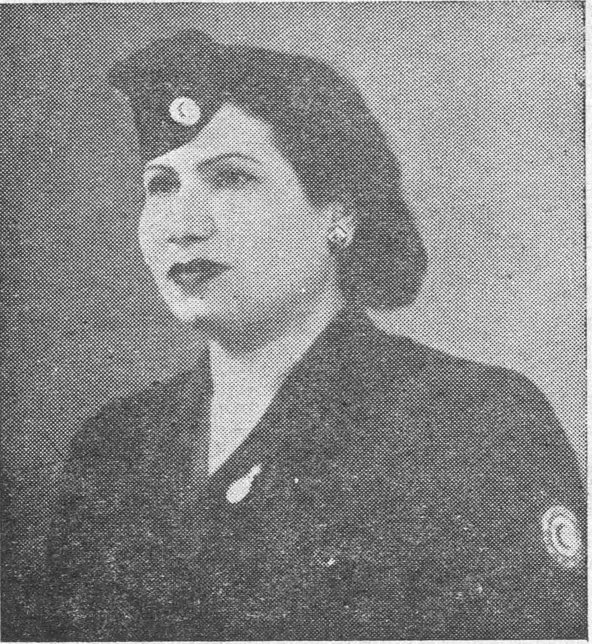
Mrs. Aida Boushay
I have returned from my visit to beloved Egypt, and it is as if I were still in that beautiful dream — I do not want to wake from it!
Yes, my dear, I went to Egypt — and what did I see?... I saw wonders. Every individual there feels that he has his dignity: he walks with head held high, full of self-respect. And how not, when Muhammad Naguib and his companions have restored to you your faith in God and in yourselves, so that you rose up and cried with them 'Unity, Order, Work.' Unity — which I felt in you and in your works, for you walk and work side by side with your Muslim friends, Nafisa and others and others. How often was I seized by a rapture of joy and pride, and how my heart danced with delight, when I saw the cross hanging upon your breast trembling with joy as you worked for the Crescent... How the vile colonizer tried to divide the sons of the one country in the name of religion... but you overcame his malice as we overcame it, and you taught that 'religion belongs to God, and the homeland to all.'
And what shall I tell you of the order I witnessed in Cairo — Qena — Luxor — Aswan, and of the work?.. How proud I am of you, my friend! You used to tell me of the colonizer's aggressions and crimes that had befallen your country, and determination and earnestness were in your eyes; so you rolled up your sleeves — you who had touched nothing but silk — and cast off the garment of hesitation and hastened to help the needy and the afflicted among the sons of your homeland, driven to it by your faith in your devoted leaders. I am proud of you and of the renaissance of Egypt.
And as I present to you The Woman's Voice, I want you also to let us hear your voice, from the field of your working life. Write to us of the activity of the Egyptian woman and of her struggle, for we are truly athirst to hear those pure, sweet voices. Farewell, dearest of friends.
Miss al-Qira Jureidini spent a month's holiday in the sister land of Egypt after a long absence from it, and came back filled with the utmost admiration for the mighty Egyptian renaissance, at the hands of its men and its women alike. So she wrote to a friend dear to her, Mrs. Aida Boushay, this letter overflowing with enthusiasm and appreciation — and she wished to publish a part of it in the pages of The Woman's Voice. Miss Jureidini says: