apart in his art, and his flowers, in their delicacy, their gentleness, and their color, have been the wonder of the botanists of our own age. So likewise the artist Filippo Lippi and many others of the artists of the Renaissance and beyond, who colored numerous canvases representing spring and describing its marvels and the freshness of its airs.
Then came the Flemish school, whose artists — men known for precision and skill — composed splendid things upon spring and its blossoms, in a sweet manner and with a delicate spirit; and the works of theirs in the European museums bear witness to it.
Nor was the English school any less attentive to spring than the others, especially as we know something of the English love of flowers and greenery, and we know English nature and her green fields of perpetual spring. We know, too, what the writer Ruskin breathed into his nation of a spirit enamored of nature, and his stubborn defense of her, so that the sons of his country might enjoy all the beauty of that captivating nature — a beauty that never fails to awaken in them the love of life and the feeling of life. The flower, simple in appearance to some, is great in the power of its meaning, strong in its effect: it is the sign of a refined life, the sign of civilization and culture; and whoever turns away from the sight of flowers and forgets them has forgotten much of his humanity and much of the meaning of his life. The English men of art took particular care in the painting of spring, foremost among them the artists Constable and Gainsborough, and many others besides. As for the French school, it shared to a great degree in coloring splendid canvases of this beautiful season. We mention at the head of its artists Watteau, who in his paintings sang to us the beauty of nature and the freshness of spring in its prime, giving us of his art what may rightly be counted immortal masterpieces — the more so since the conditions of life and the customs of the generation in his day were favorable, for the people of his age would go out to the gardens and pleasure-grounds to spend sweet, contented hours amid music, drink, and the company of fair women, all of which paved the way for the artist to paint spring in its most beautiful attire and its most radiant images. Fragonard matched him in this, representing spring in the gardens of Versailles and the groves of Fontainebleau, adding to nature's gaiety and her laughter — he the merry, joyous artist who adored nature and fair women alike. And are not spring and the fair one and the same thing, a picture of beauty and of youth?
But the artist Corot devoted nearly his whole life to the painting of nature, and of spring above all. In his
painting of spring in the morning, in its laughing scenes and green plains, the girls fall to dancing and singing, delighting in its pleasures and taking shade beneath its lofty trees, while the sunbeams show upon its boughs and the gleaming palms of its leaves, adding to their charms and bringing out their beauties — thanks to the magic brush of this genius of an artist who stood alone in revealing the charms of nature. He is a poet in the tongue of his lines and his colors, making us hear the sweetest melodies and the most plaintive strains through color, movement, and the pouring out of light. In his canvases we feel the light and the breeze, we breathe in the fragrance, and we feel the deepest meaning, magic, and enchantment that life holds.
And when we speak of these artists of the West, we must not fail to mention that the Lebanese artists have not forgotten Spring, living as they do in Lebanon and in its captivating nature, teeming with every kind of loveliness, arrayed in the most splendid robes of beauty and the brightest delights of life. And if the harsh conditions of their lives have not allowed them to produce an abundant number of pictures of spring, still they have never failed to steal glimpses of its beauty whenever occasion offered — whether on the summits of its snow-crowned mountains, or on its slopes and valleys adorned with green and with flowers, or on its laughing, merry shores.
For in spring, in Lebanon, we witness the wedding of nature, one of the feasts of beauty, and a generous, gracious invitation — one of those invitations which nature extends to those of her children who love beauty and adore life.
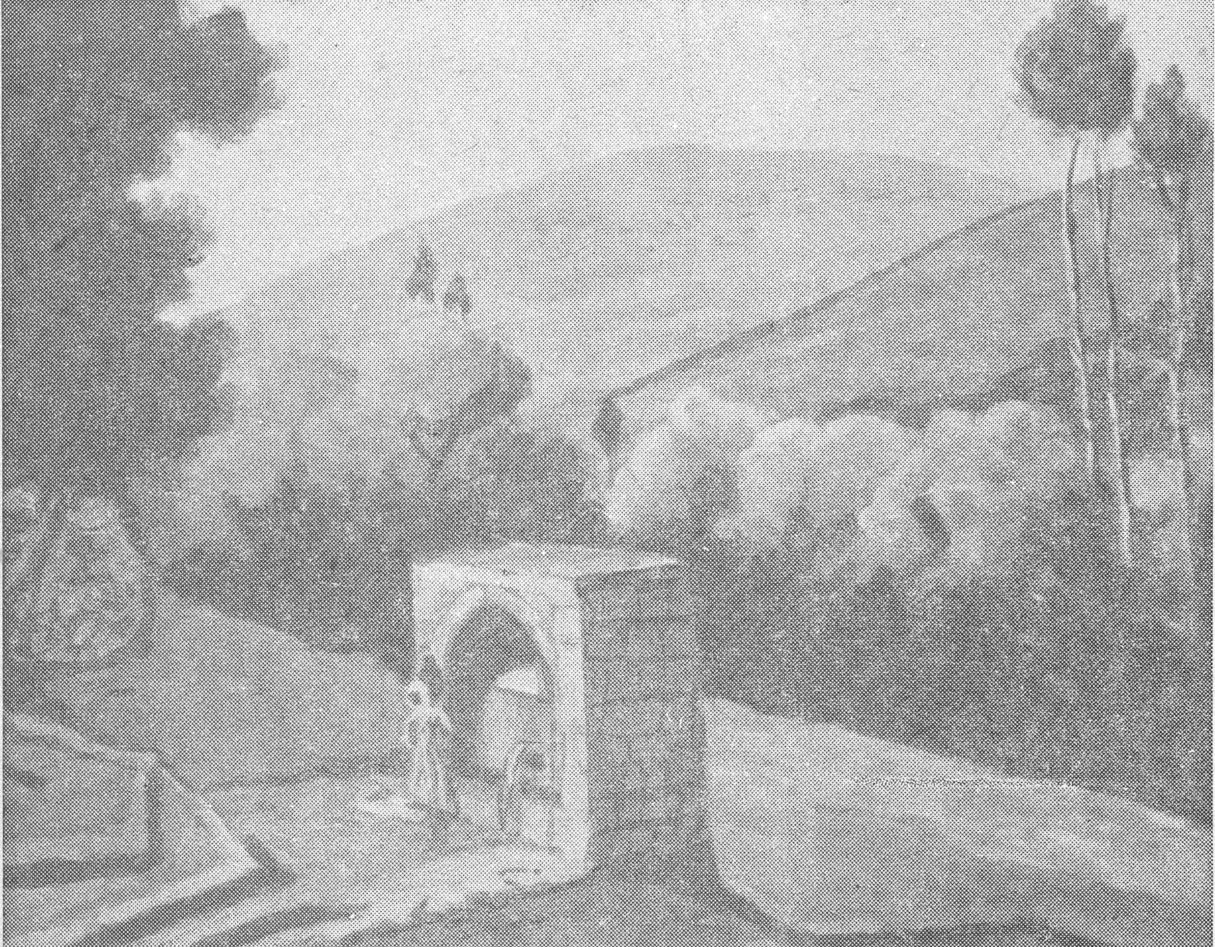
The village of Mukhtara in spring...