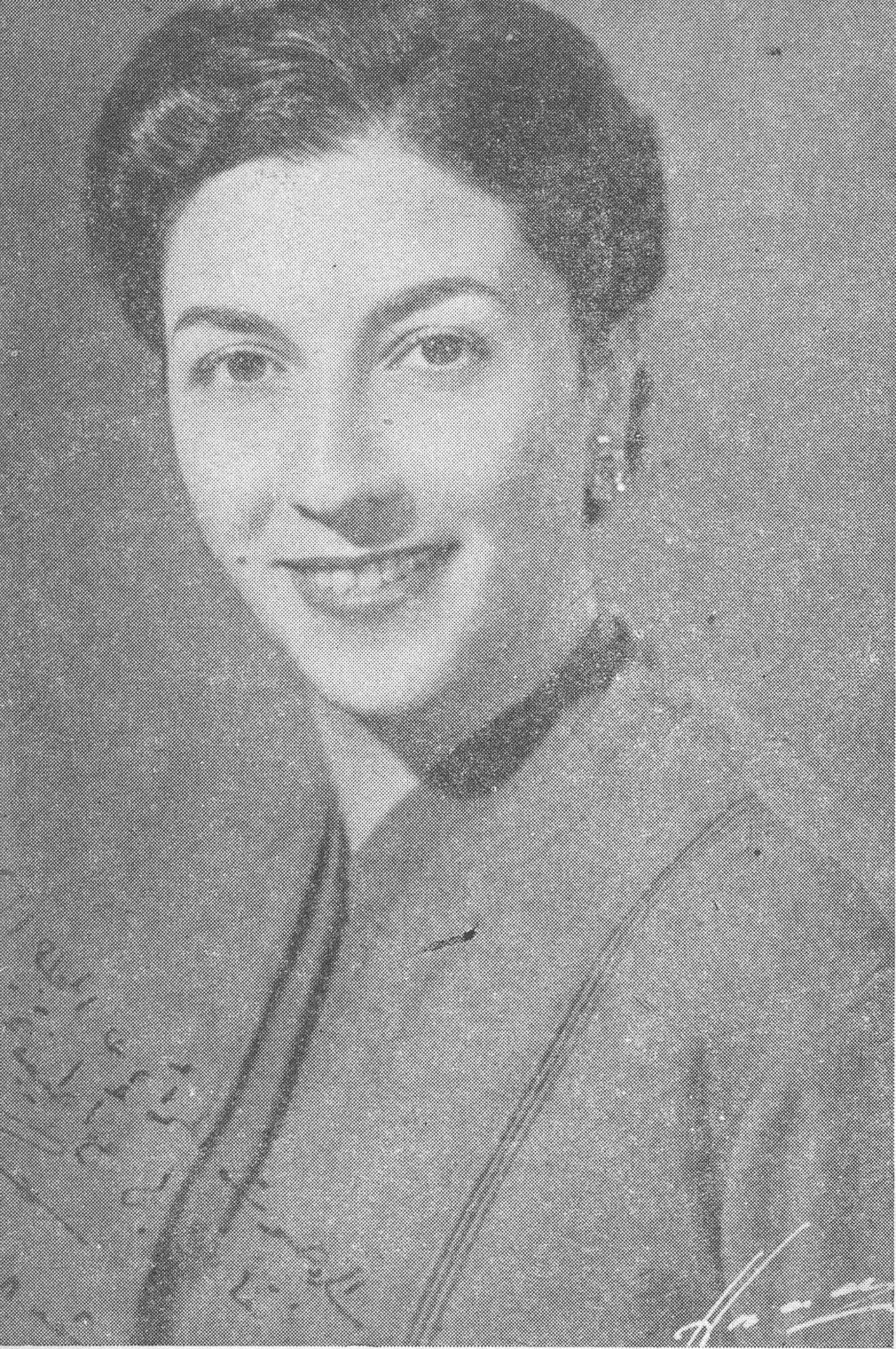
We extend the warmest welcome to our friend Mrs. Salma al-Haffar al-Kuzbari, who returns to her literary activity in The Woman's Voice after a long absence, during which she was occupied in preparing studies of certain immortal women, Western and Eastern... We publish below a sample of them, on "Shajarat al-Durr."
•
Shajarat al-Durr is among the most famous women of history in the East, and the first and last woman to occupy the throne of Islamic Egypt. She commanded and governed, appointed and dismissed, sent armies to war and signed treaties of peace. Her name was engraved upon the dirhams and dinars, judgments were issued in her name, and prayers were said for her in the mosques, in the middle of the seventh century of the Hegira (the thirteenth of the Christian era).
Some historians count Shajarat al-Durr the first of the Mamluk sultans, because she was the first mamluk woman to sit upon the throne and become a queen to whom millions owed obedience and allegiance, after having been a slave girl bought with money! Others consider her the last of the kings of the Ayyubid state, because she was the wife (1) of the Emir Najm al-Din Ayyub, called al-Malik al-Salih, seventh of the kings of the Ayyubid dynasty founded in Egypt by the great commander Saladin.
The history of Shajarat al-Durr is the history of a slave woman within the history of a nation! She was an owned slave girl before she became the wife of an emir, and a queen. She came to Egypt in the first flush of youth, sent by the Abbasid Caliph in Baghdad to the Emir Najm al-Din Ayyub. There are those who say that the Emir bought her among the slave girls he purchased in the days when he was governor of the fortress of Kayfa, on the borders of Turkestan, on behalf of his father al-Malik al-Kamil. The Emir gave her the name "Shajarat al-Durr" after he had studied her closely and found that she was not merely a peerless pearl, but a captivating young woman in whose charms of body and character were gathered pearls beyond price! She enjoyed with him a favor that entitled her to become the sole possessor of his heart and his mind, the voice of counsel and command in his court, then the mother of his child, then his lawful partner. Then it came to pass that she attained the loftiest
station and became an uncrowned queen when the Emir Najm al-Din ascended the throne of the Ayyubid state. And at last she seated herself upon the throne in her turn, and the destinies of a nation were bound up with her; and she governed with skill, administration, and good management.
There were gathered in the person of Shajarat al-Durr qualities and powers that fitted her to play an important role in history, and history has written immortality for her, from the seventh century of the Hegira until today and tomorrow. She became famous, when she was a slave girl of beauty and intelligence, for learning and art — for she was skilled in reading, in calligraphy, and in singing — and her fame spread abroad when she became a queen of shrewdness, resolution, and cunning.
Her age was crowded with great historical events. In her reign the Crusaders were broken in their seventh campaign, which they directed toward Egypt: they were routed at the city of Mansura with the worst of defeats, their commanders were killed, and their king, the leader of the campaign — Louis IX, King of France, called Saint Louis — was taken prisoner. He was confined in the house of the Emir Najm al-Din ibn Luqman at Mansura, and Shajarat al-Durr did not release him until he had pledged never to return to invade Egypt, and until his wife Marguerite of Provence had ransomed him with a great sum of money. Al-Malik al-Salih, the husband of Shajarat al-Durr, had died
(1) — Historians differ over the validity of Shajarat
al-Durr's marriage to al-Malik al-Salih: some state positively that she became his lawful partner, while others insist that she was only a concubine of his — and God knows best.
while the war between the Muslims and the Crusaders was at its fiercest, and her cunning showed