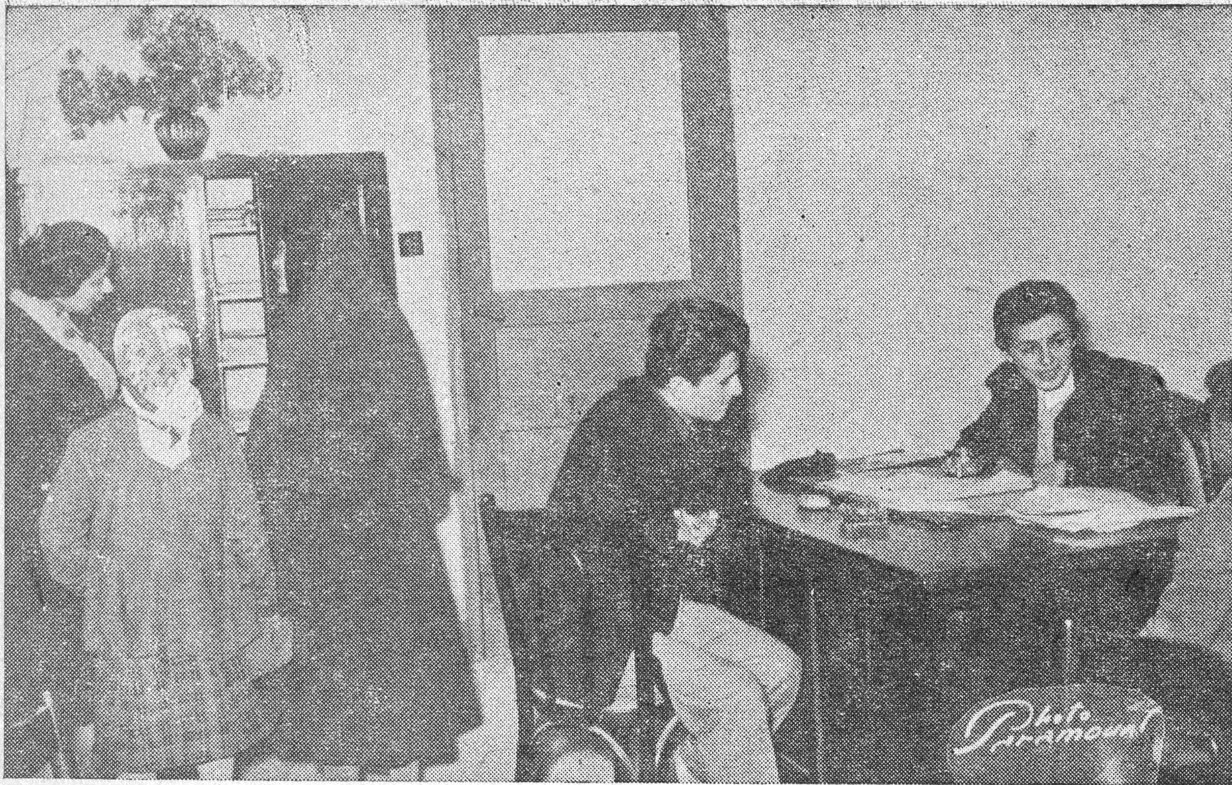
... Then she goes to the drawer where she keeps the vagrant girl's own file ...
while the social worker Miss Wadad Abu Nader (the author of this article) interviews another juvenile ...
... How can one arouse their interest and win their trust?
to the association of the Union for the Protection of Juveniles, since the case of every juvenile must be accompanied by a detailed social inquiry.
And here we do our duty.
The substance of this duty lies in studying the juvenile's circumstances in his environment, his family, and his work, and in preparing a detailed file on all his conditions and conduct — one that throws light on the reality of his situation and on the things that worked together to make of him this vagrant. What helps us to guide him better, and helps the courts in their turn to take measures suited to his nature, his family, his environment, and his society, is our belief that the juvenile is not a criminal but a maladjusted child, whom the factors already mentioned helped push to where he ended up.
The value of the work of the delegates of the Union for the Protection of Juveniles shows itself in the conscientious, scientific inquiry that she alone is able to carry out, thanks to the tenderness, affection, intuition, and patience that woman displays — qualities that move the family to trust and instill reassurance in the souls of those children.
She cannot succeed in any task she undertakes except when this trust is present and there is mutual response between us and
those children — which is the first thing we strive to achieve in the work we do.
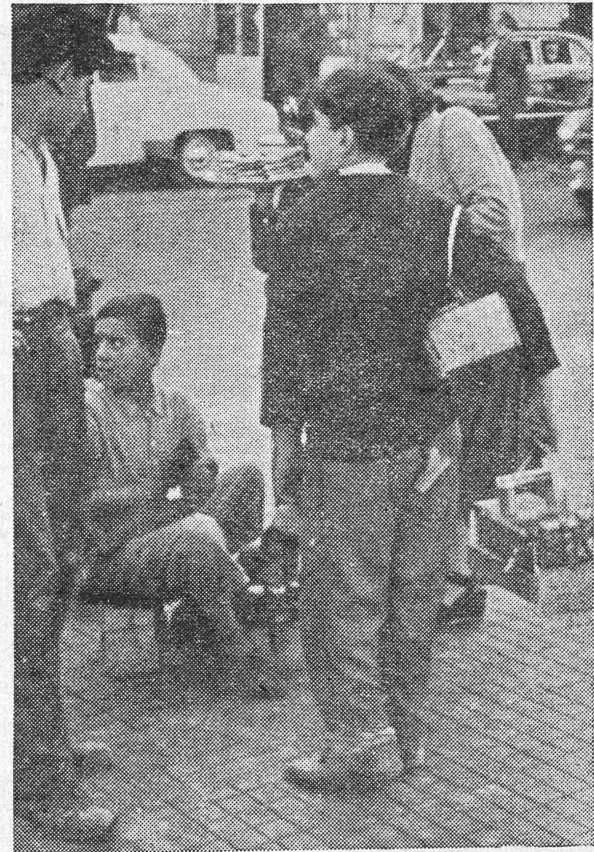
Faced with this reality — the reality of these eighty arrested vagrants — we began our work by interviewing each juvenile separately, so as to learn his condition in all its aspects, and by getting in touch with his family and with every person connected with the juvenile. To hasten this, the social workers rallied and volunteered for the task, contributing every effort, energy, and awareness to preparing the first steps for these deprived vagrant children — which helped us, and helped the courts, to decide their fate for their own good and reform, and for the good and salvation of society.
And some conscientious officials hurried to extend a helping hand with warmth and understanding.
Then their families came...
And here...
we found ourselves before a new tragedy.
We heard insults and defiance, and we kept silent.
We went on doing our duty.
The first thing we did was to move them out of the Finance building, and in this we succeeded; the president of the Juvenile Court, with human feeling, answered our plea, gave of his time outside offi
cial working hours, and completed their proceedings.
And so it was that judgment was passed on them.
Some were handed over to their families — the result of the social inquiry we had conducted — on condition that they be bound by a system of supervision by the social workers, so that their fate could be watched over with reassurance.
And some were placed in the private orphanages, which understood in their turn the gravity of the matter and made a sacrifice in accepting them, despite means that scarcely permitted them to do so — on the understanding that these institutions remain in contact and cooperation with the office of the Union for the Protection of Juveniles. This was accomplished with the assistance of the Ministry of Social Affairs, which took action and issued a decree concerning the acceptance of sentenced juveniles in private institutions.
And after this...
and after the families had felt and grasped the value of the work and the result we had reached, they came giving thanks, and they apologized