be born and die, like Cubism, Futurism, Vorticism, Concavism, and others, just as we now see some of what is current in its death throes. Our hope is that all this will not go to waste, but will serve as streams that run their course and pour at last into the river of immortal art.

Q — What is your opinion of contemporary Lebanese artists and others, since you have accompanied this movement, and what are their merits?

A — Contemporary Lebanese artists have, in my view, great merit in awakening the artistic consciousness we perceive in Lebanon, however its tendencies differ and its paths branch. When we speak of art in Lebanon we cannot but mention in the vanguard Daoud Corm, Khalil Saleeby, Habib Srour, and Gibran Khalil Gibran, and name among the living Youssef Howayek, Moustafa Farroukh, Omar Onsi, Cesar Gemayel, Saliba Douaihy, and Rachid Wehbi — each of whom has taught, guided, and worked, not in the measure of the ambition and aptitude within him, but in the measure allowed him by the anomalous circumstances that dominate every intellectual movement in Lebanon. Fairness requires that we not forget, among those who shared in awakening the spirit of art in this country, Georges Cyr, Novikoff, and Lecoche. But we still await in this beloved homeland the artist who will reach a world summit in the field of art, to be pointed to as one points to Cézanne, for example, or to Henry Moore or Augustus John or Epstein or Picasso or others. And before I close my talk, I warn the beginner in Lebanon against the paths of error which have their advocates — some hired, some deluded, some conceited — who seek fame by the nearest roads and the easiest means. True glory rests on no foundations but those of toil, sacrifice, knowledge, and sincerity.
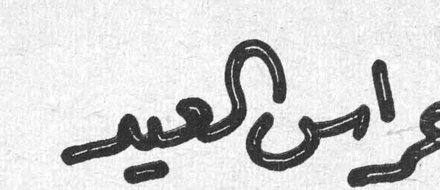
The Bells of the Feast
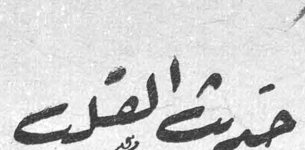
Talk of the Heart
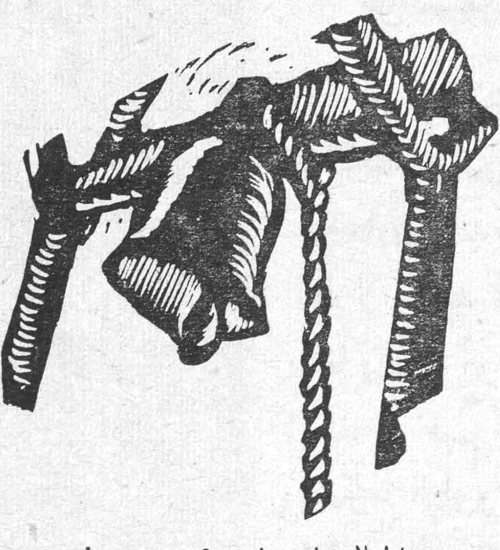
... This lively, repeated ringing — the ringing of the feast-day bells — wakes from the depths of my imagination legendary pictures of my distant childhood
How refreshed our lanes were in those days —
refreshed with distilled orange-blossom water,
sprinkled generously by the old women over the trays of ma'moul,
filling the houses,
carried by the little ones on their heads, amid the clamor of their merry village songs!
And perhaps the greatest joy fell to the baker, Uncle Abu Hasan:
his time was never too short for the grooming of his upstanding mustaches, save in the ma'moul season of each year!!
And the tale of the colored eggs, and the gathering of boys and girls that went with it,
in the church square, or at a bend in the road...
the hour when heads brushed heads in naive innocence, and breasts beat their first beats,
and cheeks flushed rosy in the gray of the twilight just before dawn,
and hands trembled as the eggs were knocked together:
you win or you lose!
And how many a droll tale of prowess at this game has been handed down, generation to generation,
to the lively, repeated ringing — the ringing of the feast-day bells!
... They called it "Pascha," and we called it: clothes adorned for allure...
and gleaming shoes, carrying our steps a-ring, that they might not be scratched.
And ribbons of silk crowning the braids, which were loosed upon the shoulders only at the feast —
these delights held the broadest place of honor in our family,
as sleep flew from our eyelids, waiting for the first peal —
bursting eager from the heart of the night,
announcing something obscure, at which our hearts trembled in awe: —
"A Lord is risen!... a victory of life over death!"
... A legend of pictures, living in my mind surging with colors,
and it pains me that it should be snuffed out thus from the lives of our children...
Else, what difference does it make to my two little ones in their drowsing,
for whom this lively, repeated ringing — the ringing of the feast-day bells —
means neither much nor little??
Aphrodite
6