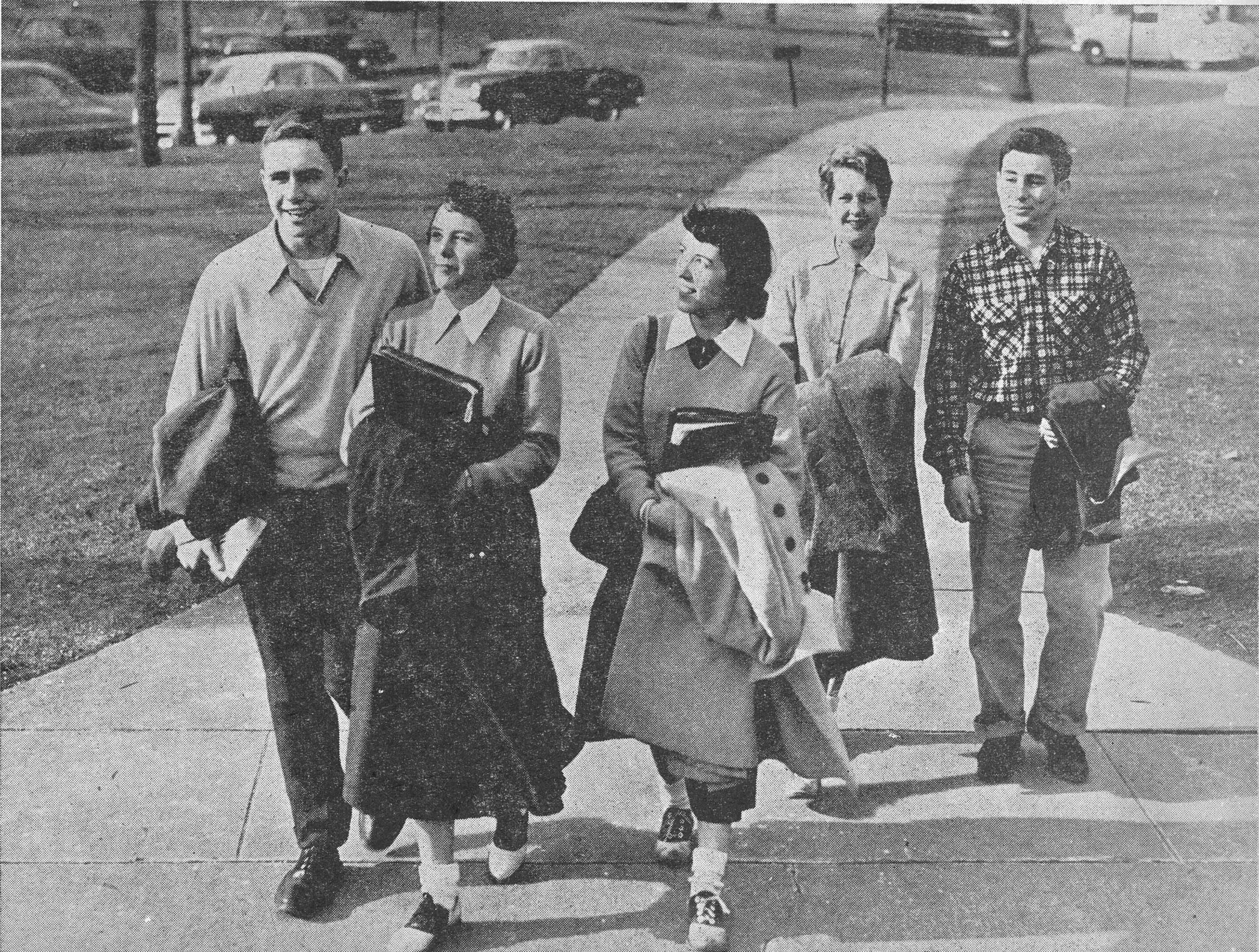
mention that American schools, from the primary grades on, are mixed; the girl comes to know her classmate on the school benches from childhood, and no sooner does she reach fourteen than she begins going out with him to the cinema or to attend sporting events. Her mother encourages her to go out with her companions, but sets her an hour for her return home at night so long as she has not passed twenty.
American society shows its apprehension at the increasing freedom of the new generation (between the ages of 14 and 20), and great efforts are made to occupy the young men and girls with membership in clubs and in athletic and social institutions; the schools cooperate with the churches and the homes to keep the conduct of youth in check by means of these clubs.
I still remember last New Year's Eve, when the inhabitants of one village met and deliberated on holding an evening dance for their children, to keep them from going to the bars and dance halls on that
night, and so escape being exposed to automobile collisions. One of the merchants volunteered that day to pay the expenses of the dance orchestra; the village school volunteered to hold the dance in its hall; and then the families joined in by contributing sweets and Coca-Cola and decorating the dance floor.
That night some two hundred boys and girls gathered and danced until midnight. Some of the parents stood watching the party from the windows, while the school principal and a group of her teachers themselves distributed the evening's favors — horns, balloons, and paper hats — among the dancers.
•
And so that the reader may get a clear idea of how an American girl lives, take for example Helen, a girl of twenty-four who took her degree in commercial sciences and works today as an employee in an industrial company, drawing 250 dollars a month.
Two years ago she moved to live in the city of
A group of students, boys and girls, on their way back to their homes.