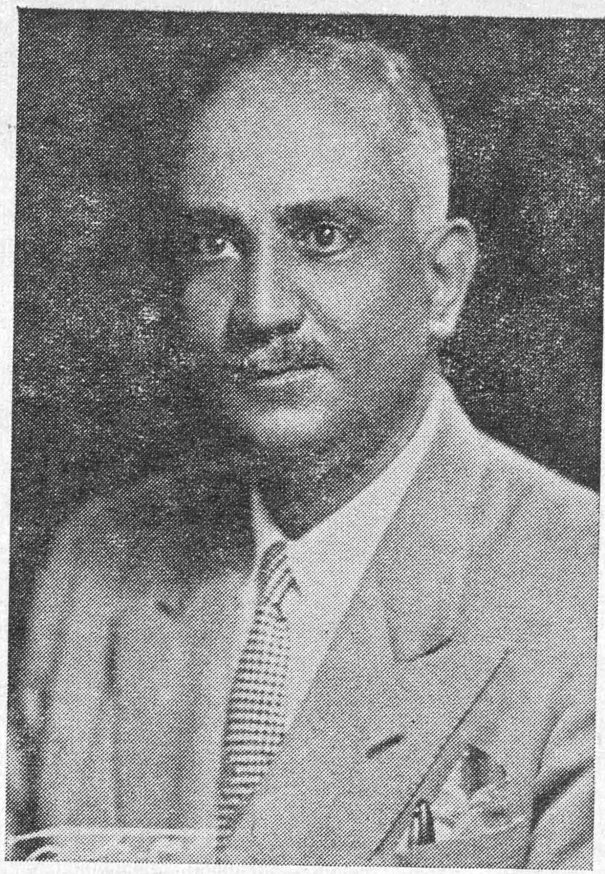
... At the end of this past April, the poet of Bahrain, Mr. Ibrahim al-Arrayedh, visited Beirut in response to an invitation from the Arabic Department of the American University of Beirut to lecture on poetry at the Fourth Congress of Arabic Studies, whose proceedings we noted in the last issue of this magazine.
In a delightful session at the office of The Woman's Voice, the poet al-Arrayedh expressed his highest admiration for the only magazine that raises the banner of the Arab woman to a level worthy of her place in the modern leap forward, without losing anything of its sobriety..
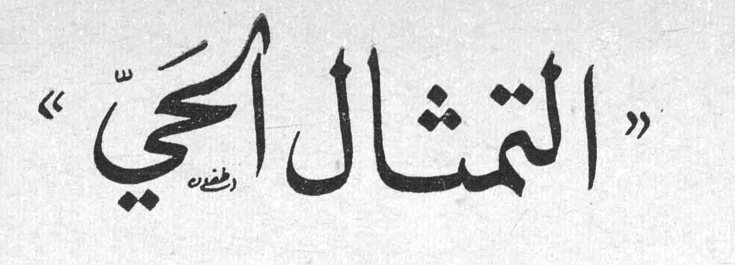
The poet was gracious enough to present us with this poem, "The Living Statue," from his collection of verse "The Brides" (al-Ara'is), published by Dar al-Ilm lil-Malayin in Beirut.
She dwelt on the dark floor of a plain and humble house,
a maiden who owned no bread, yet was rich in beauty.
She went in rags, but hers was a pure soul;
a revolution had robbed her of everything but her virtue.
She writhes whenever she sees the house empty —
where are her father and mother, in the darkness of eternity?
And her brother, felled in the fray by a wretch's hand:
he dropped, while the fluttering flag bent low in salute.
How should she not weep — has fate left her anything at all?
•
She went out, stumbling in her hem, to a neighbor close by,
who lived among people, in his solitude, like a stranger,
gray hair traced upon his forehead like scars —
where in all of time is a heart never terrified by calamity?
She came to him in his workshop, hard at his labor,
carving the body out of rock and bringing forth wonders.
He saw her walking in her rags like one under suspicion,
hunger's traces of pallor upon her cheeks,
and he turned to gaze at that beauty in an awesome silence.
•
He drew near her fevered body ... yet with a knight's honor.
Why was she not shaken by him, why did she not fear his approach?
In his eyes — nothing to affright her — was the light of prophecy:
one of beauty's devotees for art's sake ... however far his excess.
Then she felt his hand pulling away the garment with force,
and she moved to cover her breasts .. in modesty and honor.
"I... I... do you not feel that I stand over an abyss?"
He said, "Enough! By my gray hairs you stand in the shade of fatherhood.
Were you bared, art would rise by your shoulders to its heights."
•
So she cast off what covered her only a little,
then said, "And when will you feed me?" He said, "At dusk."
And she knelt long before him in her nakedness,
and he found no fault in her figure except its thinness.
He bent to examine the body .. its branches and its roots,
and sensed in her limbs — her eyes closed — something overwhelming.
Then, when she heard him utter the verdict: beautiful,
she rose smiling through tears that ran in streams:
"Can this beauty give me life, age after age!"
She stood naked among the statues like a pearl,
holding her lips to laughter, a tear in her eyes,
while he went on marking out her measure with chisel in marble.
She never once tried to bend her