It was a Sunday afternoon when a great statesman, his mind weighed down by the toils of a far-flung empire, entered the children's room of his country house, picked up a brush, and began drawing it across one of the canvases. Before long he had made a new discovery: the cares had vanished
To paint this scene you must understand what equipment you need, for the value of a picture increases in proportion to the care you devote to the preliminary arrangements.
Before you apply the colors, you must lay out the design of the view, which begins at a distant point and draws nearer.
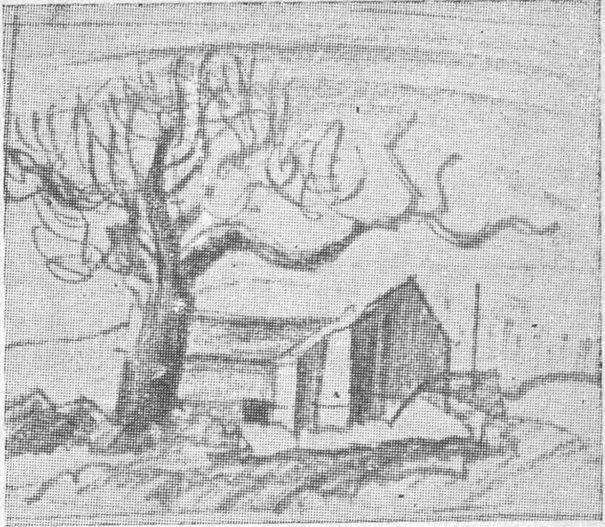
The first step in transferring the design is to sketch it in charcoal on the "canvas," using only a small amount lest it overwhelm the colors. Oil painting requires that you begin with the dark colors first; in this way you see the two colors, white and black, on the canvas. That done, you can blend the intermediate colors into the picture. It appears the artist began with the trunk of the tree, then moved to the side of the hut, and then returned to the rest of the picture.
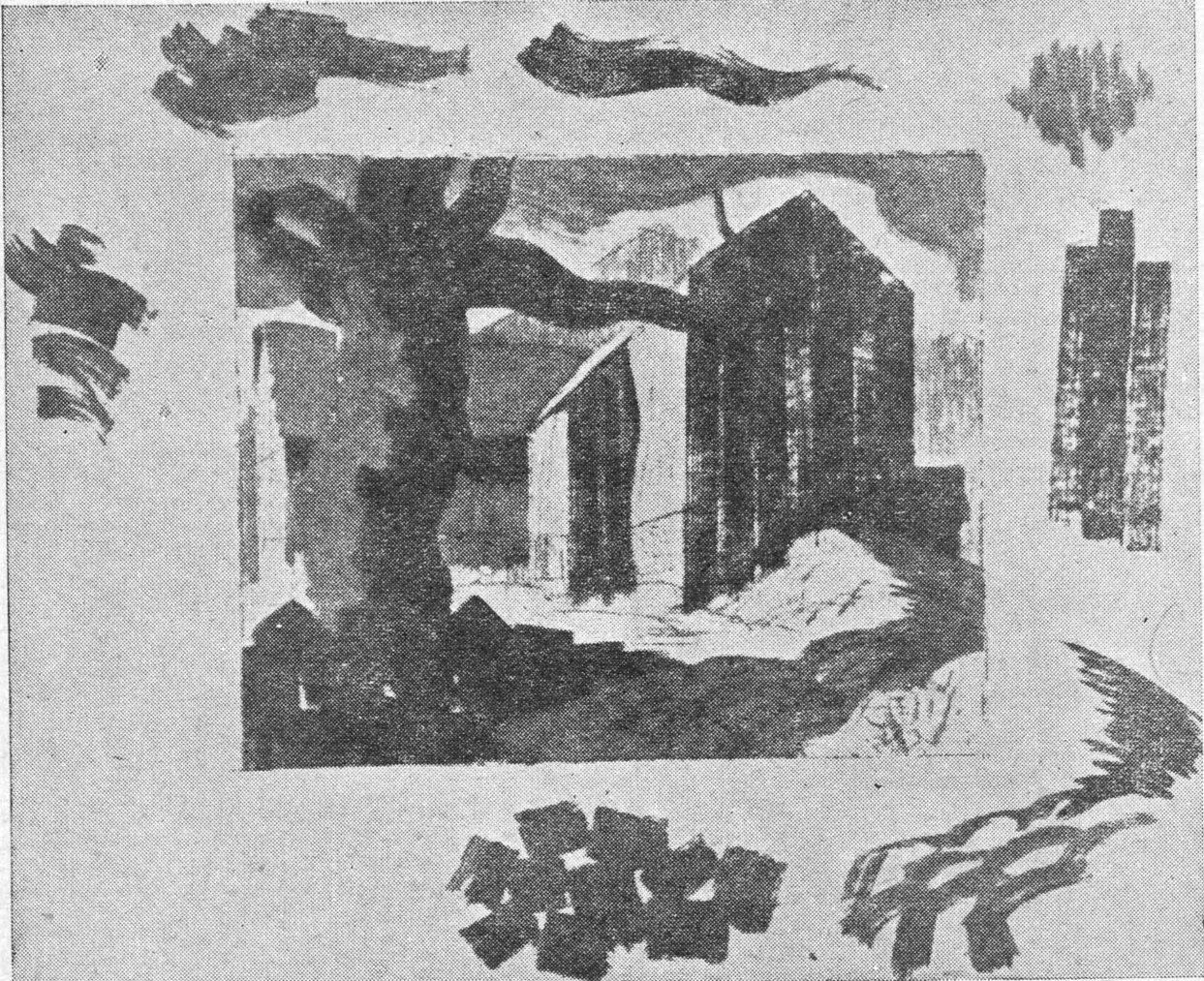
The second step is to distribute the colors over the canvas by introducing the "light" colors. Thus you see that the tree, for instance, looks dark as it did in the first picture, and what surrounds it appears like dusky clouds — but the brush will soon pass over to breathe life into it! We are still using the "light" colors, and the picture grows and moves toward life; everything has changed, and the obscurity that first wrapped the picture has cleared away. Yet certain touches remain in the artist's mind, which he insists on adding from his own imaginings...
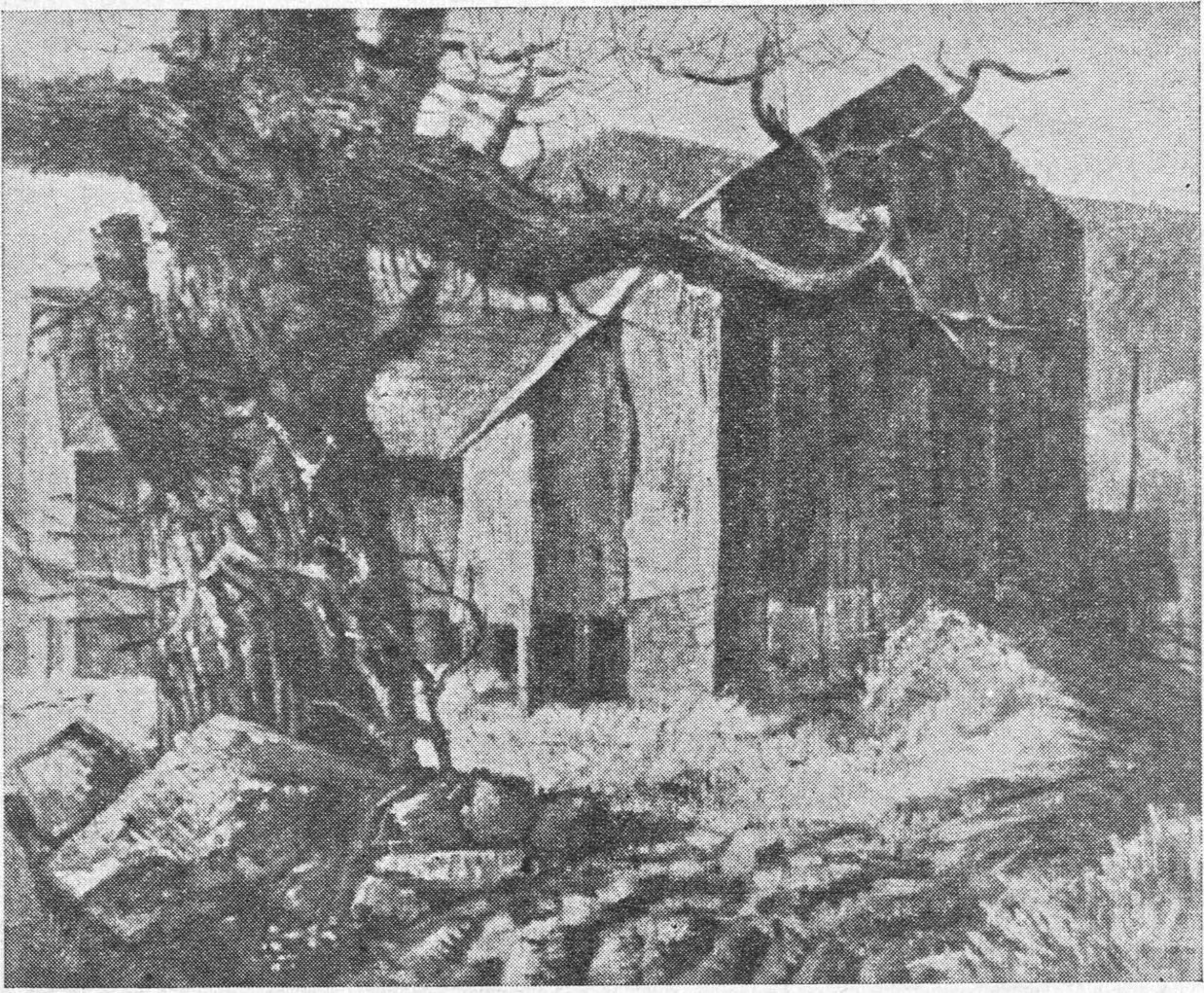
At last the brush disappeared, and the picture emerged into being, alive and